Articles by: Saniterra

Shower Water Pressure and Flow Rate: What’s the Difference and Why Does It Matter?

A shower can look perfect and still deliver a disappointing experience. Sometimes the water feels weak, takes too long to rinse shampoo, or changes noticeably when another tap is turned on.

These problems are often described as low water pressure. However, water pressure and flow rate are not the same thing. Understanding the difference can help you identify what is affecting your shower and choose the right shower fittings for your plumbing system.

In this guide, we’ll explain how pressure and flow rate work, how to measure water flow at home, what can affect shower performance, and what to consider when choosing a shower head.

1. Water Pressure vs Flow Rate: What’s the Difference?

Although they are closely related, water pressure and flow rate describe two different things.

What is water pressure?

Water pressure is the force that pushes water through pipes and fittings. It helps move water from the supply system towards your shower.

It is commonly measured in:

  • Bar: A metric unit widely used in Europe.
  • PSI: Pounds per square inch, commonly used in some other markets.

In simple terms, pressure describes how strongly water is being pushed through the plumbing system.

What is flow rate?

Flow rate measures the volume of water passing through an outlet over a specific period of time.

It is usually measured in litres per minute (L/min).

For example, if a shower head delivers 8 litres of water in one minute, its flow rate is 8 L/min under those particular test conditions.

The difference is important: pressure describes the force driving the water, while flow rate describes how much water actually comes out.

A shower can have reasonable supply pressure but still deliver a low flow rate because of a restricted fitting, a blocked filter or a flow regulator.
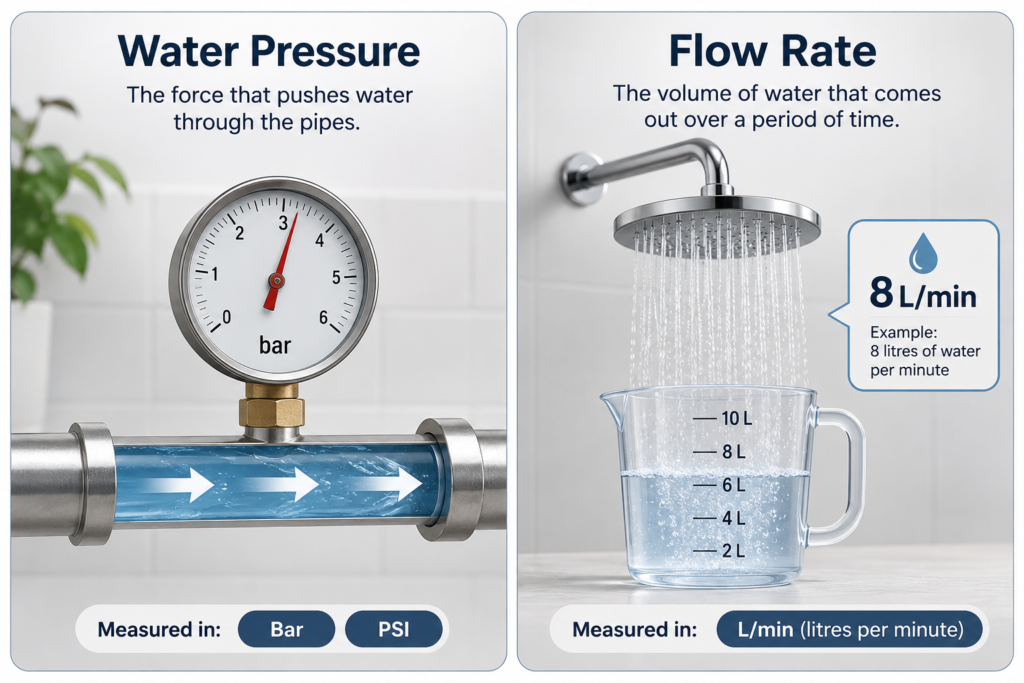
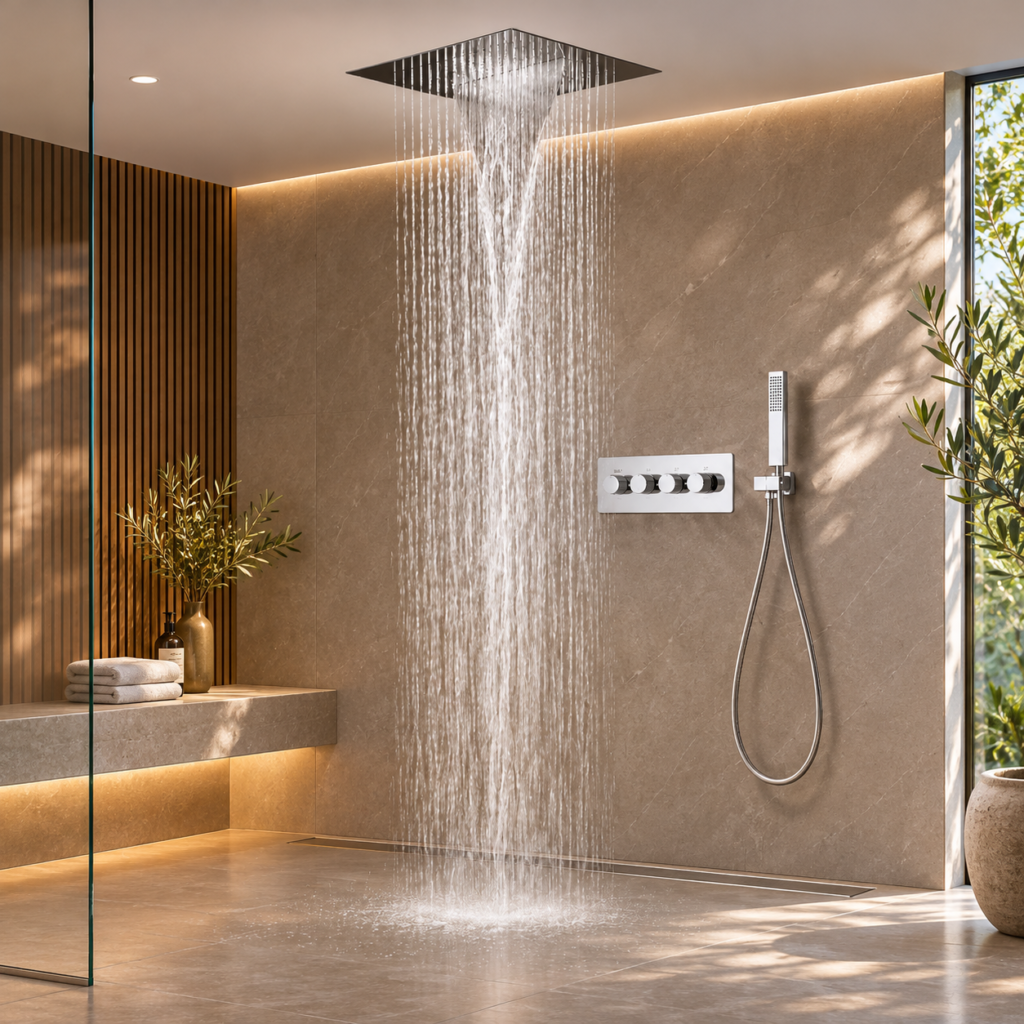
Difference between water pressure and flow rate in a shower system

2. How Is Water Pressure Measured?

Water pressure is commonly measured in bar or PSI.

A pressure gauge can be connected to a suitable test point in the plumbing system to measure pressure. However, there is an important distinction between two types of pressure measurement:

  • Static pressure: The pressure when water is not flowing.
  • Dynamic pressure: The pressure while water is flowing through the system.

Dynamic pressure is particularly relevant when assessing shower performance because the shower is operating while water is being used.

A system may show a reasonable static pressure but experience a significant pressure drop when the shower is running. This can happen when pipes, valves or other parts of the plumbing system restrict the available water supply.

For this reason, measuring pressure only when all taps are closed may not give a complete picture of how your shower performs.

3. What Is Flow Rate and How Can You Measure It at Home?

Flow rate is one of the most useful measurements when investigating shower performance.

You can estimate your shower’s flow rate with a simple test using a container with a known volume and a timer.

The simple bucket test

  1. Take a container with a clearly marked volume, such as a 10-litre bucket.
  2. Place it under the shower head.
  3. Turn on the shower using the normal setting you would use.
  4. Collect water for a measured period, such as 30 seconds.
  5. Measure how much water has collected.

To calculate the flow rate, use this formula:

Flow rate (L/min) = Water collected (litres) ÷ Time (seconds) × 60

For example, if you collect 4 litres in 30 seconds:

4 ÷ 30 × 60 = 8 L/min

This means the shower is delivering approximately 8 litres per minute under the conditions of your test.

Remember that this test measures the actual water output at the shower head. It does not measure water pressure.

For a more accurate assessment, especially when comparing hot and cold water performance or investigating a suspected plumbing fault, a qualified plumber can carry out additional measurements.
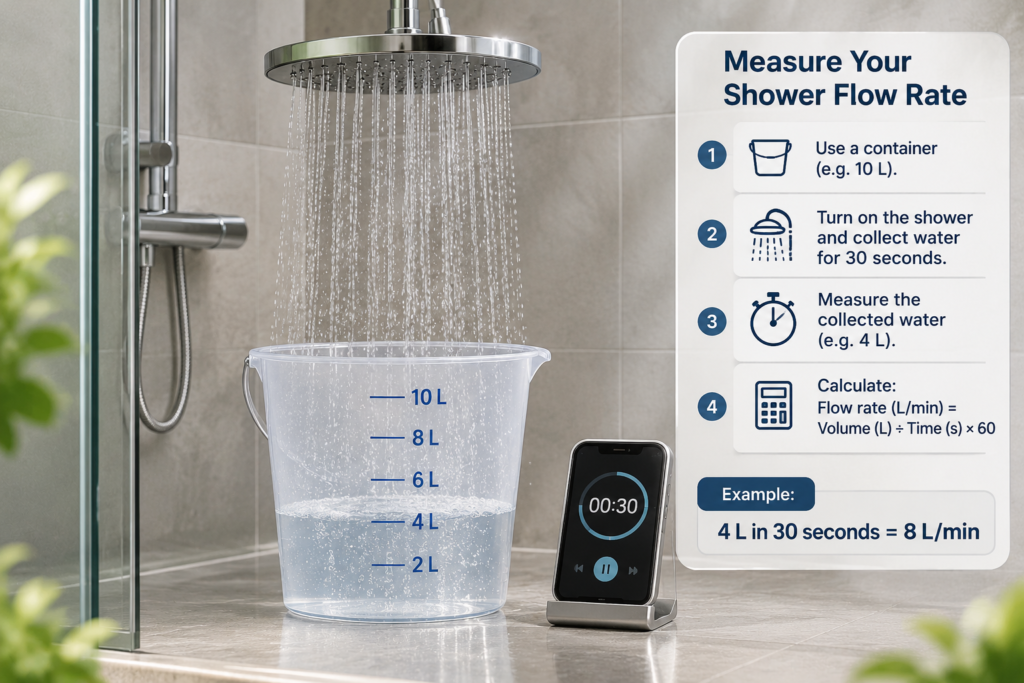
Measuring shower flow rate using a bucket and timer

4. What Causes Low Water Pressure or Poor Shower Flow?

If your shower does not perform as expected, several factors may be responsible. It is important to identify the cause before replacing the shower head or changing the plumbing system.

Limescale and blocked shower nozzles

Mineral deposits can accumulate around shower nozzles over time, particularly in areas with hard water. This can partially block the openings and affect the spray pattern and water distribution.

Cleaning the shower head according to the manufacturer’s instructions may improve its performance.

Blocked filters or flow restrictors

Some shower fittings contain filters or flow regulators. Debris, sediment or mineral deposits can affect these components and reduce water output.

Flow regulators are not necessarily a problem. They are often designed to control water consumption while maintaining the intended spray performance.

Restricted pipes or valves

Partially closed isolation valves, narrow or obstructed pipes, and other restrictions can affect the amount of water reaching the shower.

Problems with the water supply

The pressure available from the building’s supply system may vary. In some properties, pressure can also change when several water outlets are used simultaneously.

Incompatible shower fittings

A shower head or mixer may have specific minimum pressure or flow requirements. If the existing plumbing system cannot meet those requirements, the shower may not perform as intended.

Before changing equipment, check the manufacturer’s technical specifications and the conditions of the existing installation.

5. Does a Larger Shower Head Need More Water Pressure?

Not necessarily.

A common assumption is that a larger shower head always needs higher water pressure. In reality, performance depends on several factors, including the shower head’s internal design, nozzle arrangement, flow regulator and available water supply.

A large rain shower may distribute water across a wider surface. This does not automatically mean it needs a higher flow rate than every smaller shower head.

Some shower heads are specifically designed to deliver an effective spray at controlled flow rates. Others may require particular operating conditions to achieve their intended performance.

When choosing a shower head, consider:

  • The manufacturer’s minimum and recommended operating pressure.
  • The specified flow rate and the pressure at which it was measured.
  • The size and design of the spray surface.
  • Whether the product includes a flow regulator.
  • Whether your plumbing system can supply the required water.

A larger shower head should therefore be selected based on its technical specifications and the available water supply, rather than appearance alone.

6. How Can You Improve Shower Performance?

If your shower feels weak, start with simple checks before considering expensive changes.

1. Clean the shower head

Check the nozzles for limescale or debris. Follow the manufacturer’s cleaning instructions to avoid damaging the finish or internal components.

2. Check the hose and connections

For a hand shower, inspect the flexible hose for kinks, damage or obstructions. Check that the connections are properly fitted.

3. Inspect accessible filters

Some shower fittings have small inlet filters that can collect debris. These should be checked and cleaned according to the product instructions.

4. Check the water supply

If several taps or showers experience reduced flow, the issue may be related to the building’s water supply or plumbing system rather than the shower head itself.

5. Ask a qualified plumber to assess the system

If the problem continues, a plumber can measure static and dynamic pressure, check the available flow rate and identify restrictions in the installation.

Installing a pump is not automatically the right solution. The cause of the problem, the type of water supply and the plumbing arrangement should be assessed first.

7. How to Choose a Shower Head Based on Pressure and Flow Rate

A good shower head should be compatible with the water supply available in your home.

Before making a purchase, check the technical information provided by the manufacturer. Pay particular attention to the minimum operating pressure and the flow rate at the stated test pressure.

If your property has limited water pressure, look for a product designed to operate under those conditions. If your water supply is more generous, you may have a wider choice of shower head designs and configurations.

It is also worth remembering that a well-designed shower is not necessarily one that uses the most water. The aim is to achieve a comfortable and consistent spray while using water responsibly.

For more guidance on choosing between different shower head designs, read our article Rain Shower vs Hand Shower: Which One Is Right for Your Bathroom?.

You can also explore the Saniterra Shower Head collection when comparing available designs.

Frequently Asked Questions

What is the difference between water pressure and flow rate?

Water pressure is the force that pushes water through the plumbing system. Flow rate measures the volume of water delivered over time, usually in litres per minute (L/min).

What is a good flow rate for a shower?

There is no single ideal flow rate for every shower. The appropriate value depends on the shower head design, its flow regulator, the available pressure and the user’s preferences. Always check the manufacturer’s specifications.

Can high water pressure cause problems?

Yes. Excessively high pressure can place additional stress on plumbing components and fittings. A suitable pressure-reducing valve may be needed if the system exceeds the recommended operating limits.

Does a rain shower need more pressure than a hand shower?

Not necessarily. Performance depends on the design, flow requirements and operating conditions of each product. Check the manufacturer’s specifications rather than relying on the shower head type alone.

How can I check my shower's flow rate?

You can estimate it using a container with a known volume and a timer. Collect water for a measured period and calculate the litres per minute. This measures flow rate, not pressure.

Understanding water pressure and flow rate makes it easier to identify why a shower may not perform as expected.

Although the two measurements are related, they describe different aspects of the water supply. Pressure tells you how strongly water is being pushed through the system, while flow rate tells you how much water is delivered.

Before replacing your shower head or investing in plumbing changes, check the actual flow, inspect the fittings and consider the technical requirements of the products you intend to use.

The best shower experience comes from choosing compatible fittings and ensuring that the plumbing system can support their intended performance.
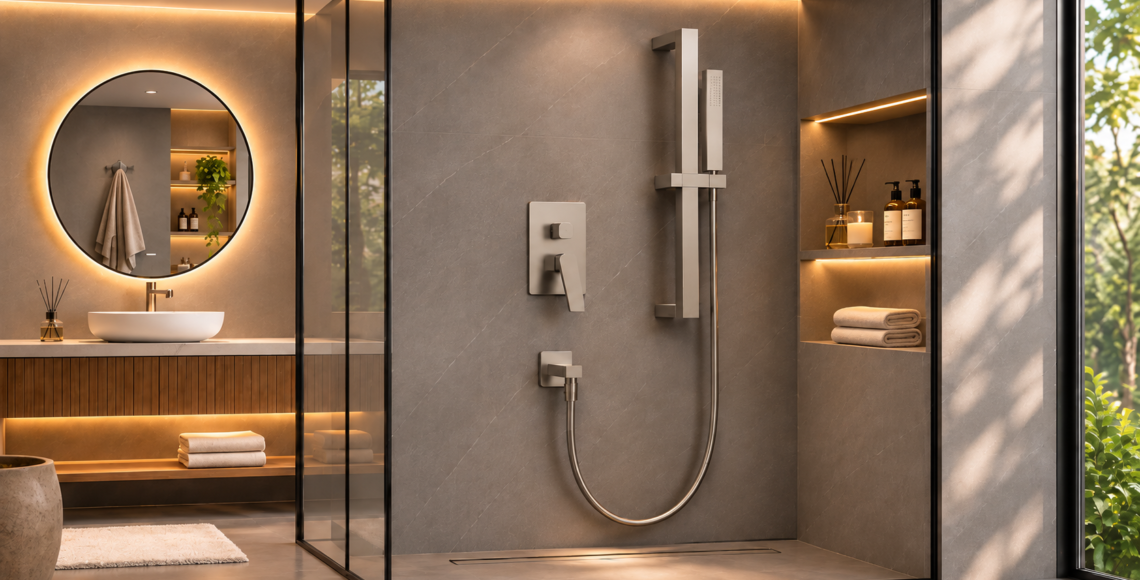
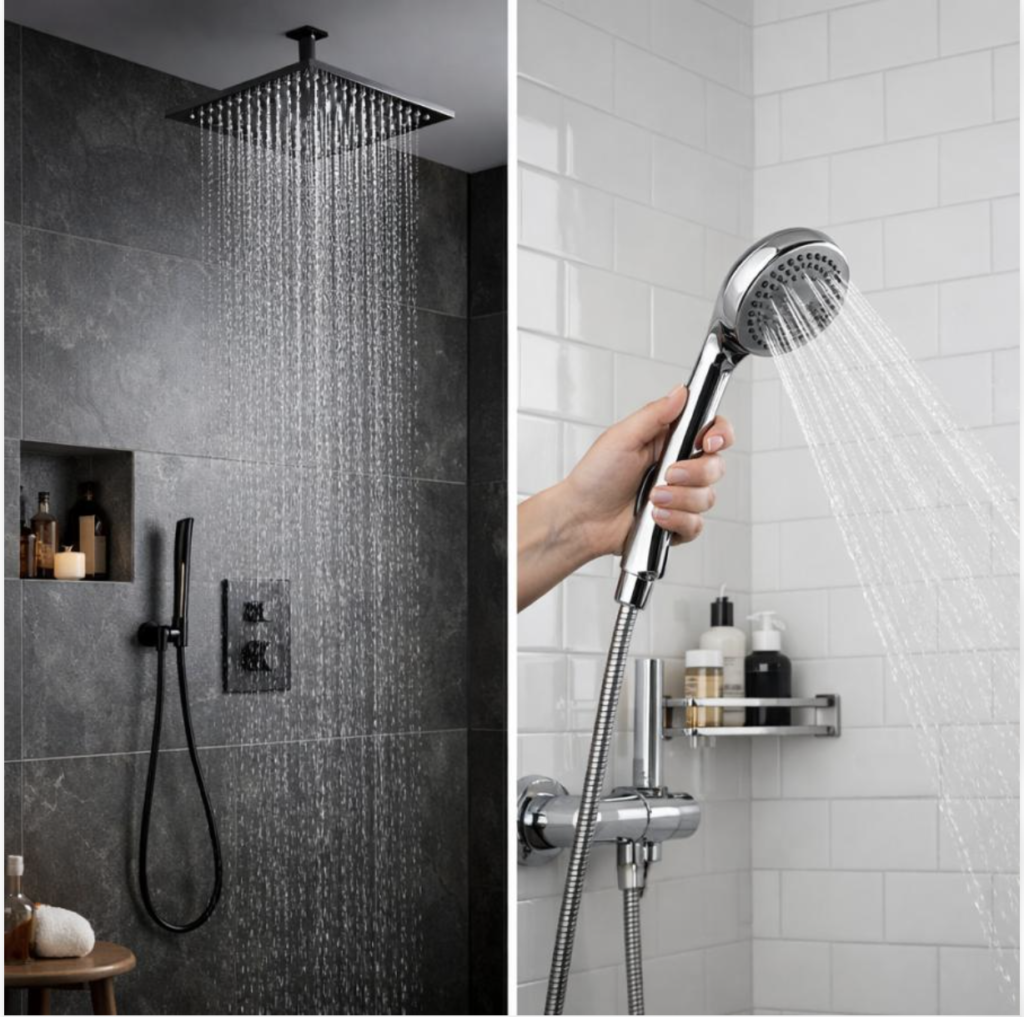
Rain Shower vs Hand Shower: Which One Is Right for Your Bathroom?

Choosing the right shower setup can make a noticeable difference to your daily routine. Two popular options are the rain shower and the hand shower. Both provide a comfortable showering experience, but they serve different purposes and offer distinct advantages.

A rain shower is designed to create a relaxing, overhead water flow, while a hand shower offers greater control and flexibility. So, which one is better for your bathroom?

The answer depends on how you use your shower, the space available, and the experience you want to create. Let’s compare the two.

1. What Is a Rain Shower?

A rain shower, also known as an overhead shower, is designed to distribute water from above, creating a broad spray that resembles natural rainfall.

It is usually installed on the ceiling or on a wall-mounted arm positioned high above the user. Rain showers are available in different shapes and sizes, making them suitable for a variety of bathroom styles.

Main advantages of a rain shower:

  • Relaxing experience: The overhead water flow creates a calm and comfortable showering environment.
  • Wide coverage: Its larger spray area can distribute water over a wider part of the body.
  • Modern appearance: Its clean design works particularly well in contemporary bathrooms.
  • Convenient everyday use: Once positioned correctly, it allows you to shower without holding or adjusting the shower head.

However, a rain shower is fixed in position, so directing water towards a specific area can be more difficult.

2. What Is a Hand Shower?

A hand shower is a shower head connected to a flexible hose. It sits in a holder or on a shower rail and can be removed whenever you need to direct the water manually.

Unlike a fixed overhead shower, a hand shower allows you to control the direction of the water. This makes it a practical choice for everyday routines and different cleaning tasks.

Main advantages of a hand shower:

  • Greater flexibility: You can direct the water exactly where you need it.
  • Easier rinsing: It is convenient for rinsing shampoo, washing specific areas and reaching places that are harder to reach with an overhead shower.
  • Practical cleaning: You can use it to rinse shower walls, floors and other parts of the shower area.
  • Adjustable positioning: When installed on a suitable shower rail, the holder can often be adjusted to different heights.

A hand shower may not provide the same broad, overhead experience as a rain shower, but its versatility makes it highly practical.

3. Rain Shower vs Hand Shower: Key Differences

Although both are designed for the same basic purpose, their everyday use is quite different.

Feature Rain Shower Hand Shower
Water direction From above Manually directed
Coverage Generally wider and more spread out More focused and adjustable
Shower experience Relaxing, overhead flow Flexible and practical
Position Fixed Removable from holder
Rinsing hair Convenient, depending on installation Easy to direct
Cleaning the shower Less convenient More convenient
Design Often creates a minimalist look Offers practical flexibility
Rain shower and hand shower compared in modern bathroom settings
Rain shower vs hand shower

Neither option is automatically better. A rain shower prioritises the overall showering experience, while a hand shower prioritises control and convenience.

4. Which One Is Better for Everyday Use?

The best option depends on your daily habits and personal preferences.

A rain shower can be a good choice if you enjoy a relaxing shower with water falling from above. It is particularly appealing for people who prefer a simple, uncluttered shower arrangement.

A hand shower is often more practical when flexibility matters. For example, it can make rinsing hair easier, help with cleaning the shower area and allow you to direct water towards specific parts of the body.

It can also be useful in households where different people have different showering preferences.

If you are designing a bathroom for everyday family use, considering these practical differences is just as important as choosing the appearance of the shower fittings.

5. Can You Have Both a Rain Shower and a Hand Shower?

Yes. In fact, combining both is often one of the most practical solutions for a modern bathroom.

A combination shower system usually includes an overhead rain shower and a separate hand shower, allowing you to switch between the two according to your needs.

For example:

  • Use the rain shower when you want a relaxing, hands-free shower.
  • Use the hand shower when rinsing your hair or directing water to a specific area.
  • Use the hand shower to rinse the shower enclosure after cleaning.

This arrangement combines the comfort of an overhead shower with the flexibility of a hand shower.

Before choosing a combination system, check that the shower mixer or diverter is compatible with the number of water outlets you intend to use. The installation must also provide suitable water pressure and flow for the selected fittings.

Combined rain shower and hand shower system in a modern bathroom
Combined rain shower and hand shower system

6. What About Water Consumption?

One common question is whether a rain shower uses more water than a hand shower.

The answer is not determined by the shower type alone. Water consumption depends on factors such as the flow rate of the shower head, how long you shower and whether the product has water-saving features.

A large rain shower may have a higher flow rate than some smaller shower heads, but this is not always the case. Similarly, using a hand shower does not automatically mean using less water.

To make a more informed choice, check the manufacturer’s stated flow rate, usually measured in litres per minute (L/min).

You can estimate water consumption using this simple formula:

Water consumption = Flow rate × Shower duration

For example, a shower head with a flow rate of 9 litres per minute uses approximately 90 litres during a 10-minute shower.

Choosing a suitable flow rate and keeping shower time reasonable can help manage water consumption, regardless of the shower type.

7. Which One Should You Choose?

There is no single answer that suits every bathroom. Your choice should reflect your priorities.

  • Choose a rain shower if you prefer a relaxing overhead experience, wide water coverage and a clean, contemporary look.
  • Choose a hand shower if flexibility, targeted rinsing and practical everyday use are more important to you.
  • Choose both if you want the benefits of an overhead shower and the convenience of a removable hand shower.

Ultimately, the right shower arrangement is the one that makes your bathroom more comfortable and functional for the people who use it.

Frequently Asked Questions

Is a rain shower better than a hand shower?

Not necessarily. A rain shower offers a relaxing overhead experience, while a hand shower provides more control and flexibility. The better option depends on your preferences and daily needs.

Can a rain shower be used with a hand shower?

Yes. Many shower systems are designed to include both. A compatible mixer or diverter allows you to switch between the overhead shower and the hand shower.

Does a rain shower use more water?

Not always. Water consumption depends mainly on the product’s flow rate and how long it is used, rather than simply whether it is a rain shower or a hand shower.

Is a hand shower practical for a small bathroom?

Yes. A hand shower can be a practical option in smaller bathrooms because it offers flexible water direction and does not require a large overhead shower head.

Can I install a rain shower without a ceiling connection?

Yes. Some rain showers can be installed using a suitable wall-mounted shower arm. The correct installation depends on the product design and the bathroom’s existing plumbing.

Rain showers and hand showers offer different advantages, and choosing between them is about more than appearance. A rain shower can create a relaxing, overhead experience, while a hand shower provides the flexibility needed for everyday tasks.

If your bathroom layout and budget allow it, combining both can give you a more versatile showering experience without having to choose one over the other.

Modern rainfall shower head in a contemporary bathroom

How to Choose the Right Shower Head for Your Bathroom

Choosing the right shower head can make a bigger difference to your daily bathroom experience than you might expect. The right design can improve comfort, complement your bathroom style, and help you make better use of water.

However, with so many options available, it is not always easy to know which type is right for your space.

Should you choose a rainfall shower head, a standard wall-mounted model, or a handheld shower? What about size, water pressure, and installation?

Here is what you should consider before choosing a shower head for your bathroom.

1. Understand the Different Types of Shower Heads

The first step is understanding the main types of shower heads and how they differ.

Rainfall Shower Heads

Rainfall shower heads are usually larger and installed on the ceiling or high on the wall. They distribute water over a wider area, creating a gentle, rain-like shower experience.

They are particularly popular in contemporary bathrooms, where a minimalist and relaxing atmosphere is desired.

Fixed Wall-Mounted Shower Heads

These shower heads are attached to a wall-mounted arm. They are available in different shapes and sizes, including round, square, and rectangular designs.

They are a practical choice for bathrooms where ceiling installation is not possible or where a more traditional shower arrangement is preferred.

Hand Shower 

Hand shower (Handheld shower heads) are connected to a flexible hose and can be removed from their holder during use.

They offer greater flexibility and are useful for rinsing, cleaning the shower area, and making bathing easier for children or people with limited mobility.

Combination Shower Systems

Some shower systems combine an overhead shower head with a handheld shower. This arrangement gives you the flexibility to enjoy both a rainfall-style shower and a more targeted water flow.

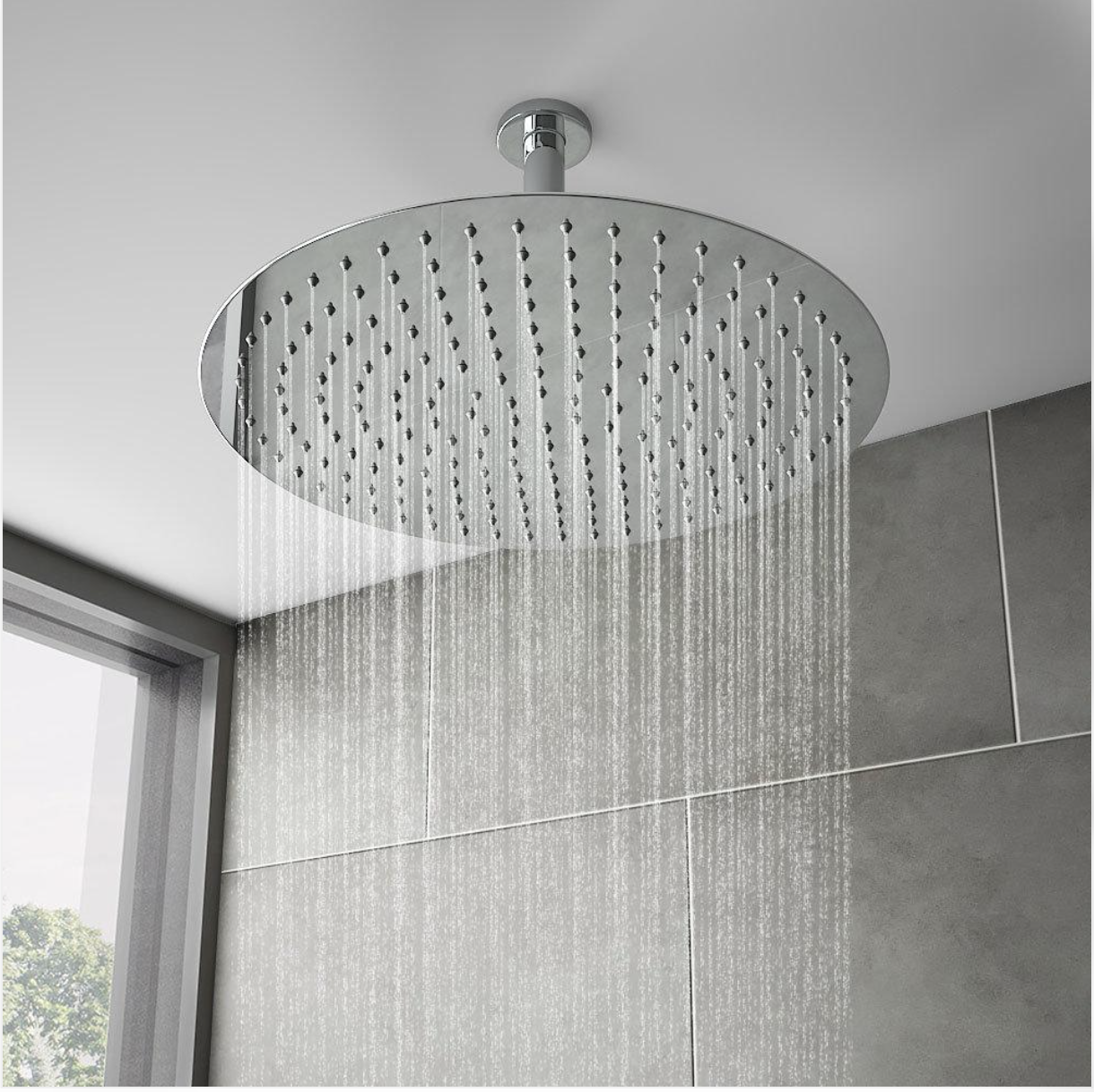
Rainfall Shower Head
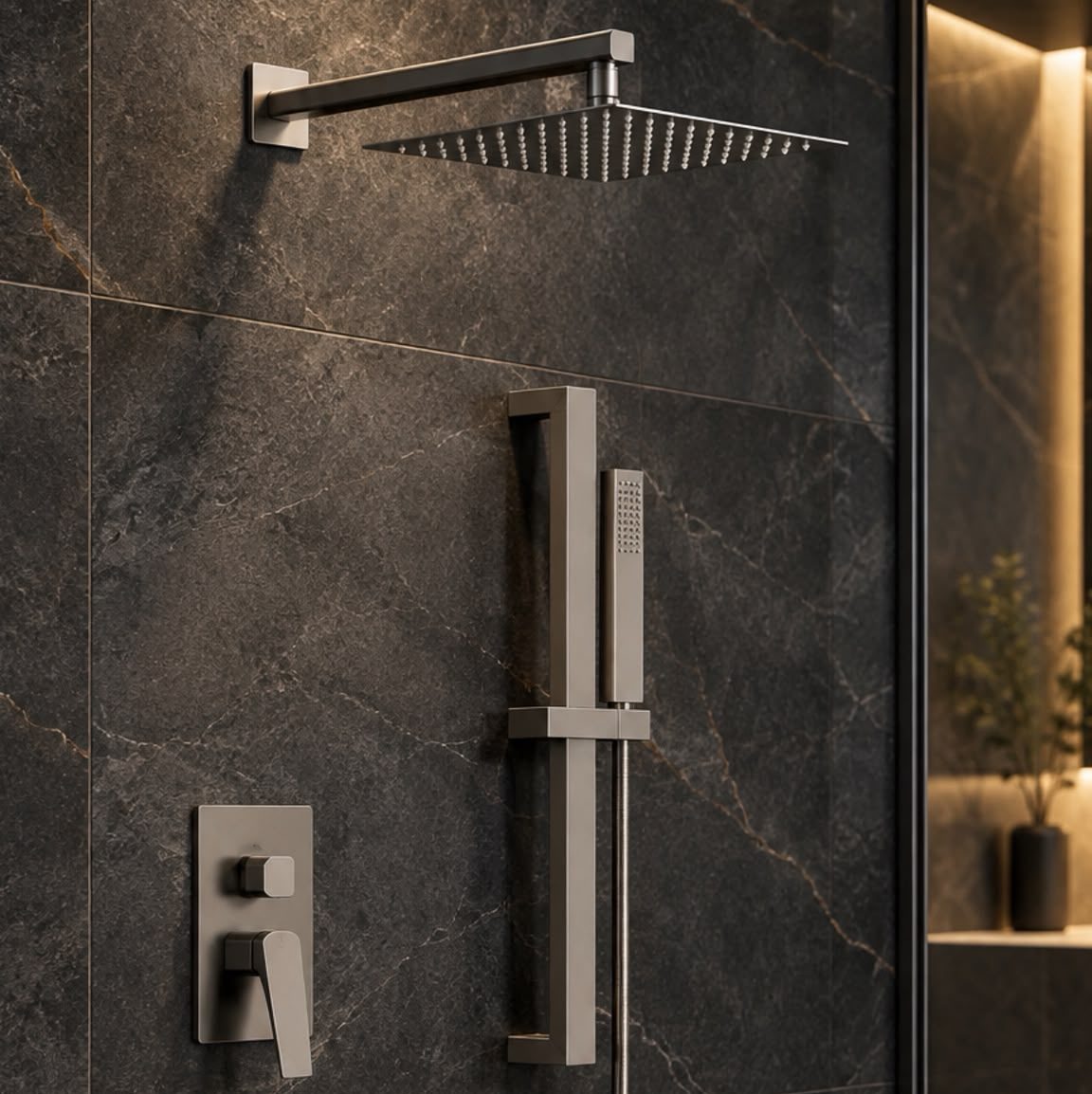
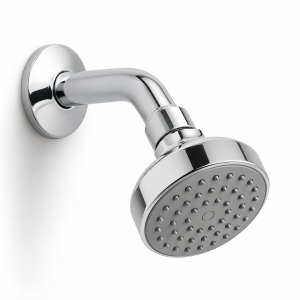
Wall Mounted Shower Head
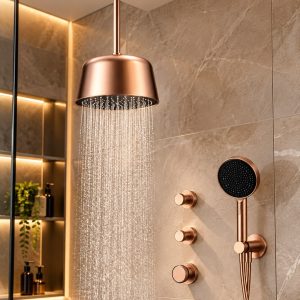
Ceiling-Mounted Shower Head
Ceiling- Mounted Shower Head
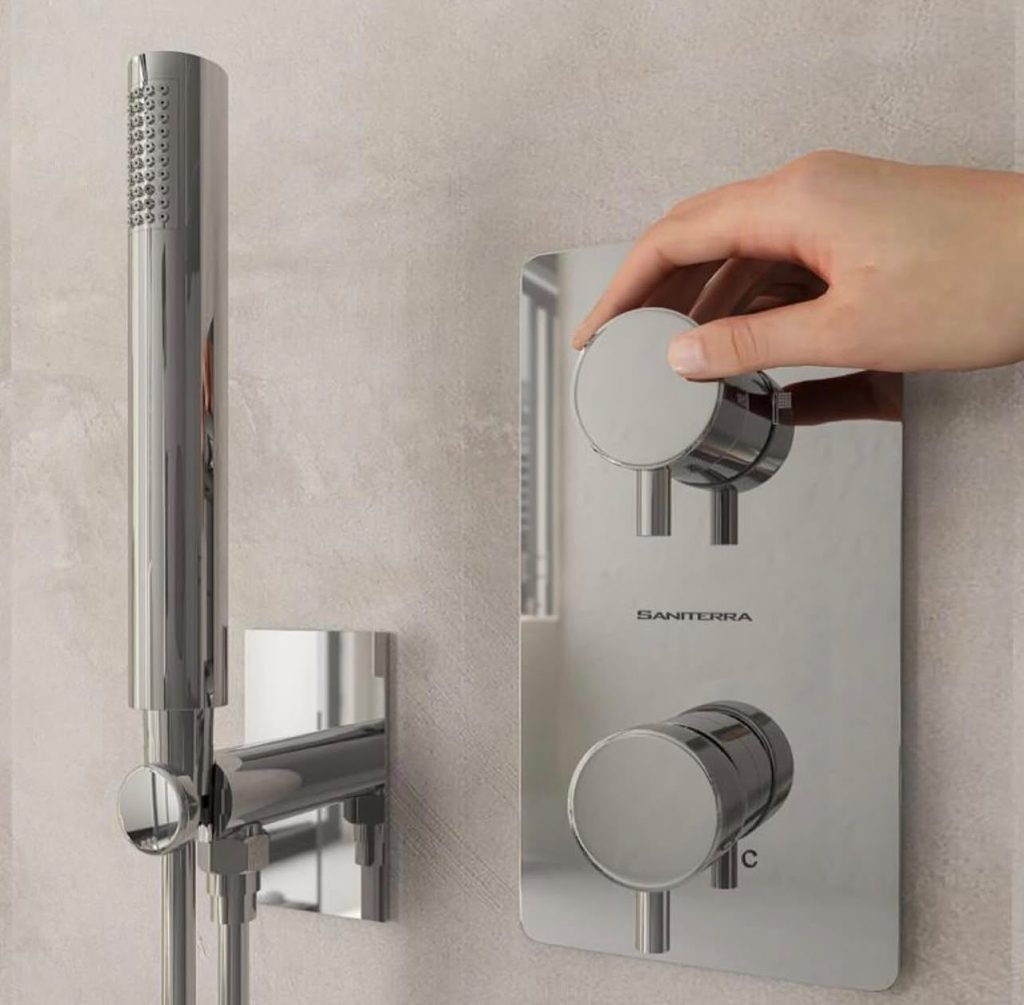
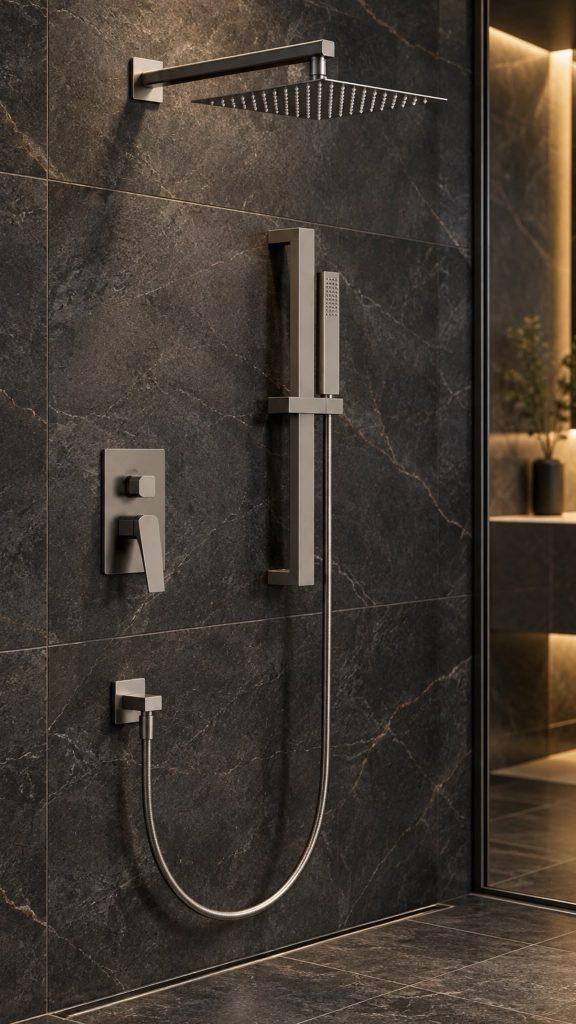
2-Way Concealed Shower Mixer with Integrated Hand Shower
Combination Shower Systems
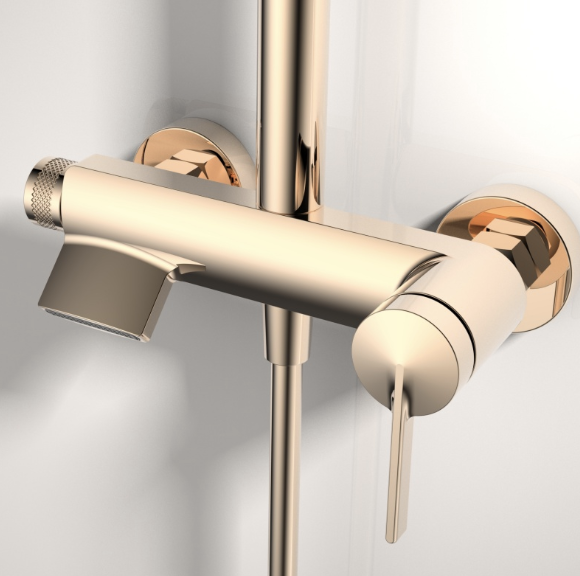
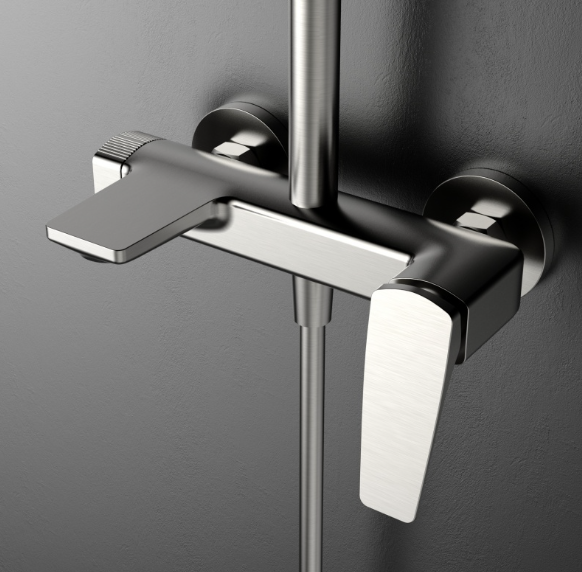
Saniterra Concealed Shower Mixer tap

2. Rainfall vs Standard Shower Heads: Which Is Better?

Rainfall and standard shower heads offer different showering experiences.

A rainfall model generally has a wider spray area and is designed to distribute water over a larger part of the body. A standard shower head often produces a more focused spray, which can be useful for everyday rinsing.

Neither option is automatically better. The right choice depends on your preferences, water pressure, bathroom layout, and the shower experience you want.

If you prefer a spacious, relaxing shower, a larger overhead model may be a good choice. If you want a more practical and adaptable arrangement, a standard wall-mounted shower head or a combination system may suit you better.

Rainfall Shower Head with Integrated Central Massage Jets

3. Consider Water Pressure and Flow Rate

Water pressure is one of the most important factors when choosing a shower head.

A large shower head does not necessarily require more water, but its performance depends on the available water pressure, the product design, and the flow rate.

If your home has low water pressure, choosing a shower head designed to work with your plumbing conditions is particularly important.

Before purchasing, consider:

  • The water pressure available in your home.
  • The shower head’s recommended operating pressure.
  • Its flow rate, usually measured in litres per minute (L/min).
  • Whether your plumbing system can support the selected shower arrangement.

A shower head with a higher flow rate is not necessarily more comfortable. Spray pattern and nozzle design also influence the overall experience.

If you are unsure about your water pressure, ask a plumber to check it before choosing a large overhead shower.

4. Choose the Right Size and Shape

Shower heads are available in different sizes and shapes, and their dimensions can influence both appearance and practicality.

Larger shower heads provide a wider spray area, but they also need to be suitable for the available water supply and shower space.

When choosing a size, consider:

  • The dimensions of your shower enclosure.
  • The height of the ceiling or wall installation.
  • The position of the shower arm.
  • The available water pressure.
  • The overall proportions of your bathroom.

Round shower heads often create a softer, more balanced appearance, while square and rectangular designs can complement bathrooms with clean, geometric lines.

The best choice is one that combines comfortable water coverage with the proportions of your shower area.

Saniterra 2 way concealed bath mixer tap with Rainfull shower head & hand shower

5. Fixed or Handheld: Which Shower Head Suits Your Needs?

A fixed shower head offers a simple and clean installation, while a handheld model provides more flexibility.

Your choice may depend on how you use your shower every day.

A fixed shower head is suitable if you prefer a simple setup with a consistent water direction. A handheld shower is particularly practical for rinsing, cleaning, and reaching different areas of the body.

For greater flexibility, you can choose a shower system that includes both options.

If accessibility and ease of use are important, consider the position of the shower rail and the height adjustment of the handheld shower.

6. Pay Attention to Material and Finish

A shower head should not only perform well but also complement the other bathroom fittings.

Chrome remains a popular choice because of its bright, reflective appearance. Stainless steel offers a contemporary look, while other finishes can create a more distinctive bathroom design.

When choosing a finish, consider the shower mixer, shower arm, accessories, and other visible fittings.

Using coordinated finishes can create a more consistent appearance throughout the bathroom.

For example, a chrome shower head can complement chrome mixers and accessories, while graphite or gold finishes can create a stronger visual statement.

Saniterra Concealed rose gold bath mixer Faucet
Saniterra Bath Mixer Tap

7. Cleaning and Maintenance Matter

Regular cleaning helps maintain the appearance and performance of your shower head.

Over time, limescale and mineral deposits can build up around the spray nozzles, particularly in areas with hard water. This can affect the water distribution and make some spray outlets partially blocked.

To keep your shower head in good condition:

  • Clean the nozzles regularly according to the manufacturer’s instructions.
  • Use a suitable bathroom cleaning product.
  • Avoid abrasive materials that could damage the finish.
  • Check for limescale around the spray outlets.
  • Inspect the shower arm and connections for signs of leakage.
  • Some shower heads feature anti-limescale or easy-clean nozzles, which can make routine maintenance easier.

Always follow the product manufacturer’s cleaning recommendations, especially for special finishes.

8. Check Installation and Compatibility

Before purchasing a new shower head, check that it is compatible with your existing shower installation.

Some models require a wall-mounted shower arm, while others are designed for ceiling installation. You should also check the connection size, water pressure requirements, and whether the existing mixer can supply the selected shower system.

If you are planning a bathroom renovation, it is a good opportunity to consider the complete shower arrangement, including the shower head, shower arm, mixer, handheld shower, and rail.

A qualified installer can help confirm compatibility and ensure the system is installed correctly.

Frequently Asked Questions

What is the best type of shower head for everyday use?

There is no single best option for every bathroom. Fixed shower heads are practical for everyday use, rainfall models offer a wider spray experience, and handheld showers provide greater flexibility.

Does a larger shower head use more water?

Not necessarily. Water consumption depends on the flow rate and operating time, not just the physical size of the shower head. Always check the manufacturer’s flow-rate information.

Are rainfall shower heads suitable for low water pressure?

It depends on the model and your plumbing system. Larger overhead shower heads may need suitable pressure and flow to perform as intended. Check the manufacturer’s specifications before purchasing.

How often should I clean my shower head?

Regular cleaning is recommended, particularly in areas with hard water. The frequency depends on water quality and the manufacturer’s maintenance instructions.

Can I replace my shower head without replacing the mixer?

In many installations, yes. However, you should check the connection type, water pressure requirements, and compatibility with your existing shower mixer and pipework.

Choosing the right shower head is about balancing comfort, design, water performance, and practicality.

Whether you prefer a rainfall shower, a classic wall-mounted model, or a hand shower option, the best choice is one that suits your bathroom layout and daily needs.

Take the time to check the size, flow rate, material, finish, and installation requirements before making your decision.

A well-chosen shower head can help create a more comfortable and enjoyable bathroom experience for years to come.

Common Concealed Cistern Problems

Common Concealed Cistern Problems: Causes and How to Fix Them

A concealed cistern creates a clean, modern bathroom by hiding the toilet tank behind a wall or inside a supporting frame. However, like any toilet flushing system, it can develop problems over time.

You might notice that the toilet keeps running, the flush becomes weaker, the cistern takes too long to refill, or water starts leaking. The good news is that almost concealed cistern all problems are caused by internal components that can be inspected and repaired without removing the entire toilet or opening the wall.

In this guide, we explain the most common concealed cistern problems, their possible causes, and when to call a plumber.

1. The Toilet Keeps Running After Flushing

One of the most common concealed cistern problems is a toilet that continues running after the flush cycle has finished.

Possible causes:

  • A worn or damaged flush valve seal.
  • A flush valve that does not close properly.
  • A filling valve that fails to stop when the cistern is full.
  • Debris or limescale affecting the valve mechanism.

How to fix it:

First, observe whether the water continues running into the toilet bowl or whether the cistern keeps refilling intermittently. These symptoms can help identify the likely cause.

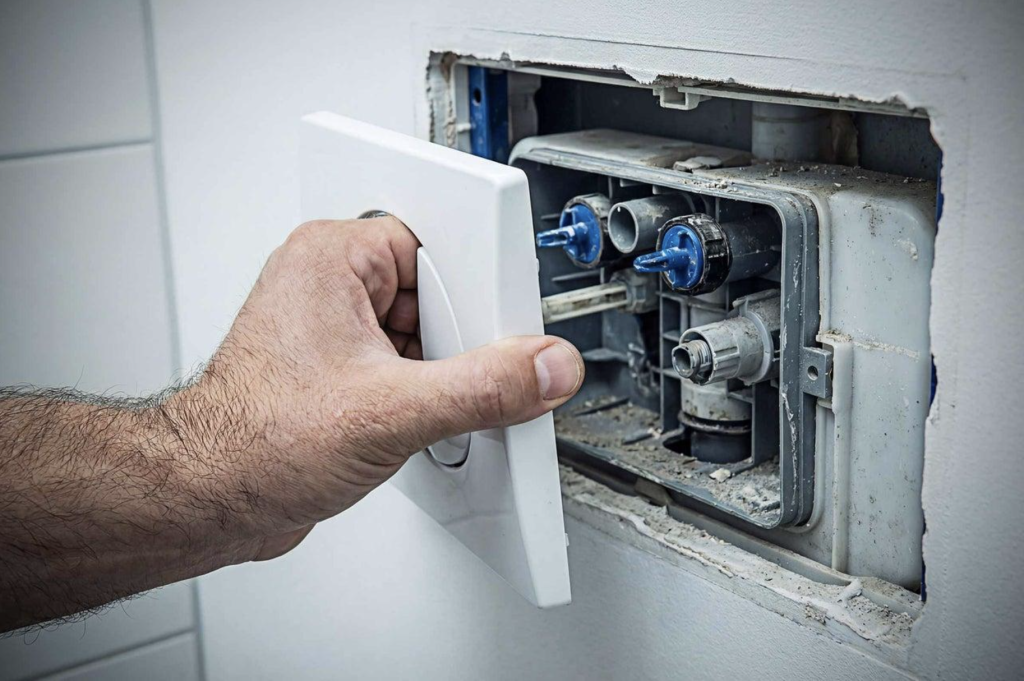
A plumber can inspect the flush valve, seals, and filling mechanism through the cistern’s service opening, which is often accessible behind the flush plate. Cleaning or replacing a faulty component may solve the problem.

If the toilet continues running, it is worth addressing promptly because unnecessary water consumption can add up over time.

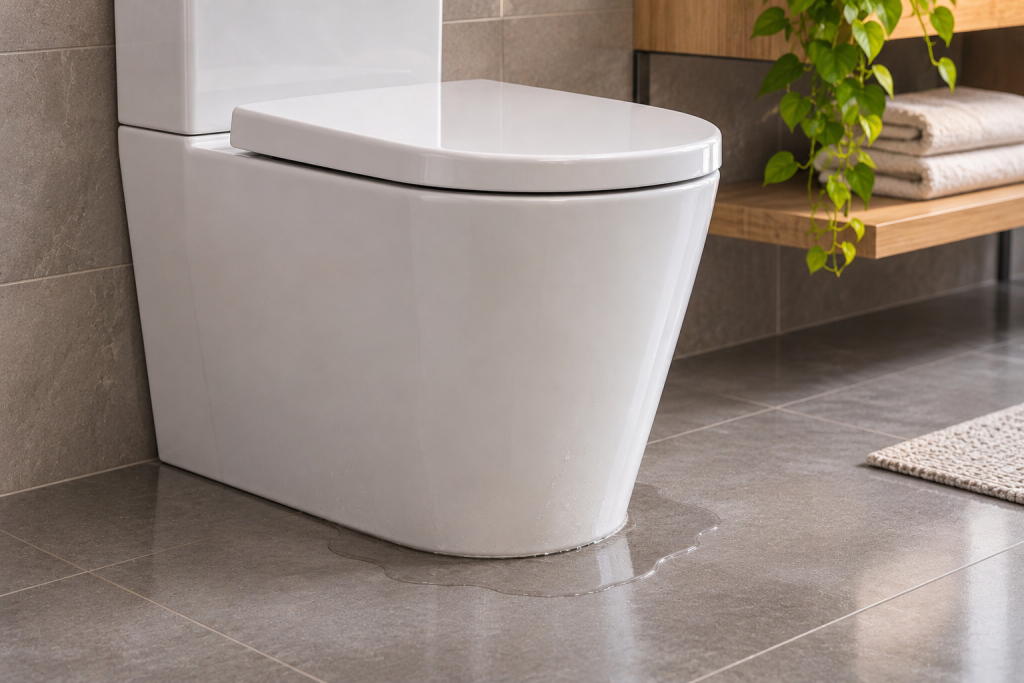
Water leaking into the toilet bowl
The Toilet Keeps Running After Flushing; how to fixe it

2. The Cistern Takes Too Long to Refill

After flushing, the cistern should refill and be ready for the next use. If this process takes unusually long, the problem may lie with the water supply or filling mechanism.

Possible causes:

  • A partially closed water supply valve.
  • Low water pressure.
  • A blocked inlet filter.
  • Limescale or debris inside the filling valve.
  • A worn or faulty filling valve.

How to fix it:

Check whether other taps in the bathroom have normal water flow. If they do, the issue may be specific to the cistern.

A plumber can inspect the supply valve, inlet filter, and filling mechanism. Depending on the cause, cleaning the filter or replacing the filling valve may restore normal refill times.

Avoid adjusting concealed components without checking the manufacturer’s instructions, particularly if access is limited.

3. The Flush Is Weak or Does Not Clear the Bowl Properly

A weak flush can leave waste behind or require repeated flushing. Although the concealed cistern may be responsible, the problem is not always inside the tank.

Possible causes:

  • An incorrect flush-volume setting.
  • A flush valve that does not open fully.
  • Restricted water flow through the toilet’s flushing channels.
  • A partial blockage in the toilet trap or waste pipe.
  • A mismatch between the cistern and toilet specifications.

How to fix it:

First, check whether the problem happens with every flush. If the water level and refill cycle appear normal but the bowl still does not clear properly, the toilet or drainage system may need inspection.

A plumber can check the flush mechanism, the flush-volume settings, and the waste pipe for obstructions. Always follow the manufacturer’s specified settings rather than increasing the flush volume without checking compatibility.

If the problem began after a new toilet was installed, confirm that the toilet and concealed cistern are compatible.

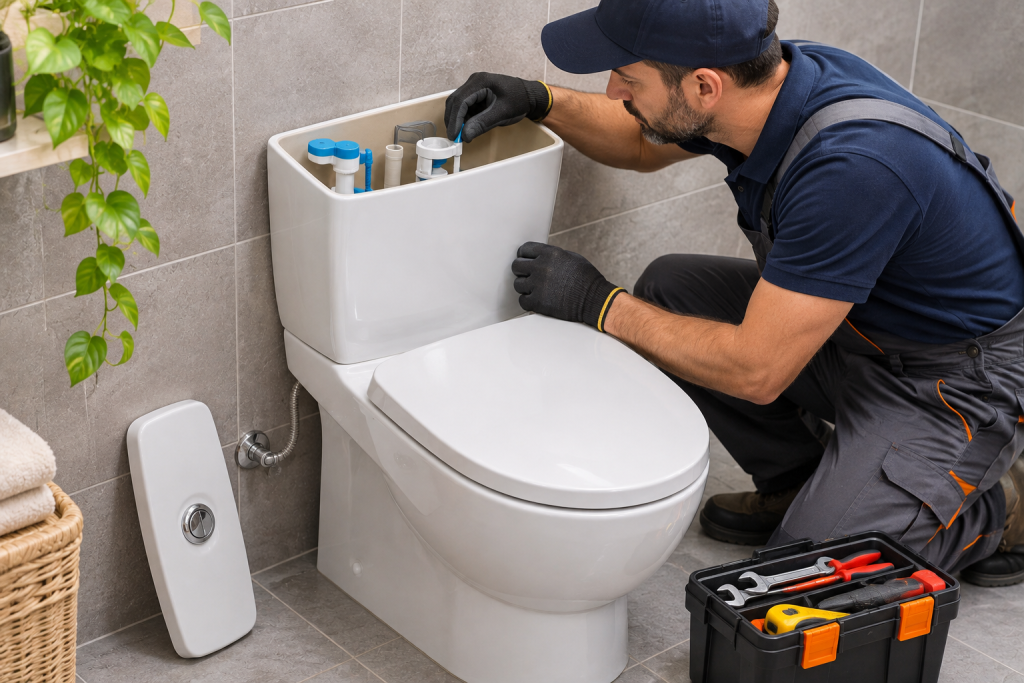
Plumber inspecting concealed cistern components to diagnose a weak toilet flush
inspecting concealed cistern components to diagnose a weak toilet flush

4. Water Leaks Around the Toilet or Inside the Wall

Water around a wall-hung toilet or damp patches on a nearby wall should never be ignored.

A concealed cistern leak can be harder to identify than a leak from an exposed toilet tank because some components and connections are hidden behind the wall.

Possible causes:

  • A leaking water supply connection.
  • A damaged seal or flush pipe connection.
  • A faulty internal valve.
  • A leak from the toilet’s waste connection.
  • Condensation on cold surfaces, which can sometimes be mistaken for a leak.

How to fix it:

Look for recurring moisture, unexplained puddles, damp patches, or water marks around the toilet and nearby wall.

If you suspect an active leak, shut off the cistern’s water supply using the designated isolation valve if it is safely accessible, and arrange a professional inspection. Do not remove tiles or open the wall before the source of the leak has been identified.

Many concealed cisterns are designed to allow access to serviceable components through the flush plate opening. However, the exact repair method depends on the installation and the location of the leak.

Important: If water is reaching electrical fittings or spreading rapidly, avoid the affected area and seek urgent professional assistance.

5. The Flush Button Is Stiff, Stuck, or Does Not Work

The flush button is the part of a concealed cistern that users interact with every day. If it becomes difficult to press, sticks in place, or fails to activate the flush, the problem may be mechanical.

Possible causes:

  • Misaligned button rods or operating components.
  • A loose or incorrectly installed flush plate.
  • Dirt or limescale affecting moving parts.
  • A damaged pneumatic hose or actuator, depending on the system.
  • A problem with the flush valve itself.

How to fix it:

Check whether the flush plate appears loose or misaligned. Do not force a stuck button, as this may damage the operating mechanism.

A plumber can remove the flush plate according to the manufacturer’s instructions and inspect the actuator, rods, or pneumatic connections. Some faults can be corrected by adjusting or replacing a small component rather than replacing the complete cistern.

When choosing replacement parts, confirm that they are compatible with the cistern model.

6. The Cistern Makes Unusual Noises

A concealed cistern may produce some noise while filling after a flush. However, persistent whistling, banging, or unusually loud filling sounds can indicate a problem.

Possible causes:

  • A worn or faulty filling valve.
  • High or fluctuating water pressure.
  • Vibrations in the water supply pipework.
  • Air or movement in the plumbing system.
  • A valve that does not open or close smoothly.

How to fix it:

Try to identify when the sound occurs. Noise during refilling may point towards the filling valve or water supply, while a sudden banging sound can be associated with pressure changes in the pipework.

A plumber can inspect the filling mechanism, water pressure, and pipe connections. Replacing a worn valve or correcting a pipework issue may reduce the noise.

If the noise starts suddenly or becomes significantly louder, arrange an inspection rather than assuming it is normal.

7. The Cistern Does Not Stop Filling

If water continues entering the cistern after it should be full, the filling valve or its level-control mechanism may not be working correctly.

This is different from a toilet that continues running into the bowl after flushing, although the symptoms can sometimes occur together.

Possible causes:

  • A filling valve that is stuck or worn.
  • A float mechanism that cannot move freely.
  • Incorrect water-level adjustment.
  • Debris or limescale inside the valve.

How to fix it:

A plumber can inspect the filling valve and water-level control through the service opening. Cleaning, adjustment, or replacement may be sufficient.

If the cistern is overflowing into the toilet bowl, arrange a repair promptly to avoid wasting water.

Can You Repair a Concealed Cistern Without Opening the Wall?

In many cases, yes.

Concealed cisterns are generally designed with a service opening behind the flush plate. Depending on the model, this opening can provide access to the filling valve, flush valve, and other serviceable parts.

However, not every problem can be resolved through this opening. Damaged concealed pipework, inaccessible connections, or structural installation issues may require more extensive work.

Before attempting a repair, consult the manufacturer’s installation and maintenance instructions. If you cannot identify the fault or safely access the components, contact a qualified plumber.

How to Prevent Concealed Cistern Problems

Regular checks can help identify minor issues before they become more expensive to repair.

  • Address continuous running promptly. A small valve problem can waste water if left unresolved.
  • Use compatible replacement parts. Different cistern models may require different valves and operating components.
  • Avoid forcing the flush button. Resistance may indicate a mechanical problem.
  • Investigate recurring leaks. Do not assume that dampness will disappear on its own.
  • Follow the manufacturer’s maintenance instructions. Avoid aggressive chemicals or cleaning products that may damage internal components.
  • Use a qualified installer. Correct installation and compatible components are important for reliable performance.
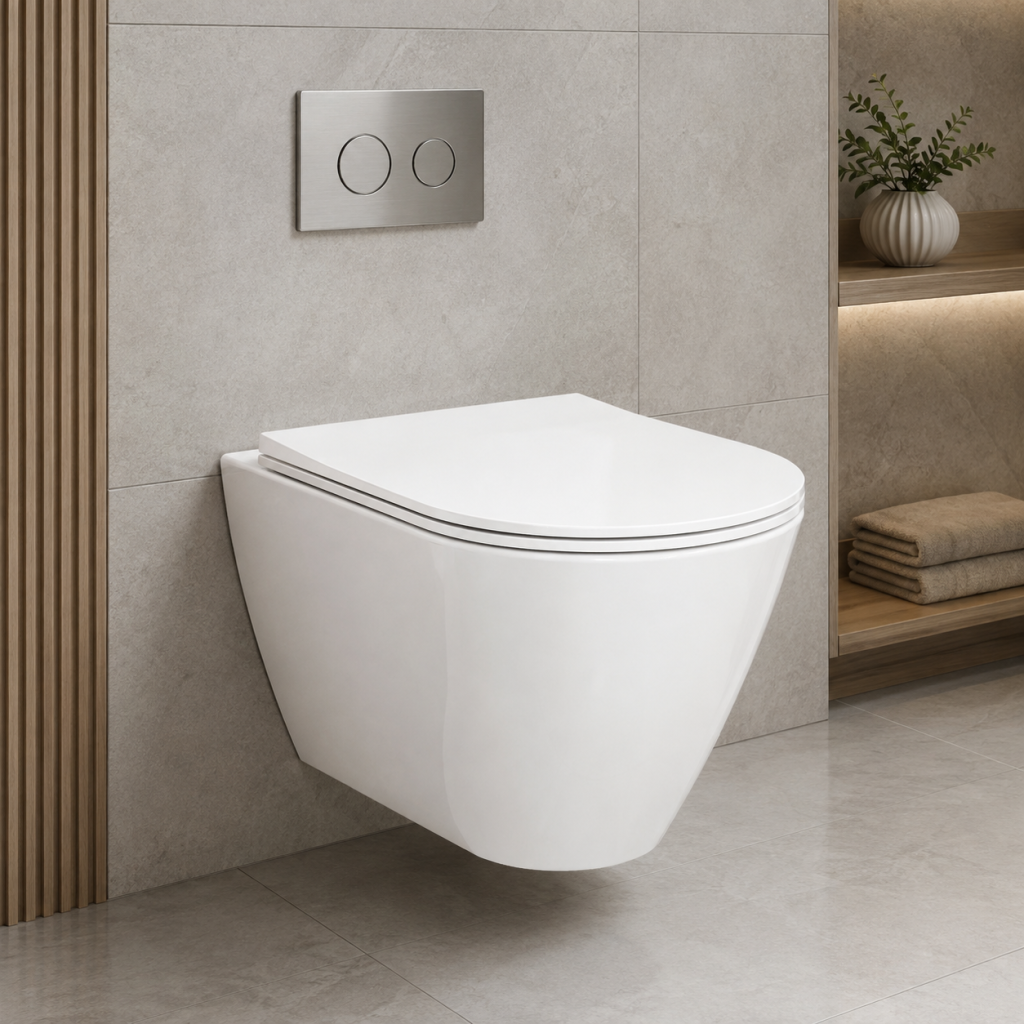
A concealed cistern should also be selected to match the toilet and the installation requirements. For a new bathroom, confirm compatibility before purchasing the toilet, cistern, and supporting frame.

Frequently Asked Questions

What is the most common concealed cistern problem?

A toilet that keeps running after flushing is a common problem. It may be caused by a worn flush valve seal, a faulty filling valve, or a mechanism that does not close correctly.

Can a concealed cistern be repaired without removing the toilet?

Many internal cistern faults can be repaired through the service opening behind the flush plate. However, leaks from inaccessible pipework or certain installation problems may require more extensive access.

Why does my concealed cistern keep refilling?

The filling valve may not be closing correctly, the water level may be incorrectly adjusted, or the flush valve may be allowing water to escape into the bowl. A plumber can identify which component is responsible.

How do I know if my concealed cistern is leaking?

Possible signs include unexplained water around the toilet, persistent damp patches, water marks on the wall, or water continuing to enter the bowl when the toilet is not in use. The source should be checked before assuming the cistern itself is damaged.

When should I call a plumber?

Contact a plumber if the toilet continues running, the flush becomes unreliable, the button stops working, or you notice signs of a leak. Seek prompt assistance for active leaks or water damage.

Most concealed cistern problems do not automatically mean that the entire system needs replacing. Faulty valves, worn seals, blocked filters, and button mechanisms can often be repaired through the service opening.

The key is to identify the source of the problem before replacing parts or disturbing the wall. With compatible components, correct installation, and timely maintenance, a concealed cistern can provide reliable performance for years.

For a new bathroom or a cistern replacement, always check that the cistern, frame, and toilet are compatible and that the system can be serviced according to the manufacturer’s instructions.

Milano Bull wall-mounted toilet

Signs It’s Time to Replace Your Toilet

A toilet can last for many years, but that does not mean it will work perfectly forever. Over time, worn components, cracks, recurring leaks, and changes in your bathroom needs may make replacement a better option than repeated repairs.

But how do you know when it is time for a new toilet?

Here are the most important signs to look for, what they mean, and when replacing your toilet may be the most practical solution.

1. Your Toilet Has Cracks

Small cracks in the toilet bowl or tank should never be ignored. Even a hairline crack can worsen over time and potentially lead to water leakage. If you notice moisture around the base of the toilet, inspect the area carefully. The cause could be a damaged seal, a loose connection, or a crack in the ceramic.

When to replace it: If the ceramic bowl or tank is cracked, replacement is usually safer than attempting a repair. A qualified plumber can help determine the cause and the best solution.

cracked ceramic toilet bowl showing a sign that replacement may be needed

2. Your Toilet Keeps Leaking

A toilet leak can come from several places, including the supply connection, the tank, the flush valve, or the seal between the toilet and the floor.
Not every leak means you need a new toilet. Many leaks can be fixed by replacing a worn seal, tightening a connection, or repairing an internal component.
However, if leaks keep returning despite proper repairs, or if the ceramic itself is damaged, replacing the toilet may be the more sensible long-term choice.

Tip: If water is leaking onto the bathroom floor, arrange an inspection promptly to help prevent damage to the surrounding flooring.

3. You Need Frequent Repairs

Have you replaced the flush valve, repaired the filling mechanism, or called a plumber several times in recent months?
Individual repairs may be relatively simple, but repeated problems can become expensive and inconvenient.

Before deciding, compare the likely cost of further repairs with the cost of a suitable replacement, including installation. A toilet with a sound ceramic body may only need new internal parts, so age alone is not a reason to replace it.

When to replace it: Consider replacement when problems are recurring, the ceramic is damaged, or the cost and inconvenience of repairs no longer make sense.

Plumber inspecting toilet flush mechanism to identify recurring toilet problems

4. Your Toilet Uses Too Much Water

Older toilets may use more water per flush than modern water-efficient models. If reducing household water consumption is a priority, upgrading your toilet could be worth considering.
Before replacing it, check the amount of water your current model uses per flush. Also consider how often the toilet is used and whether the flushing system is working correctly.

A more efficient model can help reduce water consumption, but the actual savings depend on the existing toilet, the replacement model, and household usage.
When to replace it: A replacement may be worthwhile if your existing toilet uses significantly more water than modern alternatives and you expect the efficiency improvement to justify the cost.

5. Your Toilet Is Difficult to Clean

Cleaning difficulties do not always mean your toilet needs replacing. However, persistent staining, damaged surfaces, or a design that makes routine cleaning unnecessarily difficult may be reasons to consider an upgrade.
Modern toilet designs offer different bowl shapes and flushing technologies. For example, rimless toilets have no traditional rim around the inside of the bowl, making this area easier to access during cleaning.

The overall result still depends on the design, the flushing system, and regular maintenance.

When to replace it: Consider an upgrade if the surface is damaged or the existing design no longer meets your cleaning and maintenance needs.

6. Your Toilet Wobbles or Is Unstable

A toilet should sit securely on the floor or its mounting system. If it rocks when you sit down, the cause could be loose fixings, an uneven floor, or a problem with the installation.
Do not assume that the toilet itself must be replaced. A plumber should first check the mounting, connections, and seal.

If the ceramic is damaged or the installation cannot be made secure without replacing the unit, a new toilet may be necessary.
Important: Avoid continuing to use a visibly unstable toilet without having it checked, as movement can damage the seal and contribute to leaks.

7. Your Bathroom Needs Have Changed

Sometimes a toilet works perfectly well but no longer suits the bathroom.
You may be renovating, making better use of a small space, updating the bathroom style, or looking for a design that is easier to clean.

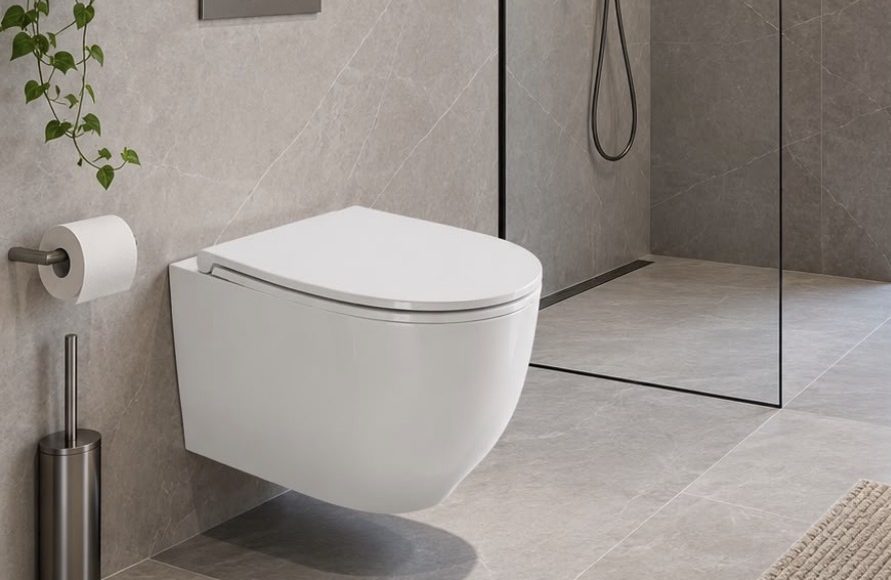
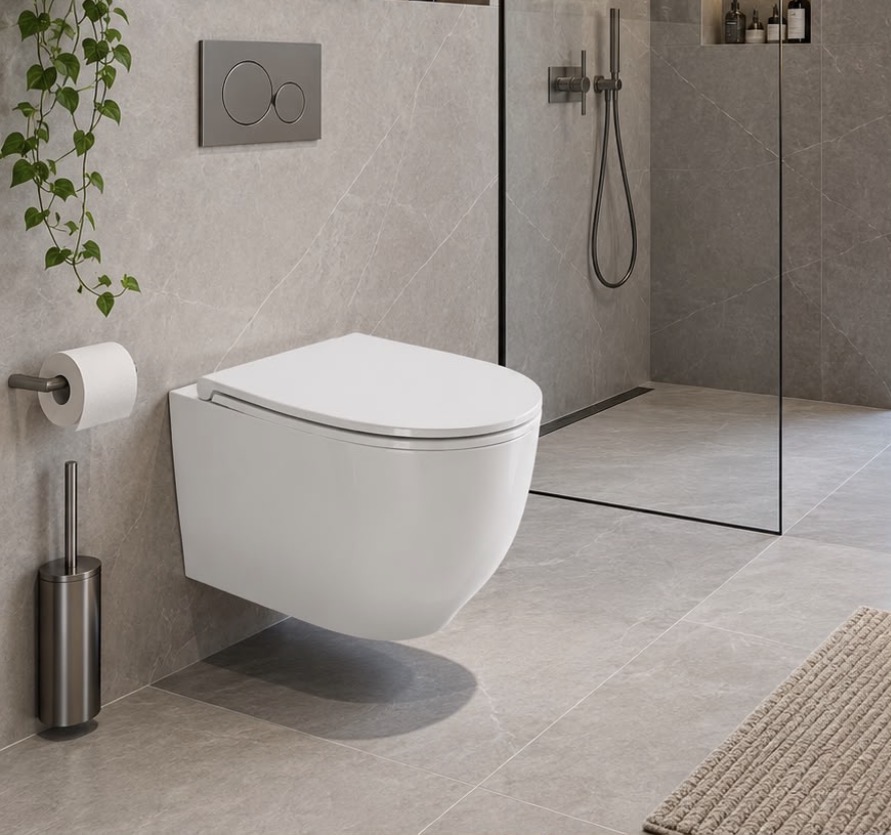
A wall-mounted (wall-hung) toilet can create a more open appearance because the bowl is mounted above the floor. A floor-standing (back-to-wall) toilet offers a different design option, with the bowl rests on the floor.
Your choice should take into account available space, plumbing, installation requirements, maintenance access, and budget.

Milano Bull wall-mounted toilet
Milano bull freestanding toilet

Should You Repair or Replace Your Toilet?

The right decision depends on the problem, not simply the age of the toilet.

Situation What to consider
Worn internal parts Repair may be enough
Minor leak from a replaceable seal Repair and inspect the connection
Cracked ceramic Replacement is generally recommended
Repeated failures Compare repair costs with replacement
High water consumption Evaluate more efficient models
Bathroom renovation Choose a toilet that fits the new layout

Before buying a replacement, measure the available space and check the existing plumbing connections. If you are considering a wall-hung model, confirm that the supporting frame, concealed cistern, and installation arrangement are suitable.

Choosing the right toilet is about more than appearance. Reliability, water use, cleaning, comfort, and installation all matter.

Final Thoughts

A toilet does not need to be replaced just because it is old. The most important factors are its condition, reliability, water consumption, and suitability for your bathroom.

If you notice cracks, persistent leaks, or repeated failures, investigate the cause before deciding. A simple repair may be all that is needed, while a damaged or increasingly unreliable toilet may be better replaced.

The goal is to choose a solution that makes sense for your bathroom, your budget, and your long-term needs.

Frequently Asked Questions

How do I know if my toilet needs replacing?

Cracked ceramic, recurring leaks, frequent breakdowns, and repair costs that keep adding up are important signs. A plumber can help distinguish a repairable fault from a problem that calls for replacement.

How many years should a toilet last?

A well-maintained ceramic toilet can last for decades, although seals, valves, and other moving components may need attention sooner. There is no single replacement age that applies to every toilet.

Is it better to repair or replace an old toilet?

Repair is often the sensible choice when the ceramic is sound and the problem is limited to a replaceable component. Replacement becomes more attractive when damage is structural or problems keep recurring.

Can a new toilet help save water?

Yes, depending on how much water your existing toilet uses and the efficiency of the replacement model. Compare the stated flush volumes before making a decision.

Should I replace my toilet when renovating my bathroom?

Not necessarily. If your existing toilet is in good condition and suits the new layout, keeping it may be practical. If you want a different style, easier cleaning, or improved water efficiency, renovation can be a convenient time to upgrade.

Saniterra Milano sky blue wall mounted toilet & bidet

How to Choose the Right Toilet for Your Bathroom

Choosing a toilet may seem straightforward—until you start comparing different types, sizes and installation styles. A toilet should fit the bathroom not only visually, but also in terms of available space, cleaning, installation and everyday use.

The right choice depends on a few practical questions:

  • How large is your bathroom?
  • Do you prefer a wall-hung or floor-standing design?
  • How important is easy cleaning?
  • What type of flushing performance are you looking for?
  • Will the toilet use a concealed cistern?
  • Do the toilet’s dimensions suit your space?

This guide will help you narrow down the options without making the decision unnecessarily complicated.

1. Start with Your Bathroom Size

Before choosing a toilet design, look at the actual space available.

A toilet that looks perfect in a large showroom may feel oversized in a compact bathroom. On the other hand, a very small toilet can look out of proportion in a spacious master bathroom.

When planning the layout, consider:

  • The width of the bathroom
  • Available space in front of the toilet
  • Distance from walls and other fixtures
  • Door movement
  • Shower, vanity or bidet placement

Professional bathroom-planning guidance also treats clearance around fixtures as an important part of a functional layout. The NKBA’s planning guidance is useful as a design reference, but local building regulations and installation requirements should always take priority where applicable.

Tip: Always check the technical dimensions of the toilet before making your final decision—not just the product photograph.

2. Wall-Hung or Back-to-Wall?

This is usually one of the first decisions to make.

Choose a Wall-Hung Toilet If…

A wall-hung toilet may be a good choice if you want:

  • A cleaner, more contemporary appearance
  • Visible floor space underneath the toilet
  • Easier floor cleaning
  • A visually lighter bathroom design
  • Flexibility in creating a coordinated wall-hung bathroom

Because the toilet is mounted off the floor, the area underneath remains accessible for cleaning. This can also create a more open visual effect, particularly in smaller or contemporary bathrooms.

Choose a Back-to-Wall Toilet If…

A back-to-wall toilet may suit you if you prefer:

  • A floor-standing design
  • A more grounded visual appearance
  • A concealed cistern with a cleaner overall look
  • A design that works well in both contemporary and classic bathrooms

With both wall-hung and many back-to-wall installations, the cistern can be concealed behind or inside the wall structure. The best option depends on the room, installation conditions and your preferred design.

There is no universal winner. The right choice is the one that works best for your bathroom and installation

3. Consider a Rimless Toilet

Cleaning is one of the most important factors when choosing a toilet.

Traditional toilet designs can include areas that are harder to reach during cleaning. A rimless design removes the conventional rim structure, making the bowl easier to inspect and clean.

A rimless toilet can therefore be a practical choice if you prioritise:

  • Easier cleaning
  • A more accessible bowl design
  • Good hygiene
  • A modern appearance

However, as with any toilet, the overall performance also depends on the design of the bowl and the flushing system.

4. Does Flushing Technology Matter?

Yes—but not every bathroom needs to be approached as a search for the most powerful flush.

A good flushing system should provide effective bowl cleaning while working efficiently and comfortably in everyday use.

Some toilets use specially designed water flow systems. For example, a Vortex flushing system uses a fast, swirling water movement to help distribute water around the bowl.

When choosing a toilet, consider:

  • How effectively the bowl is cleaned
  • How evenly water moves around the bowl
  • Noise during flushing
  • Performance with the compatible dual-flush cistern
  • Ease of keeping the bowl clean

Some Saniterra toilet models are designed with Vortex flushing, available in selected wall-hung and back-to-wall models. The important point is not the name of the technology itself, but whether the complete toilet and cistern combination is suitable for your needs.

5. Think About the Concealed Cistern Too

If you are choosing a wall-hung toilet—or a back-to-wall toilet with a concealed installation—the cistern is an important part of the system.

It is easy to focus only on the visible ceramic toilet, but the cistern affects everyday operation as well.

When choosing a concealed cistern, consider:

  • Compatibility with the toilet
  • Installation requirements
  • Access for servicing
  • Water efficiency
  • Noise during operation
  • The quality of the internal components

A well-designed cistern should work efficiently with the toilet rather than simply being treated as a separate product.

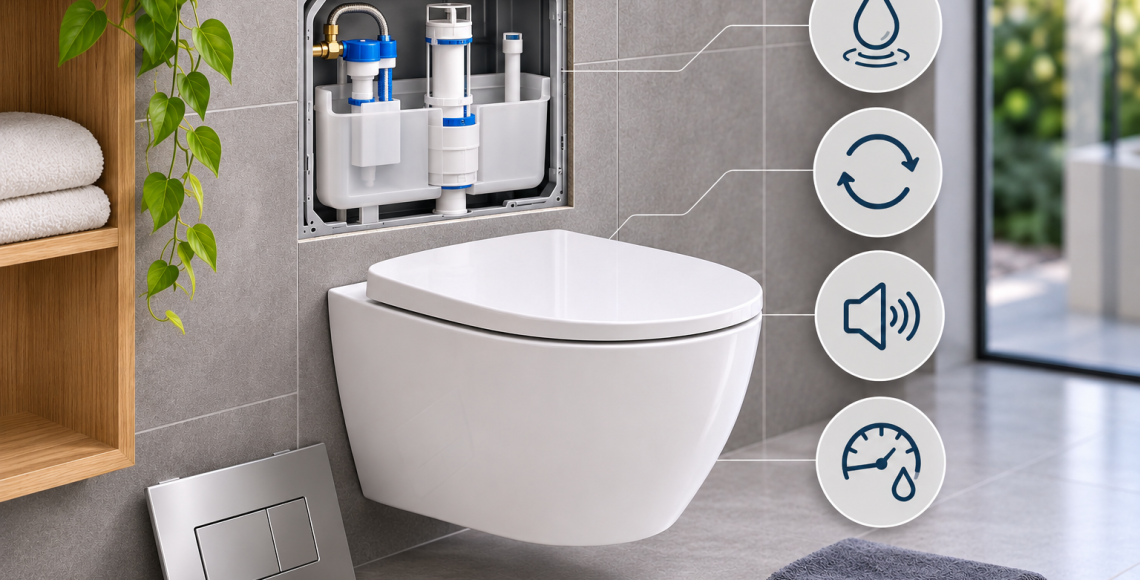
Some Saniterra installations can use the Smart Silent Concealed Cistern, designed so that the inlet valve remains closed while water is still leaving the cistern. The cistern begins refilling only after the outlet process is complete. According to Saniterra’s product information, this design can reduce unnecessary water consumption and contribute to quieter operation.

6. Think About Cleaning and Hygiene

A toilet is used every day, so easy cleaning should be part of the buying decision.

Ask yourself:

  • Can I easily clean around the toilet?
  • Are difficult-to-reach areas minimised?
  • Does the bowl design make routine cleaning easier?
  • Is there easy access to the floor?

This is one reason wall-hung toilets and rimless bowls have become popular choices in modern bathrooms. Their designs can simplify different parts of the cleaning process.

For example:

  • Wall-hung toilets make it easier to clean the floor underneath.
  • Rimless bowls can make the interior bowl easier to access during cleaning.

7. Check the Installation Requirements

A beautiful toilet is only the right choice if it can be installed correctly in your bathroom.

Before purchasing, check:

  • Wall structure
  • Waste outlet position
  • Water connections
  • Cistern compatibility
  • Installation depth
  • Required support frame for wall-hung models
  • Access for future maintenance

A wall-hung toilet, for example, requires an appropriate installation system designed to support it correctly.

For renovations, it is particularly important to understand the existing plumbing before choosing a model. Changing drainage positions or modifying the wall structure can affect the complexity and cost of the project.

8. Choose the Right Size and Proportions

The toilet should feel proportionate to the room.

In a compact bathroom, a carefully selected design can help avoid making the room feel crowded. In a large bathroom, a very small fixture may look visually disconnected from the rest of the space.

Consider:

  • Toilet projection from the wall
  • Width
  • Height
  • Space around the toilet
  • Relationship with the vanity, shower and bidet

If you are planning a toilet and bidet set, it is especially important to consider the layout of both fixtures together rather than choosing them independently.

9. Match the Toilet to Your Bathroom Style

Function comes first, but design still matters.

Your toilet should work visually with the rest of the bathroom, including:

  • Washbasin
  • Bidet
  • Bathroom taps
  • Bathtub or shower area
  • Tiles and wall finishes

A coordinated bathroom does not mean that every product must be identical. However, matching the overall shape, proportions and design language can create a more balanced result.

For example, a wall-hung toilet and wall-hung bidet can create a consistent floating appearance, while floor-standing fixtures may create a more traditional or grounded look.

Quick Guide: Which Toilet Should You Choose?

Choose a Wall-Hung Toilet If…

You want:

✓ Easier floor cleaning
✓ A contemporary appearance
✓ A visually open bathroom
✓ A toilet mounted off the floor

Choose a Back-to-Wall Toilet If…

You prefer:

✓ A floor-standing toilet
✓ A clean design with the cistern concealed
✓ A more grounded appearance
✓ A design that suits different bathroom styles

Consider a Rimless Toilet If…

You prioritise:

✓ Easy cleaning
✓ Accessible bowl surfaces
✓ Everyday hygiene
✓ A modern toilet design

Consider Vortex Flushing If…

You are interested in:

✓ Fast, swirling water movement
✓ Effective bowl rinsing
✓ A carefully designed flushing system

The right toilet is not simply the one with the most features or the most modern appearance.

Start with your bathroom’s available space. Then consider the installation type, ease of cleaning, bowl design, flushing system and the concealed cistern where relevant.

For many bathrooms, choosing between wall-hung and back-to-wall will be the first major decision. After that, details such as rimless design, flushing technology and cistern performance can help you choose a system that suits your everyday needs.

The best toilet is one that fits your bathroom, works reliably and remains practical to use and clean over time.

bidet placement guide

Where Should a Bidet Be Placed? Ideal Bidet Placement & Toilet Spacing

The most common and practical place for a bidet is next to the toilet, usually on the same wall.

The goal is to create a layout that is comfortable to use without making the bathroom feel crowded. Rather than relying on one fixed gap between the toilet and bidet, consider the actual dimensions of both fixtures, the clear space around them and the available room in front.

A well-planned toilet and bidet layout should feel balanced, accessible and easy to use—especially in a master bathroom or a larger bathroom where there is enough space for both fixtures.

Why Does Bidet Placement Matter?

A bidet may look like a simple additional bathroom fixture, but its position can make a significant difference to how comfortable the bathroom feels.

Place it too close to the toilet or another fixture, and the area can feel cramped. Place it too far away, and the layout may become less practical and visually disconnected.

Good placement should consider:

  • Comfortable access
  • Enough personal space
  • Clear space in front of both fixtures
  • Access to plumbing and drainage
  • The direction of doors
  • The overall bathroom layout

The best position is therefore not simply about finding an empty space in the room.

The Most Practical Position: Next to the Toilet

In most larger bathrooms and master bathrooms, the most practical arrangement is to place the bidet beside the toilet.

This layout is popular for several reasons.

First, the toilet and bidet are used within the same part of the bathroom. Keeping them together creates a logical and functional layout.

Second, placing both fixtures on the same wall can simplify the planning of water and drainage connections during a renovation or new installation.

Finally, a toilet and bidet positioned side by side can create a balanced and coordinated appearance.

How Much Space Should You Leave Around a Bidet?

This is one of the most important parts of bathroom planning.

There is no single universal measurement for every bathroom, because toilet and bidet dimensions vary.

A better approach is to plan around three things:

1. Side Clearance

There should be enough space around the sides of the toilet and bidet for comfortable use.

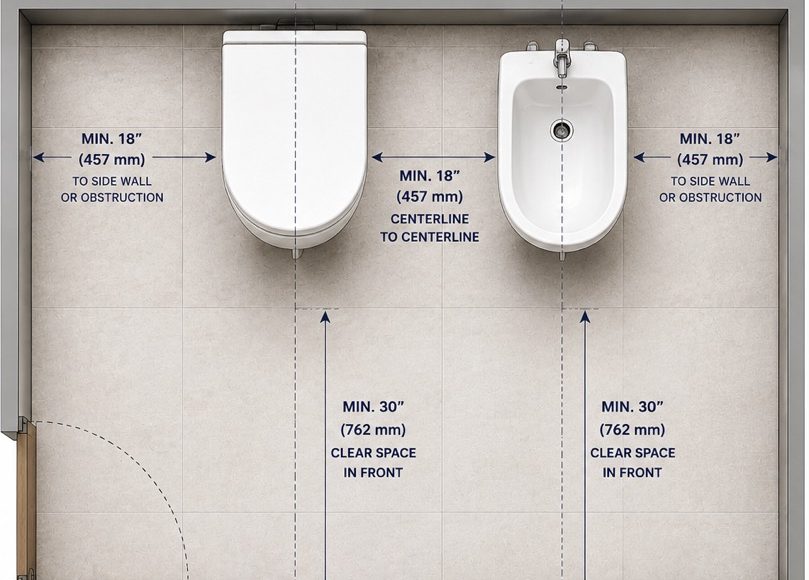
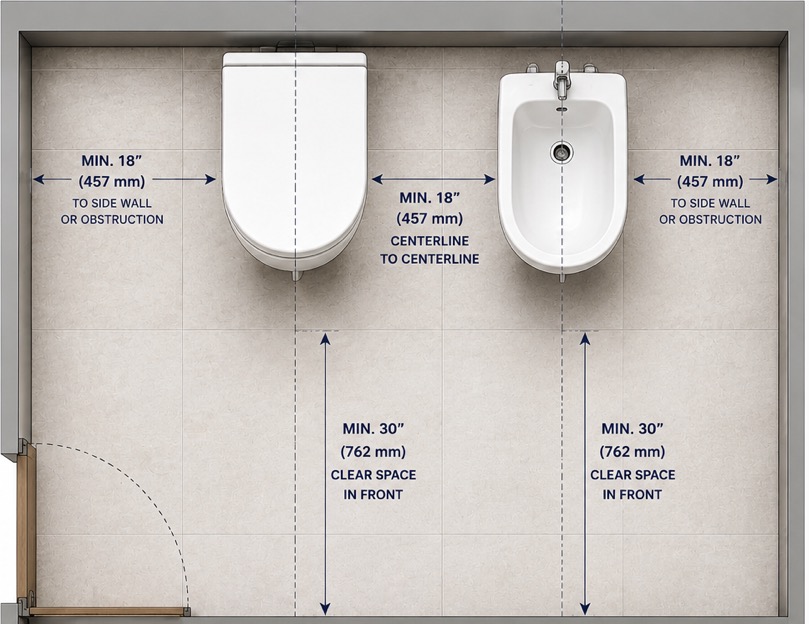
Professional bathroom-planning guidelines commonly use the centreline of the fixture as a reference point. The recommended clearance can then be measured from the centreline to the nearest wall, fixture or obstacle.

2. Space Between the Toilet and Bidet

Instead of choosing a random gap between the two ceramic fixtures, start with their actual widths and the required clearance around them.

A narrow gap may look acceptable in a floor plan but feel uncomfortable in real life.

The aim should be to leave enough space for both fixtures to be used comfortably.

3. Clear Space in Front

Don’t focus only on the distance between the toilet and bidet.

You also need enough open floor space in front of both fixtures. Bathroom-planning guidance commonly recommends planning approximately 762 mm of clear space in front of bathroom fixtures for comfortable use, although minimum requirements can vary according to local regulations.

toilet & bidet placement guide

A Simple Way to Plan the Layout

Before choosing the final position, ask these questions:

Can the toilet and bidet be used comfortably?

Imagine standing, sitting and moving between the fixtures.

Is there enough space in front?

A bathroom may have enough room for the fixtures themselves but still feel uncomfortable if the space in front is restricted.

Will a door interfere with the layout?

Check the swing of the bathroom door, shower door and any cabinet doors.

Are the plumbing connections practical?

This is especially important during a renovation. Moving drainage and water connections can significantly affect the complexity of the project.

The Best Layout for a Master Bathroom

A master bathroom usually provides more flexibility than a small guest bathroom.

If space allows, a toilet and bidet placed side by side can create a dedicated sanitary area within the larger bathroom.

This arrangement can work particularly well when:

  • The fixtures are positioned on the same wall
  • Their designs are visually coordinated
  • There is generous clear space in front
  • Other elements, such as the shower and vanity, do not interfere with access

In a larger bathroom, the goal should not simply be to maximise the distance between fixtures. The layout should still feel connected and practical.

Should the Toilet and Bidet Match?

They don’t have to be identical, but a coordinated design usually creates a more harmonious bathroom.

For example, you may consider matching:

  • Shape and design style
  • Wall-hung or floor-standing configuration
  • Ceramic finish
  • Overall proportions

A wall-hung toilet can be paired with a wall-hung bidet for a clean, floating appearance.

A floor-standing toilet and bidet can also create a coordinated and more traditional visual arrangement.

The most important factor is that the two fixtures work together in the overall bathroom design.

Wall-Hung or Floor-Standing: Does It Affect Placement?

The basic principles of spacing remain important regardless of the installation type.

However, wall-hung fixtures can create a more open visual effect because the floor remains visible underneath them.

This can be particularly attractive in a master bathroom or a contemporary bathroom design.

Floor-standing fixtures, on the other hand, can provide a more grounded appearance and may suit a different design preference.

The key point is that installation style and placement are two separate decisions.

First, decide how much space the bathroom can comfortably provide. Then choose the configuration that works best with the layout.

What If the Bathroom Is Small?

A traditional bidet may not always be the best choice for a compact bathroom.

Trying to fit both a toilet and bidet into a space that is too small can make the entire bathroom less comfortable.

In a smaller room, it may be better to:

  • Prioritise sufficient clearance around the toilet
  • Avoid blocking doors or circulation areas
  • Choose compact fixtures where appropriate
  • Consider whether a separate bidet is genuinely suitable for the available space

A bidet can add comfort and functionality, but only when the bathroom has enough room to accommodate it properly.

Did You Know?

The distance between a toilet and a bidet is not simply about aesthetics.

The final layout is influenced by fixture width, centreline clearance, front clearance, door movement and local building requirements.

That is why copying the spacing from a photo or another bathroom can be misleading. The best layout should always be based on the actual dimensions of the products and the room.

Frequently Asked Questions

Where is the best place to install a bidet?

For most bathrooms, the most practical location is next to the toilet, especially when both fixtures can be placed on the same wall with sufficient clearance.

How close should a bidet be to a toilet?

There is no single gap that works for every product. The correct spacing depends on the dimensions of both fixtures and the clearance required around them. It is better to plan from the fixture centreline and actual product dimensions than to use one universal gap.

How much space should be left in front of a bidet?

Comfortable bathroom planning commonly allows around 762 mm of clear space in front of fixtures, although local minimum requirements may differ. Always check the regulations applicable to the project.

Should a bidet be installed on the same wall as the toilet?

Often, yes. A side-by-side arrangement can be practical, visually balanced and easier to plan for plumbing. However, the best layout depends on the size and shape of the bathroom.

Can a bidet be installed in a small bathroom?

It can, but only if sufficient clearance and comfortable access can still be maintained. In some compact bathrooms, a separate bidet may not be the most practical use of space.

Do a toilet and bidet need to be the same design?

No. However, coordinating the shape, style and proportions of the two fixtures can create a more harmonious bathroom design.

The best place for a bidet is usually next to the toilet, but good bathroom design involves more than simply positioning two fixtures side by side.

The available clearance, the actual dimensions of the toilet and bidet, the space in front, door movement and plumbing all need to be considered together.

In a spacious master bathroom, a well-planned toilet and bidet combination can create a comfortable and elegant sanitary area.

In a smaller bathroom, however, it is better to prioritise comfort and usable space rather than trying to fit in an additional fixture.

The best layout is the one that works comfortably in the actual room—not simply the one that looks good on a floor plan.

Wall-Hung vs Back-to-Wall Toilet: Which One Is Right for Your Bathroom?

Both wall-hung and back-to-wall toilets can create a clean, modern bathroom because the cistern and plumbing are concealed.

The main difference is simple:

A wall-hung toilet is suspended above the floor, while a back-to-wall toilet stands directly on the floor.

A wall-hung toilet can make floor cleaning easier and create a lighter visual appearance. A back-to-wall toilet provides a similar streamlined look while keeping the toilet floor-standing.

So which is better? Neither is universally better. The right choice depends on your bathroom, installation conditions and priorities.

They Look Similar, But They’re Not the Same

If you’re planning a bathroom renovation, you may have noticed two very common modern toilet designs: wall-hung(wall mounted) and back-to-wall(freestanding).

From the outside, they can look surprisingly similar.

Both can have:

  • A concealed cistern
  • Hidden plumbing
  • A clean, minimalist appearance
  • A wall-mounted flush plate
  • A modern rimless bowl

But there is one fundamental difference:

Does the toilet touch the floor?

That’s what separates the two.

What Is a Wall-Hung Toilet?

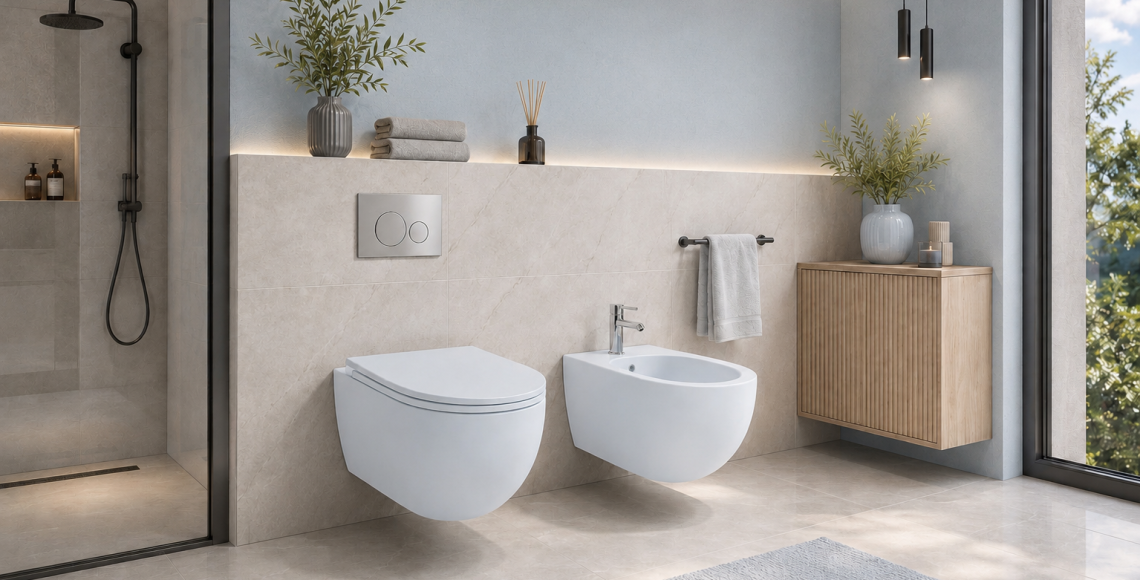
A wall-hung toilet is suspended above the floor using a concealed support frame.

The cistern and most of the plumbing are hidden behind the wall or within an installation structure.

Because the ceramic pan doesn’t touch the floor, the entire floor underneath remains accessible.

Why do people choose wall-hung toilets?

Easier floor cleaning

There is no ceramic base around which you need to clean.

A lighter appearance

The gap underneath the toilet creates a more open visual effect, which can be particularly attractive in contemporary bathrooms.

Flexible installation height

Depending on the frame and installation system, the height of the toilet can be adjusted during installation.

A clean, minimalist design

With the cistern and pipework hidden, only the essential elements remain visible.

Porto wall mounted toilet

What Is a Back-to-Wall Toilet?

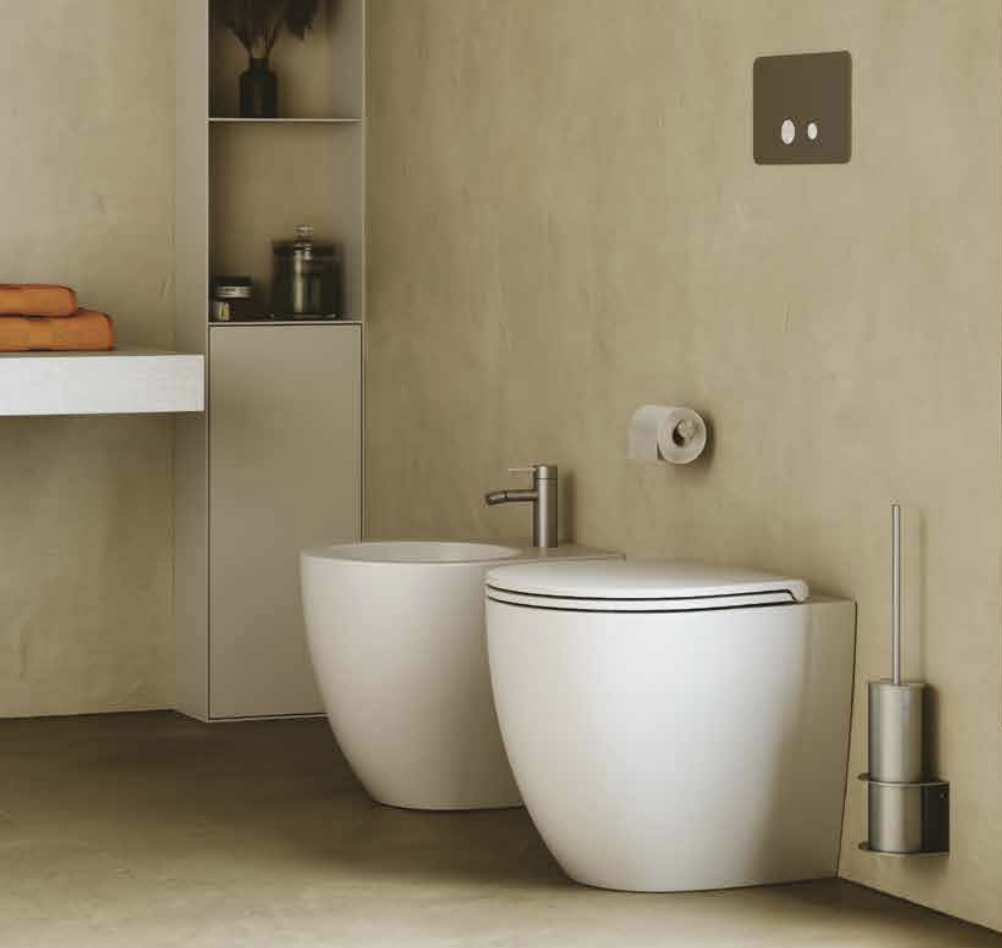
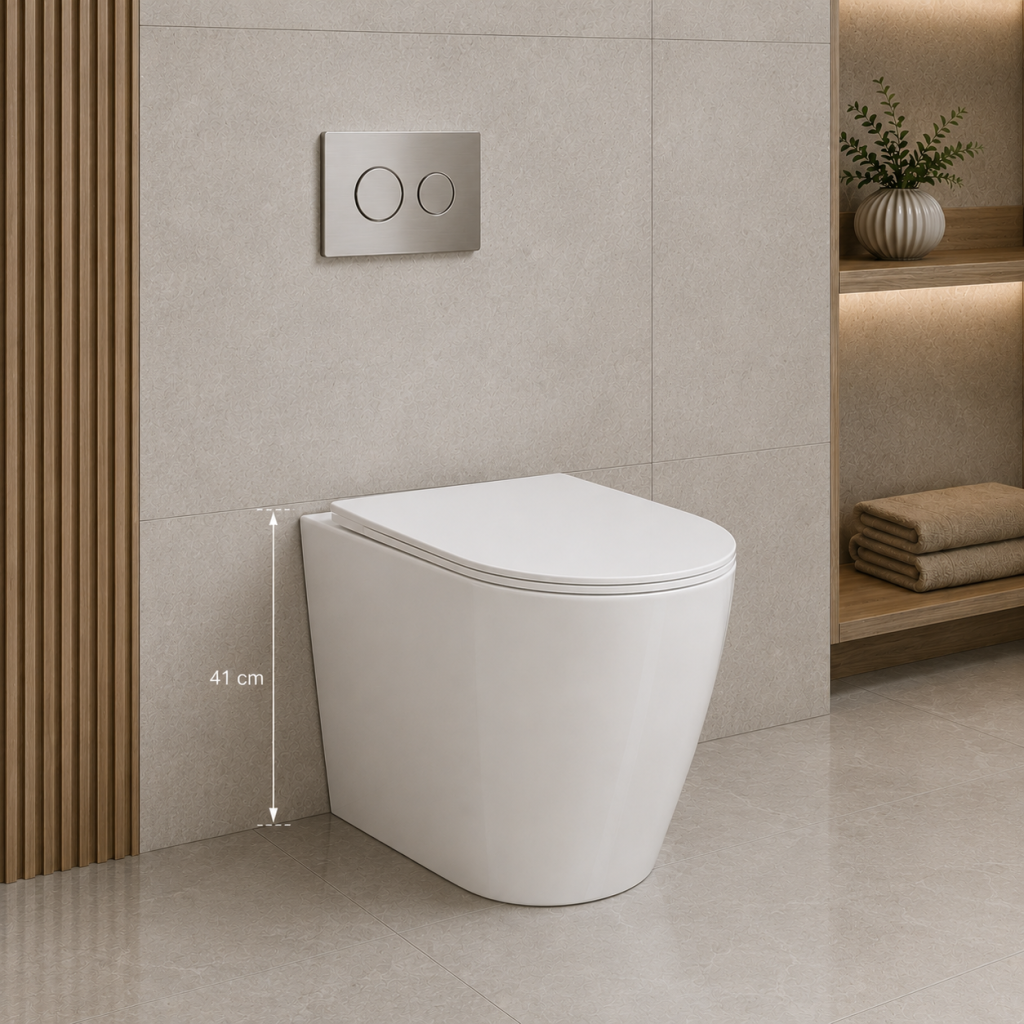
A back-to-wall toilet is a floor-standing toilet positioned directly against the wall or installation structure.

The cistern is concealed behind the wall, inside a suitable installation structure or, depending on the setup, within bathroom furniture.

The result is still clean and uncluttered—but the ceramic pan remains in contact with the floor.

Why do people choose back-to-wall toilets?

The floor-standing design

Some homeowners simply prefer a toilet that sits on the floor rather than being suspended.

Concealed cistern

The cistern and much of the plumbing remain hidden, giving the bathroom a streamlined appearance.

Modern appearance without a floating pan

You can achieve a contemporary look without choosing a wall-hung installation.

Suitable for different bathroom layouts

A back-to-wall toilet can be installed against a suitable wall or installation structure, depending on the plumbing and cistern arrangement.

porto freestanding toilet
Feature Wall-Hung Back-to-Wall
Toilet pan Suspended above floor Stands on floor
Cistern Concealed Concealed
Floor underneath Completely accessible Occupied by toilet base
Floor cleaning Easier Requires cleaning around base
Appearance Floating, lightweight Clean and streamlined
Installation Requires suitable support frame Requires suitable concealed-cistern arrangement
Height adjustment Possible depending on installation system Depends on toilet design
Rimless options Available Available
Vortex flushing Available on selected models Available on selected models

Which Is Easier to Clean?

This is one area where wall-hung has a clear practical advantage.

Because the toilet is suspended above the floor, you can clean the entire floor underneath it without having to work around a ceramic base.

A back-to-wall toilet still has a relatively clean external design because the cistern and pipework are concealed, but the base remains on the floor.

This doesn’t make it difficult to clean. It simply means you still need to clean around the footprint of the toilet.

Which Is Better for a Small Bathroom?

This depends on what you mean by “better.”

A wall-hung toilet can make a small bathroom look more spacious because the floor continues visually underneath the toilet.

It can also make floor cleaning easier.

A back-to-wall toilet can also work very well in a compact bathroom because the cistern is concealed and there is no visible tank projecting into the room.

So don’t choose solely based on bathroom size.

Check the complete dimensions of the toilet, including its projection from the wall.

A compact back-to-wall toilet can sometimes be a better fit than a larger wall-hung model.

What About Installation?

This is an important difference that is sometimes overlooked.

A wall-hung toilet needs a suitable support frame to carry the load of the suspended pan. The frame, cistern, waste connections and service access all need to be planned correctly before the wall is finished.

A back-to-wall toilet also requires planning because the cistern and plumbing are concealed, but the ceramic pan itself remains supported by the floor.

In either case, installation should be planned around:

  • Cistern compatibility
  • Waste outlet position
  • Wall depth or installation structure
  • Flush plate
  • Service access
  • Final toilet height
  • Finished floor and wall levels

The visible ceramic is only one part of the complete system.

Does One Flush Better Than the Other?

Not simply because it is wall-hung or back-to-wall.

The flushing performance depends primarily on the toilet’s bowl and flushing design, together with the concealed cistern and installation.

For example, selected Saniterra wall-hung and back-to-wall toilets incorporate Vortex flushing technology.

Vortex describes the way water enters and moves through the bowl in a controlled circular flow. It is a flushing technology, not a type of toilet installation.

This means you don’t have to choose between wall-hung and Vortex, for example.

They describe two different things:

Wall-hung = how the toilet is installed.
Vortex = how the water moves during flushing.

The same principle applies to rimless design.

So, Which One Should You Choose?

There isn’t one correct answer for everyone.

Choose a wall-hung toilet if you prioritise:

  • Easy floor cleaning
  • A floating, minimalist appearance
  • An open-looking floor area
  • Adjustable installation height where supported
  • A contemporary bathroom design

Choose a back-to-wall toilet if you prioritise:

  • A floor-standing toilet
  • A concealed cistern
  • A clean, modern appearance
  • Keeping the ceramic pan supported by the floor
  • A design that works well with suitable furniture or installation structures

And if you’re renovating from scratch, the best choice should be made before the plumbing and walls are finalised, rather than choosing the toilet only after the bathroom is already built.

Did You Know?

Wall-hung, back-to-wall, rimless and Vortex are not competing descriptions.

They describe different aspects of a toilet:

  • Wall-hung → how the pan is installed
  • Back-to-wall → where the pan sits in relation to the floor and wall
  • Rimless → the design of the bowl
  • Vortex → the water-flow and flushing technology
  • Concealed cistern → where the flush water is stored

A single toilet can therefore be wall-hung + rimless + Vortex + concealed cistern.

Or it can be back-to-wall + rimless + Vortex + concealed cistern.

Understanding these terms makes comparing toilets much easier.

Frequently Asked Questions

Is a wall-hung toilet better than a back-to-wall toilet?

Not universally. Wall-hung toilets offer easier floor cleaning and a floating appearance, while back-to-wall toilets provide a clean modern look with a floor-standing pan.

Are wall-hung toilets strong enough?

When installed with a suitable support frame and according to the manufacturer’s installation requirements, wall-hung toilets are designed to safely support normal use. The structural support comes from the concealed frame rather than the ceramic pan itself.

Do both types need a concealed cistern?

For the configurations discussed in this article, yes. The cistern is concealed behind the wall or within the appropriate installation structure.

Is a back-to-wall toilet easier to install?

Installation requirements vary by bathroom and system. A back-to-wall toilet does not suspend the pan from a frame, but the concealed cistern and plumbing still require careful planning.

Are both wall-hung and back-to-wall toilets available in rimless designs?

Yes. Rimless describes the bowl design and can be combined with either installation type.

Can both types have Vortex flushing?

Yes. Vortex flushing technology can be incorporated into both wall-hung and back-to-wall toilet designs.

The choice between a wall-hung and a back-to-wall toilet isn’t really about which one is “better.”

It’s about which one fits your bathroom and your priorities better.

If easy floor cleaning and a floating, minimalist appearance are important to you, a wall-hung toilet may be the better choice.

If you prefer a floor-standing toilet while still wanting a concealed cistern and a clean, contemporary appearance, a back-to-wall model may be the better fit.

And remember: the installation type is only one part of the decision. Bowl design, flushing technology, dimensions, cistern compatibility and the available installation space all deserve attention before you make your choice.

What Is Vortex Flushing Technology? How It Works & Why It Matters

Quick Answer

Vortex flushing technology is a flushing approach in which water enters the toilet bowl and is directed into a controlled circular, vortex-like flow. This movement helps distribute water around the bowl, improving rinsing and cleaning during the flush while allowing the toilet to operate quietly and efficiently.

The technology can be used in both wall-hung and back-to-wall toilets.

What Happens When You Flush a Toilet?

Most of us press the flush button without ever thinking about what happens next.

Behind the wall, the concealed cistern releases water through the flush valve. The water then enters the toilet bowl and needs to do two things at the same time:

  1. Rinse the bowl effectively
  2. Move the contents through the waste outlet

The way that water enters and moves around the bowl therefore matters.

This is where Vortex flushing technology comes in.

What Does “Vortex” Mean?

The word vortex describes a fast, circular or swirling movement.

In a toilet, Vortex flushing technology uses the shape and design of the water outlets to create a controlled, circular flow inside the bowl.

Rather than water simply falling into the bowl, the flow is directed so that it travels around the bowl before moving towards the outlet.

The result is a more controlled flushing action designed to rinse the bowl effectively and remove waste efficiently.

How Does Vortex Flushing Work?

The process can be simplified into four stages.

1. The Flush Is Activated

When you press the flush button, the concealed cistern releases the stored water.

2. Water Enters the Bowl

The water enters the bowl through specifically designed outlets.

3. Water Creates a Circular Flow

The direction of the incoming water creates a vortex-like movement around the bowl.

This helps distribute the available water across the bowl rather than concentrating the flow in just one area.

4. The Bowl Is Rinsed and Waste Is Evacuated

The circular movement helps rinse the bowl while the water and waste move towards the outlet and into the drainage system.

The exact flow pattern varies according to the design of the toilet and flushing system.

Why Can Vortex Flushing Improve Cleaning?

The effectiveness of a toilet flush isn’t simply about how much water is released.

How that water moves is equally important.

A well-designed flushing system aims to direct water where it is needed, helping rinse more of the bowl during each flush.

Vortex flushing technology is designed around this principle: controlled water movement rather than simply increasing water volume.

This can contribute to:

  • More effective bowl rinsing
  • Better overall cleaning
  • Faster flushing
  • A quieter flushing experience

Is Vortex Flushing Noisy?

One of the useful characteristics of a well-designed Vortex flushing system is its ability to provide effective flushing with relatively little noise.

The controlled movement of water can make the flushing process noticeably quieter than some conventional flushing designs.

However, the overall noise level of a toilet also depends on other factors, including the concealed cistern, flush valve, water pressure, installation and the construction surrounding the toilet.

So Vortex technology should not be considered the only factor determining how quiet a bathroom will be.

Can Vortex Flushing Be Used With a Concealed Cistern?

Yes.

In fact, the two components perform different jobs.

The concealed cistern stores and releases the water.

The Vortex flushing design controls how that water enters and moves through the toilet bowl.

This distinction is important because Vortex is not the name of the entire flushing installation. It describes the flushing technology and water-flow pattern within the toilet.

Does Vortex Work With Both Wall-Hung and Back-to-Wall Toilets?

Yes.

Vortex flushing technology can be incorporated into both configurations.

Wall-Hung Toilets

The toilet bowl is mounted to a concealed support frame, leaving the floor underneath open.

This makes cleaning around the toilet easier and gives the bathroom a lighter, more contemporary appearance.

Wall Hung Toilet-217011

Back-to-Wall Toilets

The toilet remains floor-standing, while the cistern and plumbing are concealed behind the wall or within a suitable installation structure.

This creates a clean appearance while retaining a floor-mounted toilet.

floor standing toilet-237011

Selected Saniterra wall-hung and back-to-wall toilets are available with Vortex flushing technology.

The important point is that Vortex relates to the flushing process, while wall-hung and back-to-wall describe how the toilet itself is installed.

Does Vortex Mean the Toilet Never Needs Cleaning?

No.

Vortex flushing can improve the way water moves around the bowl, but it doesn’t eliminate the need for regular cleaning.

Toilet hygiene still depends on:

  • Regular cleaning
  • Water quality
  • Bathroom ventilation
  • Proper use
  • The condition of the toilet and drainage system

The advantage is that an effective flushing design can make maintaining a clean bowl easier as part of normal bathroom care.

What About Rimless Toilets?

Vortex flushing and rimless design are related, but they are not the same thing.

Rimless describes the physical design of the toilet bowl: there is no traditional concealed rim around the inside of the bowl.

Vortex flushing describes how water moves through the bowl during flushing.

Some toilets combine both technologies.

Selected Saniterra toilets do exactly that, combining a rimless bowl design with Vortex flushing technology.

This combination can provide an accessible bowl surface for cleaning together with controlled water movement during flushing.

Did You Know?

A toilet flush is a combination of water volume, water direction, bowl geometry, outlet design and drainage.

That’s why simply increasing the amount of water does not necessarily produce a better flush.

Modern flushing technologies focus increasingly on making the available water work more effectively.

Frequently Asked Questions

Is Vortex flushing better than a conventional flush?

Vortex flushing is designed to create a controlled circular flow that can improve bowl rinsing and cleaning while maintaining an efficient flushing cycle. Actual performance depends on the complete toilet and flushing system.

Does Vortex flushing use more water?

No. Vortex technology focuses on how water is directed and circulated through the bowl rather than simply increasing the amount of water used.

Can Vortex flushing be used with a dual-flush concealed cistern?

Yes. Vortex toilets can be designed to work with modern dual-flush concealed cisterns.

Is Vortex flushing only available in wall-hung toilets?

No. Vortex flushing technology can be used in both wall-hung and back-to-wall toilet designs.

Is Vortex the same as a rimless toilet?

No. Rimless describes the bowl design, while Vortex describes the flushing and water-flow technology. They can, however, be combined in the same toilet.

Is Vortex flushing completely silent?

No toilet is completely silent. Vortex technology is designed to provide a quieter flushing experience, but overall noise also depends on the cistern, valve, water pressure and installation.

A toilet flush may look simple from the outside, but there is considerable engineering behind the way water enters, moves through and leaves the bowl.

Vortex flushing technology uses controlled circular water movement to help rinse the bowl effectively and evacuate waste efficiently.

When combined with a rimless bowl and a well-designed concealed cistern, it can contribute to a cleaner, more hygienic and quieter everyday bathroom experience.

And because Vortex technology can be incorporated into both wall-hung and back-to-wall toilets, it is not limited to one particular bathroom layout.

What Is a Rimless Toilet? Benefits, How It Works & Common Myths

A rimless toilet is designed without the traditional inner rim found in conventional toilet bowls. Instead of releasing water from hidden channels beneath the rim, it directs water around the bowl through an open flushing system. This design makes the bowl easier to clean and can improve hygiene by reducing hidden areas where dirt and bacteria may accumulate.

A Small Design Change That Makes a Big Difference

At first glance, a rimless toilet looks almost identical to a traditional toilet.

The difference only becomes obvious when you look inside the bowl.

Unlike conventional toilets, there is no hidden rim where the flushing water travels before entering the bowl.

It may seem like a small design detail—but it changes how the toilet is cleaned, maintained and used every day.

What Does “Rimless” Mean?

Traditional toilets have a concealed rim around the inside edge of the bowl.

When you flush, water travels through hidden channels beneath this rim before flowing into the bowl.

Because these channels are difficult to reach, they can become places where limescale, dirt and bacteria gradually build up.

A rimless toilet removes this concealed rim altogether.

Instead, water is guided directly into the bowl through an open flushing design that is visible and easier to clean.

How Does a Rimless Toilet Work?

Although different manufacturers use different flushing designs, the basic principle is similar.

Instead of hiding the water flow beneath a rim, the flushing system directs water around the bowl through an open channel.

The aim is to distribute water efficiently while helping rinse the bowl during each flush.

Some modern toilets—including selected Saniterra models—combine the rimless design with Vortex flushing technology, creating a controlled circular flow of water that helps distribute water evenly around the bowl while operating quietly and working efficiently with modern dual-flush concealed cisterns.

What Are the Benefits of a Rimless Toilet?

Easier to Clean

Without a hidden rim, the inside of the bowl is easier to reach during regular cleaning.

There are fewer concealed areas where cleaning tools cannot reach.

Improved Hygiene

Because there are fewer hidden surfaces, there are fewer places for dirt, mineral deposits and bacteria to accumulate.

Regular cleaning is still essential, but maintaining the bowl is generally more straightforward.

Modern Bathroom Design

Most rimless toilets are designed with a contemporary appearance that suits modern bathrooms.

They are available in both wall-hung and back-to-wall designs, making them suitable for a wide range of bathroom layouts.

Efficient Flushing

Modern rimless toilets are designed to work efficiently with today’s dual-flush concealed cisterns.

Rather than relying solely on the amount of water used, many modern flushing systems focus on directing water more effectively around the bowl.

Common Myths About Rimless Toilets

Myth 1: Rimless Toilets Are Harder to Flush

Not true.

A well-designed rimless toilet is engineered to distribute water effectively throughout the bowl.

The flushing performance depends on the overall design of the toilet rather than the presence of a traditional rim.

Myth 2: They Don’t Need Cleaning

False.

A rimless toilet is easier to clean, but it still requires regular maintenance just like any other toilet.

Routine cleaning helps maintain hygiene and appearance.

Myth 3: Rimless Toilets Use More Water

Not necessarily.

Modern rimless toilets are typically designed to operate efficiently with dual-flush concealed cisterns.

Their performance comes from how the water is directed around the bowl rather than simply increasing water consumption.

Are Rimless Toilets Worth It?

For many homeowners, yes.

If you value easier cleaning, improved hygiene and a modern bathroom design, a rimless toilet can be an excellent choice.

Whether it is the right option depends on your bathroom layout, personal preferences and the type of flushing system you choose.

Did You Know?

The term “rimless” describes the shape of the toilet bowl, not the flushing technology.

A toilet can be rimless without using a vortex flush, and a vortex flushing system can vary depending on the manufacturer’s design.

When choosing a toilet, it’s worth looking at both the bowl design and the flushing system, as each contributes differently to cleaning performance and everyday use.

Frequently Asked Questions

Are rimless toilets more hygienic?

They can be easier to keep clean because there are fewer hidden areas where dirt and mineral deposits may accumulate.

Do rimless toilets splash more?

Splashing depends on the overall design of the toilet and the flushing system. A well-designed rimless toilet is engineered to provide effective flushing while maintaining user comfort.

Are rimless toilets suitable for family bathrooms?

Yes. They are commonly used in family homes because they are easy to maintain and compatible with modern bathroom designs.

Can a rimless toilet be wall-hung or back-to-wall?

Yes. Rimless designs are available in both wall-hung and back-to-wall configurations.

Is a rimless toilet worth replacing an older toilet for?

If you’re renovating your bathroom or replacing an ageing toilet, a rimless design may offer easier maintenance and improved day-to-day hygiene.

A rimless toilet is more than a modern design trend.

By removing the traditional concealed rim, it simplifies cleaning and reduces hidden areas where dirt and mineral deposits can build up.

Combined with a well-designed flushing system, a rimless toilet can provide an excellent balance of hygiene, efficiency and everyday practicality.

When choosing a new toilet, it is worth considering both the bowl design and the flushing technology—not just the appearance.