
Wall-Hung vs Back-to-Wall Toilet: Which One Is Right for Your Bathroom?
Both wall-hung and back-to-wall toilets can create a clean, modern bathroom because the cistern and plumbing are concealed.
The main difference is simple:
A wall-hung toilet is suspended above the floor, while a back-to-wall toilet stands directly on the floor.
A wall-hung toilet can make floor cleaning easier and create a lighter visual appearance. A back-to-wall toilet provides a similar streamlined look while keeping the toilet floor-standing.
So which is better? Neither is universally better. The right choice depends on your bathroom, installation conditions and priorities.
They Look Similar, But They’re Not the Same
If you’re planning a bathroom renovation, you may have noticed two very common modern toilet designs: wall-hung(wall mounted) and back-to-wall(freestanding).
From the outside, they can look surprisingly similar.
Both can have:
- A concealed cistern
- Hidden plumbing
- A clean, minimalist appearance
- A wall-mounted flush plate
- A modern rimless bowl
But there is one fundamental difference:
Does the toilet touch the floor?
That’s what separates the two.
What Is a Wall-Hung Toilet?
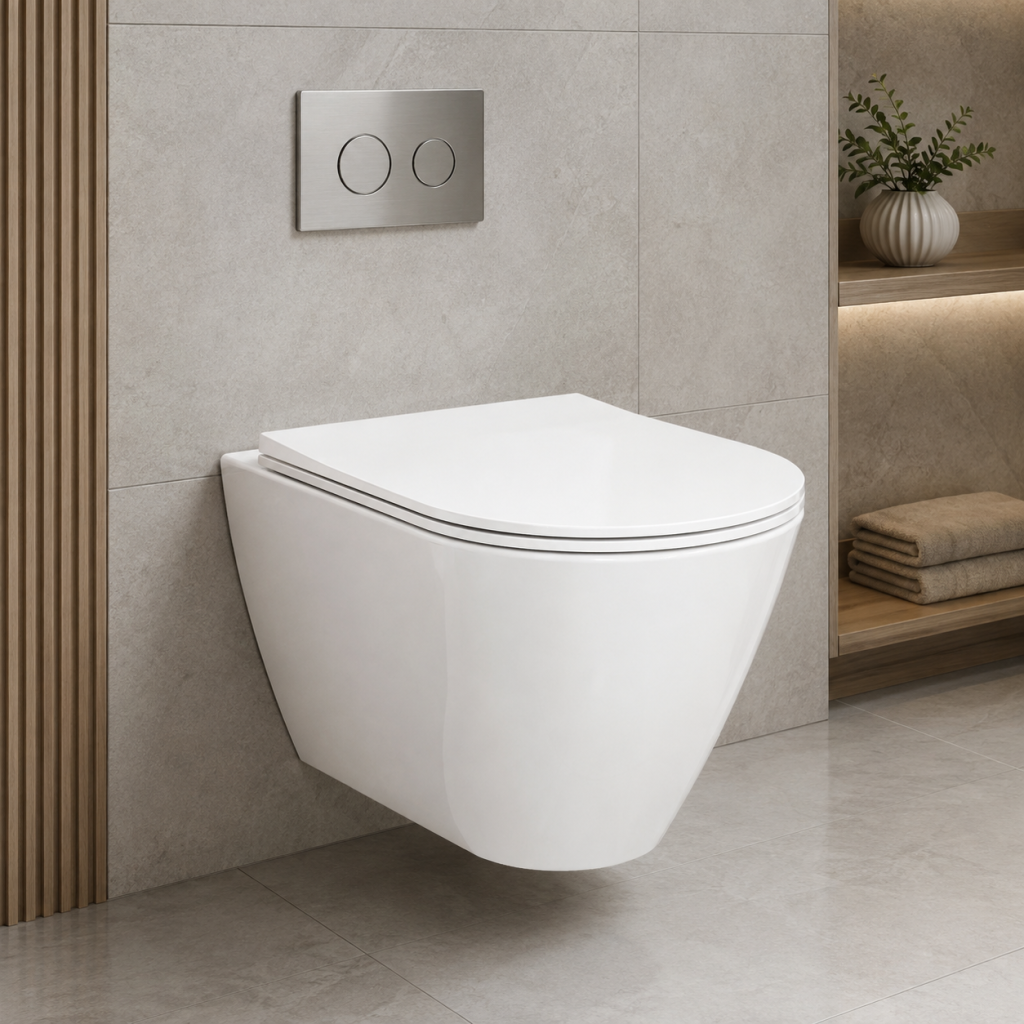
A wall-hung toilet is suspended above the floor using a concealed support frame.
The cistern and most of the plumbing are hidden behind the wall or within an installation structure.
Because the ceramic pan doesn’t touch the floor, the entire floor underneath remains accessible.
Why do people choose wall-hung toilets?
Easier floor cleaning
There is no ceramic base around which you need to clean.
A lighter appearance
The gap underneath the toilet creates a more open visual effect, which can be particularly attractive in contemporary bathrooms.
Flexible installation height
Depending on the frame and installation system, the height of the toilet can be adjusted during installation.
A clean, minimalist design
With the cistern and pipework hidden, only the essential elements remain visible.
What Is a Back-to-Wall Toilet?
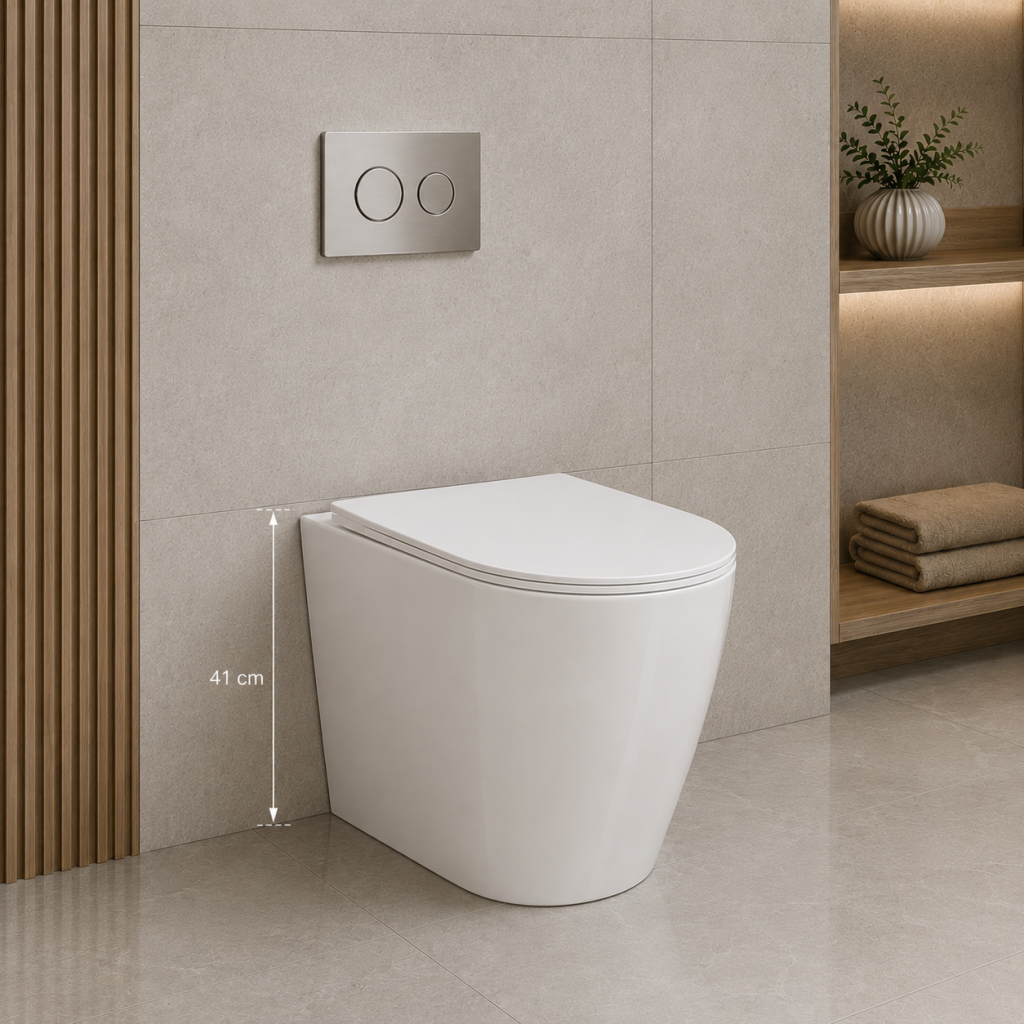
A back-to-wall toilet is a floor-standing toilet positioned directly against the wall or installation structure.
The cistern is concealed behind the wall, inside a suitable installation structure or, depending on the setup, within bathroom furniture.
The result is still clean and uncluttered—but the ceramic pan remains in contact with the floor.
Why do people choose back-to-wall toilets?
The floor-standing design
Some homeowners simply prefer a toilet that sits on the floor rather than being suspended.
Concealed cistern
The cistern and much of the plumbing remain hidden, giving the bathroom a streamlined appearance.
Modern appearance without a floating pan
You can achieve a contemporary look without choosing a wall-hung installation.
Suitable for different bathroom layouts
A back-to-wall toilet can be installed against a suitable wall or installation structure, depending on the plumbing and cistern arrangement.
| Feature | Wall-Hung | Back-to-Wall |
|---|---|---|
| Toilet pan | Suspended above floor | Stands on floor |
| Cistern | Concealed | Concealed |
| Floor underneath | Completely accessible | Occupied by toilet base |
| Floor cleaning | Easier | Requires cleaning around base |
| Appearance | Floating, lightweight | Clean and streamlined |
| Installation | Requires suitable support frame | Requires suitable concealed-cistern arrangement |
| Height adjustment | Possible depending on installation system | Depends on toilet design |
| Rimless options | Available | Available |
| Vortex flushing | Available on selected models | Available on selected models |
Which Is Easier to Clean?
This is one area where wall-hung has a clear practical advantage.
Because the toilet is suspended above the floor, you can clean the entire floor underneath it without having to work around a ceramic base.
A back-to-wall toilet still has a relatively clean external design because the cistern and pipework are concealed, but the base remains on the floor.
This doesn’t make it difficult to clean. It simply means you still need to clean around the footprint of the toilet.
Which Is Better for a Small Bathroom?
This depends on what you mean by “better.”
A wall-hung toilet can make a small bathroom look more spacious because the floor continues visually underneath the toilet.
It can also make floor cleaning easier.
A back-to-wall toilet can also work very well in a compact bathroom because the cistern is concealed and there is no visible tank projecting into the room.
So don’t choose solely based on bathroom size.
Check the complete dimensions of the toilet, including its projection from the wall.
A compact back-to-wall toilet can sometimes be a better fit than a larger wall-hung model.
What About Installation?
This is an important difference that is sometimes overlooked.
A wall-hung toilet needs a suitable support frame to carry the load of the suspended pan. The frame, cistern, waste connections and service access all need to be planned correctly before the wall is finished.
A back-to-wall toilet also requires planning because the cistern and plumbing are concealed, but the ceramic pan itself remains supported by the floor.
In either case, installation should be planned around:
- Cistern compatibility
- Waste outlet position
- Wall depth or installation structure
- Flush plate
- Service access
- Final toilet height
- Finished floor and wall levels
The visible ceramic is only one part of the complete system.
Does One Flush Better Than the Other?
Not simply because it is wall-hung or back-to-wall.
The flushing performance depends primarily on the toilet’s bowl and flushing design, together with the concealed cistern and installation.
For example, selected Saniterra wall-hung and back-to-wall toilets incorporate Vortex flushing technology.
Vortex describes the way water enters and moves through the bowl in a controlled circular flow. It is a flushing technology, not a type of toilet installation.
This means you don’t have to choose between wall-hung and Vortex, for example.
They describe two different things:
Wall-hung = how the toilet is installed.
Vortex = how the water moves during flushing.
The same principle applies to rimless design.
So, Which One Should You Choose?
There isn’t one correct answer for everyone.
Choose a wall-hung toilet if you prioritise:
- Easy floor cleaning
- A floating, minimalist appearance
- An open-looking floor area
- Adjustable installation height where supported
- A contemporary bathroom design
Choose a back-to-wall toilet if you prioritise:
- A floor-standing toilet
- A concealed cistern
- A clean, modern appearance
- Keeping the ceramic pan supported by the floor
- A design that works well with suitable furniture or installation structures
And if you’re renovating from scratch, the best choice should be made before the plumbing and walls are finalised, rather than choosing the toilet only after the bathroom is already built.
Did You Know?
Wall-hung, back-to-wall, rimless and Vortex are not competing descriptions.
They describe different aspects of a toilet:
- Wall-hung → how the pan is installed
- Back-to-wall → where the pan sits in relation to the floor and wall
- Rimless → the design of the bowl
- Vortex → the water-flow and flushing technology
- Concealed cistern → where the flush water is stored
A single toilet can therefore be wall-hung + rimless + Vortex + concealed cistern.
Or it can be back-to-wall + rimless + Vortex + concealed cistern.
Understanding these terms makes comparing toilets much easier.
Frequently Asked Questions
Is a wall-hung toilet better than a back-to-wall toilet?
Not universally. Wall-hung toilets offer easier floor cleaning and a floating appearance, while back-to-wall toilets provide a clean modern look with a floor-standing pan.
Are wall-hung toilets strong enough?
When installed with a suitable support frame and according to the manufacturer’s installation requirements, wall-hung toilets are designed to safely support normal use. The structural support comes from the concealed frame rather than the ceramic pan itself.
Do both types need a concealed cistern?
For the configurations discussed in this article, yes. The cistern is concealed behind the wall or within the appropriate installation structure.
Is a back-to-wall toilet easier to install?
Installation requirements vary by bathroom and system. A back-to-wall toilet does not suspend the pan from a frame, but the concealed cistern and plumbing still require careful planning.
Are both wall-hung and back-to-wall toilets available in rimless designs?
Yes. Rimless describes the bowl design and can be combined with either installation type.
Can both types have Vortex flushing?
Yes. Vortex flushing technology can be incorporated into both wall-hung and back-to-wall toilet designs.
The choice between a wall-hung and a back-to-wall toilet isn’t really about which one is “better.”
It’s about which one fits your bathroom and your priorities better.
If easy floor cleaning and a floating, minimalist appearance are important to you, a wall-hung toilet may be the better choice.
If you prefer a floor-standing toilet while still wanting a concealed cistern and a clean, contemporary appearance, a back-to-wall model may be the better fit.
And remember: the installation type is only one part of the decision. Bowl design, flushing technology, dimensions, cistern compatibility and the available installation space all deserve attention before you make your choice.
