Saniterra vibes

Why Does My Toilet Keep Clogging? Common Causes & How to Prevent It

A toilet that clogs frequently is often caused by flushing unsuitable items, mineral build-up, partial blockages in the drain, poor flushing performance, or ageing plumbing. While an occasional blockage is common, repeated clogs usually indicate an underlying issue that should be addressed.

It Flushes… But the Water Doesn’t Go Down

Few bathroom problems are as frustrating as a toilet that clogs again and again.

You flush, the water rises, and for a moment you wonder whether it’s going to overflow.

Sometimes it clears slowly. Other times, you reach for the plunger.

An occasional blockage can happen in almost any home. But if it becomes a regular problem, it’s worth finding out why.

Why Does My Toilet Keep Clogging?

1. Flushing Items That Shouldn’t Go Down the Toilet

One of the most common causes of toilet blockages is flushing materials that do not break down easily.

These include:

  • Wet wipes (even those labelled “flushable”)
  • Cotton buds
  • Paper towels
  • Sanitary products
  • Dental floss
  • Excessive amounts of toilet paper

Unlike toilet paper, many of these items remain intact in the drainage system and can gradually create blockages.

2. A Partial Blockage in the Drain

Not every blockage completely stops the toilet from flushing.

A partial obstruction allows water to pass, but much more slowly than normal.

Signs include:

  • Water rising before draining.
  • Frequent need for a second flush.
  • Gurgling sounds.
  • Slow drainage.

If left untreated, a partial blockage can eventually become a complete one.

3. Hard Water and Mineral Deposits

In areas with hard water, limescale can gradually build up inside the toilet’s flushing channels.

Although this doesn’t always cause a blockage directly, it can reduce flushing performance, making waste more likely to remain in the bowl.

Regular maintenance helps minimise this problem.

4. Ageing Internal Components

As toilets get older, internal flushing components can wear over time.

If the flushing mechanism is no longer operating efficiently, the bowl may not receive enough water movement to remove waste effectively.

This often results in repeated flushing and an increased risk of blockages.

5. Problems Further Down the Drainage System

Sometimes the toilet is not the problem at all.

Tree roots, damaged underground pipes or larger drainage obstructions can restrict wastewater flow.

If several drains in your home are draining slowly, the issue may lie within the property’s drainage system rather than the toilet itself.

What Can You Do Before Calling a Plumber?

Try these simple checks first.

Use only toilet paper

Avoid flushing anything that isn’t designed for toilets.

Observe how the toilet drains

If water consistently rises before draining away, a partial blockage may already be developing.

Watch for recurring problems

If the toilet clogs every few days, there is likely to be an underlying cause rather than bad luck.

Avoid harsh chemical drain cleaners

Some aggressive chemicals can damage seals or internal components and are not suitable for every toilet.

Always follow the manufacturer’s recommendations.

When Should You Call a Plumber?

Professional help is recommended if:

  • The toilet clogs repeatedly.
  • The blockage returns shortly after clearing.
  • Water backs up into other fixtures.
  • Several drains in the house are slow.
  • You suspect a blockage further along the drainage system.

Persistent blockages should not be ignored, as they can lead to more serious plumbing problems over time.

Could a Modern Toilet Reduce the Risk of Blockages?

A new toilet cannot prevent every blockage, especially if unsuitable materials are flushed.

However, modern flushing technology can improve the way water moves around the bowl.

Some modern toilets, including selected Saniterra models, use Vortex flushing technology, which creates a controlled circular flow of water around the bowl. This design helps distribute water more effectively, providing thorough bowl cleaning while operating quietly and working efficiently with modern dual-flush concealed cisterns.

Good flushing performance can help reduce the need for repeated flushing during normal everyday use, although no toilet can eliminate blockages caused by unsuitable waste or drainage problems.

Did You Know?

Many people assume that a stronger flush simply means using more water.

In reality, how the water is directed around the bowl is often just as important as the amount of water released. Modern flushing systems focus on improving water movement and bowl coverage rather than relying solely on increased water volume.


Frequently Asked Questions

Why does my toilet clog so often?

Frequent clogs are usually caused by unsuitable items being flushed, partial blockages, mineral deposits or reduced flushing performance.

Can too much toilet paper clog a toilet?

Yes. Even toilet paper can cause blockages if large amounts are flushed at once, particularly in older plumbing systems.

Is it safe to use chemical drain cleaners?

Not always. Some products may damage toilet components or seals. Always check the manufacturer’s guidance before using chemical cleaners.

Can hard water affect toilet performance?

Yes. Limescale can gradually reduce flushing efficiency by restricting water flow through the flushing channels.

Should I replace a toilet that clogs frequently?

If the problem is caused by worn components or an ageing toilet, replacement may be worth considering. However, drainage problems should always be ruled out first.

A toilet that clogs occasionally is usually nothing to worry about.

However, if blockages become frequent, it’s important to identify the underlying cause instead of simply reaching for the plunger each time.

In many cases, better maintenance or minor repairs can restore normal performance. If you’re planning to replace an older toilet, modern flushing technologies can provide more effective bowl cleaning and a better everyday experience while remaining compatible with today’s dual-flush concealed cisterns

Weak Toilet Flush? Common Causes and Solutions

A weak toilet flush is often caused by limescale build-up, a partially blocked rim or flush channel, low water level in the cistern, worn internal components, or drainage restrictions. In many cases, the problem can be fixed without replacing the toilet. However, older flushing systems may become less effective over time, making replacement a better long-term solution.

Your Toilet Flushes… But the Bowl Isn’t Completely Clean

You press the flush button expecting everything to clear away in one flush.

Instead, waste remains in the bowl, toilet paper doesn’t disappear completely, or you find yourself flushing twice.

If this sounds familiar, you’re not alone.

A weak flush is one of the most common toilet problems homeowners experience. Fortunately, it doesn’t always mean your toilet is broken. In many cases, the cause is relatively simple to identify.

Let’s look at the most common reasons.

Why Is My Toilet Flush Weak?

1. Limescale Has Built Up Inside the Toilet

Hard water gradually leaves mineral deposits inside the flushing channels.

Although you may not see them, these deposits can reduce the amount of water reaching the bowl during each flush.

Over time, even a quality toilet may lose some of its flushing performance if regular maintenance is neglected.

What you can do

  • Clean the toilet regularly using suitable descaling products.
  • Follow the manufacturer’s maintenance recommendations.
  • Avoid harsh chemicals that could damage internal components.

2. The Water Level Inside the Cistern Is Too Low

Every flush depends on having enough water stored inside the cistern.

If the fill level is lower than intended, the toilet may not release enough water to create an effective flush.

This can happen because of an incorrectly adjusted fill valve or worn internal parts.

3. A Worn Flush Mechanism

Like any mechanical component, flushing mechanisms wear over time.

If the flush valve does not open fully or closes too early, the toilet may release less water than intended.

This often develops gradually, so homeowners may not notice the change immediately.

4. A Partial Blockage

Not every blockage completely stops the toilet from working.

Small obstructions inside the trap or drainpipe can slow the flow of water, reducing the force of the flush.

Other signs may include:

  • Water rising higher than usual before draining.
  • Slower drainage.
  • Frequent need for a second flush.

If the problem becomes worse over time, professional inspection is recommended.

5. The Toilet Design Itself

Not all toilets distribute water through the bowl in the same way.

Older flushing systems may leave areas of the bowl less effectively rinsed, meaning users sometimes feel the need to flush again even when the toilet is functioning as designed.

Modern flushing systems have evolved considerably in recent years to improve water distribution and bowl cleaning while maintaining compatibility with today’s dual-flush concealed cisterns.

What Can You Check Yourself?

Before calling a plumber, take a few minutes to inspect a few simple things.

Is the water level inside the cistern normal?

If it appears unusually low, the flushing performance may be affected.

Does the toilet drain slowly?

A slow drain could indicate a partial blockage rather than a flushing problem.

Has the toilet gradually become weaker?

If the performance has slowly declined over several months or years, mineral deposits or worn internal components may be responsible.

Does the toilet require two flushes every time?

If this happens consistently, the flushing system may no longer be operating efficiently.

When Should You Call a Plumber?

Professional assistance is recommended if:

  • The toilet frequently blocks.
  • Water drains very slowly.
  • Internal components have already been replaced but the problem remains.
  • Water leaks from the cistern.
  • The toilet is older and several problems occur at the same time.

Ignoring a weak flush can sometimes allow a small problem to become a larger and more expensive repair.

Could a Modern Toilet Improve Flushing Performance?

If your toilet is approaching the end of its service life, replacing worn parts may not always provide the best long-term result.

Many modern toilets are designed to improve the way water moves around the bowl rather than simply increasing the amount of water used.

For example, some modern toilets—including selected Saniterra models—use Vortex flushing technology. Instead of relying on a conventional flushing pattern, the system creates a controlled circular flow that distributes water more evenly around the bowl. This helps achieve effective cleaning, operates quietly and works efficiently with modern dual-flush concealed cisterns.

The goal is not to use more water, but to use the available water more effectively.

If these toilets are paired with Saniterra’s Smart Silent Concealed Cistern, users may also benefit from a quieter refill cycle and improved water efficiency through the cistern’s controlled refill design.

Frequently Asked Questions

Why does my toilet need two flushes?

This may be caused by insufficient water in the cistern, mineral build-up, a partial blockage or worn flushing components.

Can hard water affect toilet flushing?

Yes. Mineral deposits can gradually restrict water flow inside the flushing channels, reducing flushing performance.

Does a stronger flush always use more water?

Not necessarily. Modern flushing systems often focus on improving how water is directed around the bowl rather than simply increasing water volume.

Can an old toilet lose flushing performance?

Yes. Over time, internal components wear, mineral deposits build up and flushing efficiency may gradually decline.

Should I repair or replace my toilet?

If the toilet is relatively new, repairing worn components is often worthwhile. If it is older and several issues occur together, replacing it with a modern, efficient design may be the better long-term solution.

A weak toilet flush is frustrating, but it is not always a sign that the toilet needs replacing.

In many cases, simple maintenance, cleaning mineral deposits or replacing worn internal components can restore good performance.

However, if your toilet is older or you are planning a bathroom renovation, modern flushing technologies can offer noticeable improvements in everyday use. The way water is distributed around the bowl can make a significant difference to cleaning performance, efficiency and overall user experience—without relying on increased water consumption.

Why Does My Toilet Smell Even After Cleaning? Common Causes & Solutions

If your toilet still smells after cleaning, the cause may be bacteria hidden around the toilet base, a dirty toilet brush or drain, a dry trap, a damaged seal, poor ventilation, or a problem with the drainage system. Cleaning the visible surfaces may not be enough if the source of the smell is hidden.

You Clean the Toilet… So Why Does It Still Smell?

You clean the bowl, wipe the seat, disinfect the surrounding surfaces and yet, a few hours later, the unpleasant smell is back.

This can be frustrating, especially when the toilet looks perfectly clean.

The important thing to remember is that a bad smell does not always come from the visible part of the toilet bowl. The source may be hidden underneath the toilet, inside the drain, around the base or even in the plumbing system.

Here are the most common causes.

Why Does My Toilet Smell Even After Cleaning?

1. Bacteria and Dirt Are Hidden Under the Rim

Traditional toilets have a rim around the inside of the bowl. This area can be difficult to clean properly, allowing bacteria, mineral deposits and other residues to build up over time.

Even if the visible part of the bowl looks clean, hidden deposits can contribute to unpleasant odours.

A rimless toilet has a different bowl design without the traditional concealed rim. This makes the inside of the bowl easier to access during cleaning and reduces the number of hidden areas where dirt and deposits can accumulate.

However, a rimless toilet still needs regular cleaning. No toilet design is completely maintenance-free.

2. The Toilet Base May Have a Damaged Seal

If the smell seems strongest around the bottom of the toilet, the problem may not be inside the bowl.

A damaged or deteriorated seal between the toilet and the waste pipe can allow unpleasant sewer gases to escape.

You may notice:

  • A persistent sewage smell around the base.
  • Dampness near the floor.
  • A smell that returns quickly after cleaning.
  • In some cases, water leaking around the base.

If you suspect a damaged seal, professional inspection is recommended.

3. The Toilet Trap May Be Dry

The water that remains inside the toilet bowl is not there by accident.

It forms a water seal that helps prevent sewer gases from entering the bathroom.

If the water level is unusually low or the toilet is rarely used, the trap may not provide an effective seal. This can allow unpleasant smells to enter the room.

If the toilet is not used regularly, flushing it occasionally can help maintain the water seal.

4. The Toilet Brush or Cleaning Tools May Be the Source

Sometimes the toilet itself is not the problem.

A wet toilet brush placed inside a closed container can quickly develop a strong smell. Bacteria and moisture can accumulate inside the brush holder and create an unpleasant odour.

If the smell is strongest near the toilet brush, clean or replace it and wash the holder thoroughly.

5. Poor Bathroom Ventilation

A bathroom with insufficient ventilation can retain moisture and odours for a long time.

This is especially common in bathrooms without windows or with an extractor fan that is not working effectively.

Good ventilation helps remove:

* Humidity.
* Unpleasant odours.
* Airborne particles.
* Moisture that can contribute to mould growth.

If the smell becomes stronger after showering, poor ventilation may be part of the problem.

How to Find Where the Smell Is Coming From

Before using more cleaning products, try to identify the source.

Check the toilet bowl

Is the smell coming directly from the bowl, even after cleaning?

Check around the base

Is the smell stronger near the floor?

Check the toilet brush

Does the odour seem to come from the brush or its container?

Check the ventilation

Does the bathroom remain damp or smell musty for a long time?

Identifying the source is often more useful than simply cleaning the toilet repeatedly.

When Should You Call a Plumber?

Professional help may be needed if:

  • The smell is strongly similar to sewage. The smell is strongest around the toilet base.
  • You notice water leaking onto the floor.
  • The toilet moves or rocks slightly.
  •  The smell continues despite thorough cleaning.
  • Several drains in the bathroom smell at the same time.

These signs may indicate a problem with the toilet seal, drainage system or ventilation rather than a simple cleaning issue.

Can a Modern Toilet Help Reduce Odours?

A modern toilet design can make cleaning and maintenance easier, but it cannot solve every odour problem.

For example, the rimless design used in modern toilets eliminates the traditional hidden rim inside the bowl. This can make the bowl easier to clean and reduce areas where dirt and mineral deposits may accumulate.

However, if the smell is caused by a damaged waste pipe seal, a dry trap or a ventilation problem, replacing the toilet alone will not solve the underlying issue.

The best solution is always to identify the actual source of the smell first.

Frequently Asked Questions

Why does my toilet smell like sewage after cleaning?

The smell may be coming from a damaged seal, a dry trap or a problem with the drainage system rather than the toilet bowl itself.

Can a dirty toilet brush make the bathroom smell?

Yes. A wet toilet brush and its holder can collect bacteria and develop a strong unpleasant odour.

Does a rimless toilet prevent bad smells?

Not completely. However, the absence of a traditional hidden rim can make the bowl easier to clean and reduce areas where dirt and deposits may accumulate.

Why does my toilet smell worse when it is not used?

If a toilet is rarely used, the water seal in the trap may dry out, allowing sewer gases to enter the bathroom.

Why does the smell come back after cleaning?

If the source is hidden under the toilet, inside the drain or related to ventilation, surface cleaning will only temporarily mask the problem.


A toilet that smells even after cleaning is not necessarily a sign that the bowl is dirty.

The smell may come from hidden bacteria, a toilet brush, poor ventilation, a dry trap or a damaged seal beneath the toilet.

The most effective approach is to identify where the smell is coming from rather than repeatedly using stronger cleaning products.

Regular cleaning remains important, and a rimless toilet can make the bowl easier to access and maintain. But when the smell resembles sewage or returns quickly after cleaning, the cause may be a plumbing issue that requires a closer inspection.

Why Is My Toilet Making Noise After Flushing? Common Causes & Solutions

Reading time: 4 minutes

A toilet may make noise after flushing because the cistern is refilling, the fill valve is faulty, water pressure is too high, or water is continuing to leak into the bowl. A short filling sound is normal. However, hissing, whistling, vibrating or banging noises that continue after the cistern has refilled may indicate a problem that needs attention.

You Flush the Toilet… and Then the Noise Starts

You press the flush button, the toilet flushes normally, and then you hear a strange sound.

Maybe it sounds like a soft hiss.

Maybe there is a loud vibration.

Or perhaps the pipes make a sudden banging noise.

Some sound after flushing is completely normal. The cistern needs to refill with water before the toilet is ready for the next flush.

The question is: how do you know when the sound is normal and when it indicates a problem?

What Kind of Noise Is Your Toilet Making?

The type of sound can often give you the first clue.

A Short Filling Sound

A soft water-filling sound immediately after flushing is normal.

The fill valve opens, the cistern refills and then the valve closes. Depending on the system and water pressure, this may take a few seconds.

If the sound stops once the cistern is full, there is usually nothing to worry about.

A Continuous Hissing Sound

A hissing sound that continues long after flushing often means that water is still flowing.

The most common causes are:

  • A worn flush valve seal.
  • A fill valve that is not closing properly.
  • Incorrect water level.
  • Limescale affecting the internal mechanism.

You may also notice a small stream of water continuously entering the toilet bowl.

This should not be ignored. Even a small, continuous leak can waste water over time.

A Whistling or High-Pitched Noise

A high-pitched sound usually comes from the fill valve as water passes through it.

The valve may be:

  • Worn.
  • Partially blocked.
  • Affected by limescale.
  • Operating under excessive water pressure.

In some cases, cleaning or replacing the fill valve solves the problem.

A Vibrating or Shaking Sound

If the toilet makes a vibration or rattling noise while the cistern is filling, the fill valve may be struggling to control the flow of water.

This can happen when the internal components are worn or when water pressure is too high.

If the noise is strong enough to make the pipes shake, it is worth investigating rather than simply accepting it as normal.

A Loud Banging Sound After Flushing

A sudden bang from the pipes is often referred to as water hammer.

It happens when flowing water stops suddenly, creating a pressure shock inside the plumbing system.

The sound may come from the toilet itself, but the cause can be related to the water supply pipework.

If the banging is loud or happens frequently, a plumber should inspect the installation.

What Can You Check Yourself?

Before calling a plumber, there are a few simple things you can observe.

1. Does the noise stop after the cistern is full?

If yes, the sound may simply be the normal refilling process.

2. Is water still flowing into the bowl?

If you can see or hear water continuing to flow, the flush valve or another internal component may not be sealing correctly.

3. Does the noise happen only when the cistern refills?

This may point towards the fill valve or water pressure.

4. Does the noise happen throughout your home?

If several taps or toilets make similar noises, the problem may be related to the building’s water pressure or plumbing system rather than one toilet.

When Should You Call a Plumber?

Professional help is recommended if:

  • The noise continues for a long time after flushing.
  • You hear loud banging inside the walls.
  • The toilet is leaking.
  • The cistern cannot be accessed easily.
  • Replacing a valve does not solve the problem.
  • The noise suddenly becomes much louder than before.

A concealed cistern can be more difficult to inspect than a traditional exposed cistern, so it is important not to force access panels or internal components.

Could a Modern Toilet Be Quieter?

Yes, the design of the flushing system can influence the noise produced during and after flushing.

Traditional systems may create more noticeable water movement during the flush and refill cycle. Newer systems can be designed to control the flow of water more efficiently.

For example, Vortex technology is designed to create a controlled circular flow inside the toilet bowl. Depending on the specific design and installation, this can contribute to an efficient and quieter flushing experience while helping distribute water more effectively around the bowl.

The cistern also plays an important role.

Some modern concealed cistern systems are designed to manage the refill cycle more efficiently. Saniterra’s Smart Silent system, for example, is designed so that the cistern does not begin refilling until the flushing process has finished. This can reduce unnecessary water movement and help create a quieter refill cycle.

However, a noisy toilet does not automatically mean that the entire toilet needs to be replaced. In many cases, a worn valve, limescale or excessive water pressure is the real cause.

Frequently Asked Questions

Is it normal for a toilet to make noise after flushing?

Yes. A short sound while the cistern refills is normal. Continuous or unusually loud noises may indicate a problem.

Why does my toilet make a hissing noise?

Usually, water is still passing through the fill valve or leaking through the flush valve seal.

Why does my toilet whistle when filling?

A worn, restricted or partially blocked fill valve can create a high-pitched whistling sound.

Why do my pipes bang when I flush the toilet?

A sudden change in water flow can cause water hammer, creating a banging sound in the pipework.

Can limescale make a toilet noisy?

Yes. Mineral deposits can affect valves and other moving parts, preventing them from operating smoothly.

Is a concealed cistern quieter than a traditional cistern?

Not automatically. The level of noise depends on the design of the flushing mechanism, water pressure, installation and surrounding wall construction. Some modern concealed cistern systems are specifically designed to reduce operational noise.


A little noise after flushing is normal. The cistern needs to refill, and some sound is simply part of that process.

However, a toilet that continues to hiss, whistle, vibrate or bang long after flushing may be telling you that something needs attention.

The first step is to identify what kind of noise you are hearing. In many cases, the cause is a relatively simple issue with the fill valve, flush valve, water pressure or limescale.

If you are replacing an older toilet or planning a bathroom renovation, the flushing system itself is also worth considering. Modern rimless toilets, efficient flushing technologies and thoughtfully designed concealed cisterns can help improve not only cleaning performance and water efficiency, but also the everyday sound level of the bathroom.


Why Does My Toilet Keep Running? Causes, Easy Fixes & When to Replace It?

If your toilet keeps running after flushing, the problem is usually caused by a worn flush valve, a faulty fill valve, an incorrectly adjusted float, or a leak inside the concealed cistern. Many of these issues are inexpensive to repair, but older toilets or outdated flushing systems may be worth replacing for better water efficiency.

You Flush… But the Water Never Seems to Stop

You flush the toilet, walk away, and a few minutes later you still hear water running.

It may seem like a small annoyance, but a continuously running toilet can waste a surprising amount of water over time and increase your utility bill.

The good news? Most running toilets have a simple cause, and many problems can be fixed without replacing the entire toilet.

Why Does a Toilet Keep Running?

Here are the most common reasons.

1. A Worn Flush Valve Seal

The flush valve seal (sometimes called the flapper seal) prevents water from escaping the cistern after flushing.

Over time, rubber seals can become worn, stiff or damaged. Even a small gap allows water to leak continuously into the toilet bowl, forcing the cistern to refill again and again.

What you can do

* Remove the flush plate or cistern lid (depending on your installation).
* Check whether the seal looks damaged or covered in limescale.
* Replace it if necessary.

2. The Fill Valve Isn’t Closing Properly

The fill valve controls how the cistern refills after every flush.
If it sticks or becomes worn, water may continue entering the cistern even after it is full.
This is one of the most common causes of a constantly running toilet.

Signs

* A hissing sound after flushing.
* Water trickling into the bowl.
* The cistern never seems completely quiet.

3. The Float Is Set Too High

Inside every cistern is a float that tells the fill valve when to stop.
If the float sits too high, water rises above the overflow level and flows continuously into the toilet.
Fortunately, this is often a simple adjustment.

4. Limescale Build-Up

If you live in a hard water area, mineral deposits can affect moving parts inside the cistern.
Limescale may prevent valves from sealing properly, leading to continuous water flow.
Regular maintenance helps reduce this problem.

Is a Running Toilet Serious?

Usually, no.
However, ignoring the problem can:

* Waste hundreds of litres of water over time.
* Increase water bills.
* Wear out internal components faster.
* Lead to more expensive repairs later.

Fixing the issue early is almost always the better option.

When Should You Call a Plumber?

Consider professional help if:

* You’ve replaced the seal but the problem continues.
* Water leaks outside the toilet.
* The concealed cistern cannot be accessed easily.
* The toilet is more than 15 years old and several parts are failing.

Could a Modern Toilet Help?

If your toilet is older, replacing individual parts may not always be the most cost-effective long-term solution.
Modern rimless toilets are generally easier to clean because there is no hidden rim where dirt and bacteria can accumulate.

Some newer flushing systems also improve bowl cleaning while reducing water consumption and operating noise.

For example, Saniterra’s Vortex flushing technology creates a controlled circular flow of water that helps clean the bowl more evenly than many conventional flushing systems.

Saniterra Vortex System

Some concealed cisterns, including Saniterra’s Smart Silent Concealed Cistern, are also designed to delay refilling until the flush cycle has finished. This reduces unnecessary water movement inside the tank, lowers operating noise and can help save up to 9 litres of water per day for a typical family of four under normal household use.

These technologies won’t solve a damaged valve in an existing toilet, but they are worth considering if you’re planning a bathroom renovation or replacing an ageing toilet.

FAQ

Why does my toilet keep running even after replacing the flapper?

The problem may be caused by the fill valve, float adjustment or mineral deposits inside the cistern rather than the flush valve seal.

Can a running toilet increase my water bill?

Yes. Even a slow leak can waste a significant amount of water if left untreated.

Is it safe to keep using a running toilet?

Usually yes, but it should be repaired as soon as possible to prevent unnecessary water waste.

How long should a toilet flushing mechanism last?

Most quality flushing components last between 8 and 15 years, depending on water quality, usage and maintenance.

Final Thoughts

A toilet that keeps running is one of the most common plumbing problems, but it’s also one of the easiest to diagnose.

In many cases, replacing a worn seal, adjusting the float or servicing the fill valve is enough to restore normal operation. If your toilet is older or you’re renovating your bathroom, upgrading to a modern rimless toilet with an efficient concealed cistern can improve hygiene, reduce water consumption and provide quieter day-to-day performance.

What Happens Inside a Concealed Cistern After You Press the Flush Button?

Every day, we press a flush button without giving it a second thought.

The water disappears, the toilet is cleaned, and within a few moments, everything is ready for the next use.

Simple, right?

Not quite.

Behind the wall, inside every concealed cistern, a carefully designed sequence of mechanical movements takes place in just a few seconds. These movements determine not only how well your toilet flushes, but also how much water is actually used, or wasted.

Surprisingly, not all concealed cisterns work the same way.

The First Second After You Flush

The moment you press the flush plate, the outlet valve opens.

Gravity takes over, allowing the stored water inside the cistern to rush into the toilet bowl with enough force to complete the flush.

At this point, every concealed cistern looks identical.

But this is exactly where the difference begins.

How a Conventional Concealed Cistern Works

In a conventional system, the inlet valve opens almost immediately after the flush starts.

While water is still leaving the cistern, fresh water has already started entering it.

From the outside, everything appears normal.

Inside the tank, however, two things are happening at the same time:

* Water is flowing out.
* Fresh water is flowing in.

This overlap might seem harmless, but it creates an inefficiency. Part of the incoming clean water contributes little to the flushing process because it enters before the cycle has finished.

It’s a small amount during each flush—but over weeks, months, and years, those small amounts accumulate.

Is There a Better Way?

Engineers asked a simple question:

Why refill the cistern before the flush has actually finished?

If the tank is still emptying, wouldn’t it make more sense to wait just a little longer before opening the inlet valve?

That simple idea led to a smarter flushing sequence.

A Smarter Sequence

Instead of refilling immediately, the inlet valve remains closed throughout the flushing cycle.

The sequence becomes:

1. The flush button is pressed.
2. The outlet valve opens.
3. Water leaves the cistern.
4. The inlet valve stays closed.
5. The outlet valve closes.
6. Only then does the cistern begin to refill.

Nothing changes for the user.

The flush feels exactly the same.

But internally, the system works much more efficiently.

Why Timing Matters

The difference is only a few seconds.

Yet those few seconds prevent fresh water from entering while the flush is still in progress.

Instead of allowing clean water to mix with an active flush, the cistern completes one task before starting the next.

Think of it as waiting for one door to close before opening another.

It’s a small engineering improvement, but it makes the entire system more efficient.

How SANITERRA Smart Silent Technology Works

This is exactly the principle behind the SANITERRA Smart Silent Concealed Cistern.

Its delayed-refill technology keeps the inlet valve closed while the outlet valve is open.

Only after the flushing cycle has completely finished does the inlet valve open and quietly refill the cistern.

This intelligent sequence offers several advantages:

* No unnecessary water enters during flushing.
* Approximately 0.5 litres of water can be saved with every flush.
* A typical family can save up to 9 litres of water per day.
* Overall water consumption can be reduced by up to 12%.
* The refill process is smoother and quieter.

The best part?

The user doesn’t have to do anything differently.

The system works automatically, every single time.

Smart Engineering Isn’t Always Visible

When choosing a concealed cistern, most people compare flush plates, frame strength, installation depth, or dual-flush volumes. BUT …

Very few ask an equally important question too:

What happens inside the tank after I press the flush button?

The answer reveals a difference you can’t see, but one you’ll benefit from every day.

Sometimes, innovation isn’t about adding more features.

Sometimes, it’s simply about making the sequence smarter.

And in the case of a concealed cistern, a smarter sequence means quieter operation, less wasted water, and better performance with every flush.

Green Bathroom

Calm Luxury Across Timeless Styles

Green has become one of the most refined color choices in contemporary bathroom design. Inspired by nature yet softened for modern interiors, this tone brings a sense of calm, balance, and understated luxury. Unlike bold or vivid greens, this green tone feels architectural and timeless, making it suitable for a wide range of bathroom styles.

Mediterranean Serenity

In Mediterranean bathrooms, green pairs beautifully with natural stone, plastered walls, limewash finishes, and warm neutral surfaces. It reflects the landscapes of coastal villas and olive groves, creating a tranquil and sun-washed atmosphere that feels both relaxed and elegant.

Scandinavian Balance

Scandinavian design values simplicity, light, and harmony with nature. Green fits seamlessly within this philosophy, especially when combined with light wood, soft gray tiles, and matte finishes. The result is a bathroom that feels airy, calm, and effortlessly modern.

Minimal & Modern Architecture

For minimal and modern bathrooms, green adds depth without visual noise. Its soft presence complements clean lines, seamless surfaces, and refined proportions. When paired with concrete, microcement, or stone textures, the color enhances architectural clarity while preserving a calm visual flow.

Boho, Refined

The green offers a sophisticated interpretation of boho style. Paired with natural textiles, handcrafted details, and organic shapes, it creates a relaxed atmosphere that feels curated rather than decorative; warm, natural, and visually balanced.

Classic with a Contemporary Twist

In classic bathrooms, the green introduces freshness while respecting traditional design principles. Used alongside marble surfaces, elegant detailing, and refined fixtures, it creates a timeless yet modern aesthetic.

Quiet Luxury

The green is ideal for luxury bathrooms where elegance is expressed through restraint. Combined with sculptural sanitary ware, premium materials, and brushed metal finishes, the space feels calm, confident, and intentionally designed.

Explore the Green Bathroom Collection

Discover a complete bathroom concept designed in a harmonious green tone. Each product in this collection is crafted to work together visually, allowing you to create a cohesive and refined bathroom space.

Sanitary Ware in Green

Toilets & Bidets

Toilet and bidet designs for a seamless and balanced layout.

Washbasins

Countertop, wall-mounted, & free-standing washbasins that highlight clean geometry and soft surfaces.

311041 Orbicular Wash Bowl 42cm-Green
Countertop wash-bowl-diamond-312028-42-Green
Countertop washbasin Cute-Green
322028-92 DIAMOND Wash Basin-green
322028-42 DIAMOND Wash Basin-Green
ORBICULAR Ceramic Free Standing Wash bowl-verde
Saniterra sky blue collection

Sky Blue Bathroom

Calm Design with a Refined Luxury Expression

The Sky Blue Collection is inspired by the natural clarity of open skies and calm waters. Light yet expressive, this color introduces a sense of freshness, openness, and balance to bathroom spaces. Unlike darker blues, Sky Blue reflects light beautifully, making it an ideal choice for interiors where brightness, calmness, and spatial clarity are essential.
When applied thoughtfully, Sky Blue goes beyond a simple color choice and becomes a design element capable of shaping both atmosphere and emotion.

Mediterranean Bathroom-Skyblue

The Character of Sky Blue

Sky Blue is a soft, airy tone with a naturally calming effect. It visually expands the space and creates a welcoming, relaxed environment. Because of its lightness, Sky Blue requires precision in material selection and finishing details; when used correctly, it achieves a refined and contemporary aesthetic, while careless combinations may reduce its impact.
This color performs best in interiors that prioritize balance, natural light, and controlled contrast.

Design Styles Compatible with Sky Blue

  • Mediterranean Style

Sky Blue has a strong and authentic connection to Mediterranean interiors, where sea and sky tones define the visual identity. Combined with white walls, sand-colored surfaces, and natural textures, it creates a fresh, sunlit, and timeless bathroom atmosphere.

  • Scandinavian Style

In Scandinavian design, Sky Blue works as a subtle color accent that complements white surfaces, light wood, and minimalist forms. It adds warmth and personality without breaking the clean and understated character of the space.

  • Coastal & Contemporary Coastal

Sky Blue is naturally suited to coastal-inspired bathrooms. Used on key sanitary elements, it reinforces a relaxed, breezy feeling while maintaining a modern and refined appearance.

  • Modern / Contemporary

In modern bathrooms, Sky Blue softens architectural lines and adds visual comfort. When combined with minimal forms and high-quality finishes, it results in a calm yet sophisticated space.

  • Luxury Bathroom Design

Although Sky Blue is often associated with lightness and softness, it can achieve a luxurious expression when designed with precision and restraint. In luxury bathrooms, Sky Blue should never stand alone; it must be supported by refined materials, premium finishes, and thoughtful contrasts.
Luxury emerges not from intensity, but from balance. When paired with elegant surfaces and subtle metallic accents, Sky Blue transforms into a mature and confident design choice rather than a decorative color.

Recommended Faucet & Hardware Finishes:

  • Brushed Brass/ Champagne Gold-warm, refined, and controlled; the most balanced luxury pairing
  • Brushed Nickel – minimalist, timeless, and architecturally clean
  • Soft Graphite or Matte Black – modern, bold, and design-forward
    Highly polished or overly shiny gold finishes are generally not recommended, as they may overpower the softness of Sky Blue and disrupt the overall harmony.

The Sky Blue Collection Overview

The Sky Blue Collection is designed as a fully coordinated system, ensuring visual harmony across all bathroom elements.

Washbasins

Available in countertop, wall-mounted, and freestanding formats, Sky Blue washbasins introduce lightness and refinement while maintaining functional clarity.

Bathtub

The Sky Blue bathtub becomes a central design element, offering a calm and sculptural presence that enhances relaxation and visual comfort.

Shower Tray

Minimal in form and precise in execution, the Sky Blue shower tray grounds the space while maintaining brightness and continuity.

shower tray-sky blue

Sky Blue works best when combined with:

  • White and off-white wall finishes
  • Sand, beige, or light stone flooring
  • Light natural wood elements
  • Soft matte or satin metallic accents

These combinations enhance the purity of the color while reinforcing a refined and contemporary atmosphere.

The Sky Blue Collection offers a balanced approach to bathroom design, where calmness, light, and refinement coexist. Suitable for Mediterranean, Scandinavian, coastal, and soft modern styles, this color adapts effortlessly when paired with the right materials and finishes. In luxury interiors, Sky Blue stands as a subtle yet confident design statement — elegant, controlled, and timeless.

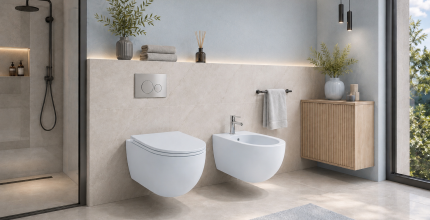
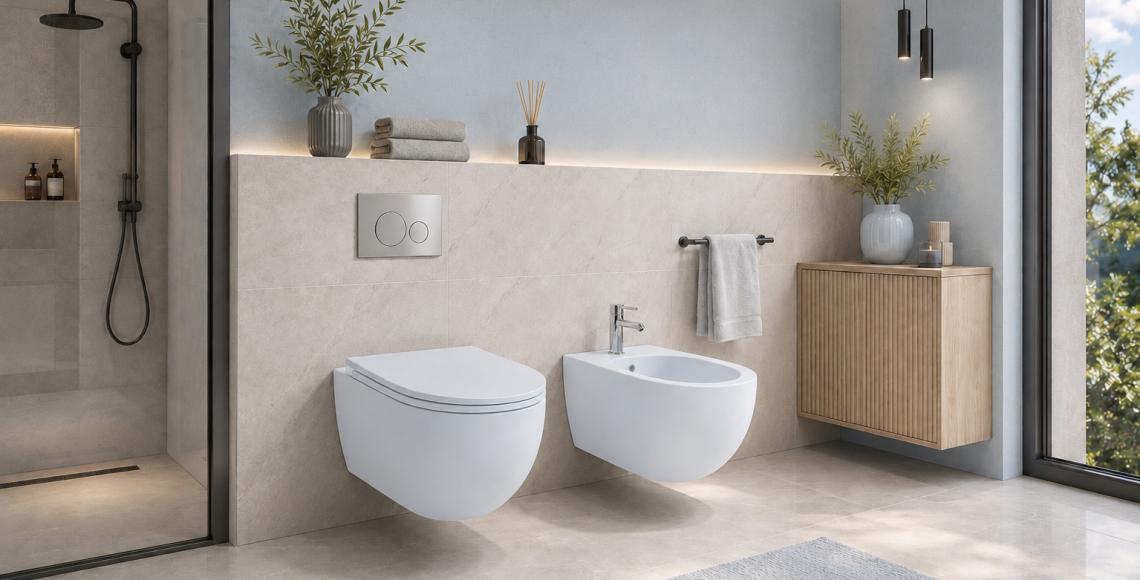
wall-hung-toilet-bidet-beige.

Beige Bathroom

Whisper-soft and grounded in nature, the Beige collection brings the warmth of sun-bleached landscapes into your bathroom. Elegant, earthy, and versatile; Beige forms a serene foundation for unforgettable spaces.

The Beige tone is inspired by warm, sunlit terrains — think coastal dunes, sandy pathways, and soft earthen textures. Its neutral warmth creates a sense of calm and natural elegance, making it ideal for a variety of interior styles. Beige’s innate versatility allows it to seamlessly pair with minimalist Scandinavian simplicity, artistic Bohemian richness, and Mediterranean warmth. Whether you’re creating a serene spa-like bathroom, an expressive artistic space, or a timeless classic interior, Beige provides balance, harmony, and an enduring design foundation.

Mediterranean Bathroom-sand color

Applicable Design Styles with Beige

1. Mediterranean Style

    • Compatibility: Very high
    • Why: Mediterranean design embraces earth-inspired tones and natural light, making Beige a perfect neutral base.
    • How Sand is used: Walls, floors, accents that reflect warm sunshine and coastal landscapes.
    • Resulting Feel: Warm, relaxed, timeless

2. Scandinavian Style

    • Compatibility: High
    • Why: Scandinavian simplicity values neutral palettes; Beige adds warmth that complements its clean structure.
    • How Sand is used: Neutrals on walls or floors paired with light woods and minimal fixtures.
    • Resulting Feel: Soft minimalism with a warm undertone

3. Boho (Bohemian) Style

    • Compatibility: High
    • Why: Boho loves earthy, natural color families; Beige gives a neutral anchor to more expressive layers.
    • How Beige is used: Base tone for textural and patterned elements — allowing accessories, textiles, and artisanal details to shine.
    • Resulting Feel: Warm, textured, visually rich yet grounded

4. Modern Minimalist

    • Compatibility: Moderate to High
    • Why: Beige can soften stark minimalism without overpowering it.
    • How Beige is used: Paired with clean lines and restrained decor for understated luxury.
    • Resulting Feel: Calm minimalist with warmth

Washbasins – Beige Tone

The Beige washbasins combine organic warmth with refined design. Available in countertop, freestanding, wall mounted options, they offer a tactile, natural presence without compromising on contemporary form or functionality.

Toilet & Bidet

Designed as a visual pair, the Beige toilet and bidet echo the collection’s natural aesthetic. Their streamlined forms bring harmony and balance to any bathroom layout. Perfect for Mediterranean, Scandinavian, or Boho interpretations.

Shower Tray

A subtle foundation for your shower zone, the Beige shower tray enhances spaciousness and complements both minimalist and textural design approaches.

shower tray-beige

Bathtub

The Beige-toned bathtub elevates bathing into a grounded, sensory experience. Its soft, earthy finish and balanced form blend effortlessly into spaces that celebrate natural materials and relaxed luxury.

Style Combinations & Material Pairings

Recommended Materials Beige:

Natural Stone & Matte Cream Finishes — Mediterranean harmony
Light Wood and Linen Textiles — Scandinavian warmth
Woven Textures & Patterned Rugs — Boho richness
Matte Black or Brushed Metal Accents — Contrast and definition

Technical Highlights

Consistent color profile across all products
Durable matte finishes
Easy-clean surfaces
Ideal for residential spaces

Are Boho, Scandinavian, and Mediterranean Styles the Same?

Short answer: No.

They are three distinct interior design styles with different origins, philosophies, and visual outcomes. While they may share a few surface similarities, their core logic is fundamentally different.

Mediterranean Style 

Origin:
Southern Europe (Italy, Spain, Greece, Southern France)

Design Philosophy:
Life shaped by sunlight, nature, and authenticity. Spaces are meant to feel lived-in, calm, and timeless.

Key Characteristics:

  • Colors inspired by nature:
    • White, cream, sand, beige
    • Sky blue, light green
    • Terracotta tones
  • Strong emphasis on natural light
  • Natural materials:
    • Stone, plaster, ceramic, wood
  • Balanced spaces — never empty, never cluttered

Overall Feeling:
Warmth, serenity, authenticity, and quiet elegance

Scandinavian Style

Origin:
Northern Europe (Sweden, Denmark, Norway)

Design Philosophy:
Simplicity, functionality, and maximum light with minimal visual noise.

Key Characteristics:

  • Cool, neutral color palette:
    • White, soft gray(Ice in Saniterra), muted beige (Beige in Saniterra)
  • Clean lines and minimal detailing
  • Highly functional layouts
  • Very limited decorative elements

Overall Feeling:
Calm, order, clarity, mental silence

Boho Style

Origin:
A non-geographic, expressive style inspired by multiple cultures

Design Philosophy:
Freedom, individuality, and emotional expression without strict rules.

Key Characteristics:

  • Warm, rich, and diverse colors
  • Strong use of textures and patterns
  • Handmade, artisanal elements
  • Layered and eclectic compositions

Overall Feeling:
Creative, personal, energetic, expressive