Tag: wall mounted toilet

What Is Vortex Flushing Technology? How It Works & Why It Matters

Quick Answer

Vortex flushing technology is a flushing approach in which water enters the toilet bowl and is directed into a controlled circular, vortex-like flow. This movement helps distribute water around the bowl, improving rinsing and cleaning during the flush while allowing the toilet to operate quietly and efficiently.

The technology can be used in both wall-hung and back-to-wall toilets.

What Happens When You Flush a Toilet?

Most of us press the flush button without ever thinking about what happens next.

Behind the wall, the concealed cistern releases water through the flush valve. The water then enters the toilet bowl and needs to do two things at the same time:

  1. Rinse the bowl effectively
  2. Move the contents through the waste outlet

The way that water enters and moves around the bowl therefore matters.

This is where Vortex flushing technology comes in.

What Does “Vortex” Mean?

The word vortex describes a fast, circular or swirling movement.

In a toilet, Vortex flushing technology uses the shape and design of the water outlets to create a controlled, circular flow inside the bowl.

Rather than water simply falling into the bowl, the flow is directed so that it travels around the bowl before moving towards the outlet.

The result is a more controlled flushing action designed to rinse the bowl effectively and remove waste efficiently.

How Does Vortex Flushing Work?

The process can be simplified into four stages.

1. The Flush Is Activated

When you press the flush button, the concealed cistern releases the stored water.

2. Water Enters the Bowl

The water enters the bowl through specifically designed outlets.

3. Water Creates a Circular Flow

The direction of the incoming water creates a vortex-like movement around the bowl.

This helps distribute the available water across the bowl rather than concentrating the flow in just one area.

4. The Bowl Is Rinsed and Waste Is Evacuated

The circular movement helps rinse the bowl while the water and waste move towards the outlet and into the drainage system.

The exact flow pattern varies according to the design of the toilet and flushing system.

Why Can Vortex Flushing Improve Cleaning?

The effectiveness of a toilet flush isn’t simply about how much water is released.

How that water moves is equally important.

A well-designed flushing system aims to direct water where it is needed, helping rinse more of the bowl during each flush.

Vortex flushing technology is designed around this principle: controlled water movement rather than simply increasing water volume.

This can contribute to:

  • More effective bowl rinsing
  • Better overall cleaning
  • Faster flushing
  • A quieter flushing experience

Is Vortex Flushing Noisy?

One of the useful characteristics of a well-designed Vortex flushing system is its ability to provide effective flushing with relatively little noise.

The controlled movement of water can make the flushing process noticeably quieter than some conventional flushing designs.

However, the overall noise level of a toilet also depends on other factors, including the concealed cistern, flush valve, water pressure, installation and the construction surrounding the toilet.

So Vortex technology should not be considered the only factor determining how quiet a bathroom will be.

Can Vortex Flushing Be Used With a Concealed Cistern?

Yes.

In fact, the two components perform different jobs.

The concealed cistern stores and releases the water.

The Vortex flushing design controls how that water enters and moves through the toilet bowl.

This distinction is important because Vortex is not the name of the entire flushing installation. It describes the flushing technology and water-flow pattern within the toilet.

Does Vortex Work With Both Wall-Hung and Back-to-Wall Toilets?

Yes.

Vortex flushing technology can be incorporated into both configurations.

Wall-Hung Toilets

The toilet bowl is mounted to a concealed support frame, leaving the floor underneath open.

This makes cleaning around the toilet easier and gives the bathroom a lighter, more contemporary appearance.

Wall Hung Toilet-217011

Back-to-Wall Toilets

The toilet remains floor-standing, while the cistern and plumbing are concealed behind the wall or within a suitable installation structure.

This creates a clean appearance while retaining a floor-mounted toilet.

floor standing toilet-237011

Selected Saniterra wall-hung and back-to-wall toilets are available with Vortex flushing technology.

The important point is that Vortex relates to the flushing process, while wall-hung and back-to-wall describe how the toilet itself is installed.

Does Vortex Mean the Toilet Never Needs Cleaning?

No.

Vortex flushing can improve the way water moves around the bowl, but it doesn’t eliminate the need for regular cleaning.

Toilet hygiene still depends on:

  • Regular cleaning
  • Water quality
  • Bathroom ventilation
  • Proper use
  • The condition of the toilet and drainage system

The advantage is that an effective flushing design can make maintaining a clean bowl easier as part of normal bathroom care.

What About Rimless Toilets?

Vortex flushing and rimless design are related, but they are not the same thing.

Rimless describes the physical design of the toilet bowl: there is no traditional concealed rim around the inside of the bowl.

Vortex flushing describes how water moves through the bowl during flushing.

Some toilets combine both technologies.

Selected Saniterra toilets do exactly that, combining a rimless bowl design with Vortex flushing technology.

This combination can provide an accessible bowl surface for cleaning together with controlled water movement during flushing.

Did You Know?

A toilet flush is a combination of water volume, water direction, bowl geometry, outlet design and drainage.

That’s why simply increasing the amount of water does not necessarily produce a better flush.

Modern flushing technologies focus increasingly on making the available water work more effectively.

Frequently Asked Questions

Is Vortex flushing better than a conventional flush?

Vortex flushing is designed to create a controlled circular flow that can improve bowl rinsing and cleaning while maintaining an efficient flushing cycle. Actual performance depends on the complete toilet and flushing system.

Does Vortex flushing use more water?

No. Vortex technology focuses on how water is directed and circulated through the bowl rather than simply increasing the amount of water used.

Can Vortex flushing be used with a dual-flush concealed cistern?

Yes. Vortex toilets can be designed to work with modern dual-flush concealed cisterns.

Is Vortex flushing only available in wall-hung toilets?

No. Vortex flushing technology can be used in both wall-hung and back-to-wall toilet designs.

Is Vortex the same as a rimless toilet?

No. Rimless describes the bowl design, while Vortex describes the flushing and water-flow technology. They can, however, be combined in the same toilet.

Is Vortex flushing completely silent?

No toilet is completely silent. Vortex technology is designed to provide a quieter flushing experience, but overall noise also depends on the cistern, valve, water pressure and installation.

A toilet flush may look simple from the outside, but there is considerable engineering behind the way water enters, moves through and leaves the bowl.

Vortex flushing technology uses controlled circular water movement to help rinse the bowl effectively and evacuate waste efficiently.

When combined with a rimless bowl and a well-designed concealed cistern, it can contribute to a cleaner, more hygienic and quieter everyday bathroom experience.

And because Vortex technology can be incorporated into both wall-hung and back-to-wall toilets, it is not limited to one particular bathroom layout.

What Is a Rimless Toilet? Benefits, How It Works & Common Myths

A rimless toilet is designed without the traditional inner rim found in conventional toilet bowls. Instead of releasing water from hidden channels beneath the rim, it directs water around the bowl through an open flushing system. This design makes the bowl easier to clean and can improve hygiene by reducing hidden areas where dirt and bacteria may accumulate.

A Small Design Change That Makes a Big Difference

At first glance, a rimless toilet looks almost identical to a traditional toilet.

The difference only becomes obvious when you look inside the bowl.

Unlike conventional toilets, there is no hidden rim where the flushing water travels before entering the bowl.

It may seem like a small design detail—but it changes how the toilet is cleaned, maintained and used every day.

What Does “Rimless” Mean?

Traditional toilets have a concealed rim around the inside edge of the bowl.

When you flush, water travels through hidden channels beneath this rim before flowing into the bowl.

Because these channels are difficult to reach, they can become places where limescale, dirt and bacteria gradually build up.

A rimless toilet removes this concealed rim altogether.

Instead, water is guided directly into the bowl through an open flushing design that is visible and easier to clean.

How Does a Rimless Toilet Work?

Although different manufacturers use different flushing designs, the basic principle is similar.

Instead of hiding the water flow beneath a rim, the flushing system directs water around the bowl through an open channel.

The aim is to distribute water efficiently while helping rinse the bowl during each flush.

Some modern toilets—including selected Saniterra models—combine the rimless design with Vortex flushing technology, creating a controlled circular flow of water that helps distribute water evenly around the bowl while operating quietly and working efficiently with modern dual-flush concealed cisterns.

What Are the Benefits of a Rimless Toilet?

Easier to Clean

Without a hidden rim, the inside of the bowl is easier to reach during regular cleaning.

There are fewer concealed areas where cleaning tools cannot reach.

Improved Hygiene

Because there are fewer hidden surfaces, there are fewer places for dirt, mineral deposits and bacteria to accumulate.

Regular cleaning is still essential, but maintaining the bowl is generally more straightforward.

Modern Bathroom Design

Most rimless toilets are designed with a contemporary appearance that suits modern bathrooms.

They are available in both wall-hung and back-to-wall designs, making them suitable for a wide range of bathroom layouts.

Efficient Flushing

Modern rimless toilets are designed to work efficiently with today’s dual-flush concealed cisterns.

Rather than relying solely on the amount of water used, many modern flushing systems focus on directing water more effectively around the bowl.

Common Myths About Rimless Toilets

Myth 1: Rimless Toilets Are Harder to Flush

Not true.

A well-designed rimless toilet is engineered to distribute water effectively throughout the bowl.

The flushing performance depends on the overall design of the toilet rather than the presence of a traditional rim.

Myth 2: They Don’t Need Cleaning

False.

A rimless toilet is easier to clean, but it still requires regular maintenance just like any other toilet.

Routine cleaning helps maintain hygiene and appearance.

Myth 3: Rimless Toilets Use More Water

Not necessarily.

Modern rimless toilets are typically designed to operate efficiently with dual-flush concealed cisterns.

Their performance comes from how the water is directed around the bowl rather than simply increasing water consumption.

Are Rimless Toilets Worth It?

For many homeowners, yes.

If you value easier cleaning, improved hygiene and a modern bathroom design, a rimless toilet can be an excellent choice.

Whether it is the right option depends on your bathroom layout, personal preferences and the type of flushing system you choose.

Did You Know?

The term “rimless” describes the shape of the toilet bowl, not the flushing technology.

A toilet can be rimless without using a vortex flush, and a vortex flushing system can vary depending on the manufacturer’s design.

When choosing a toilet, it’s worth looking at both the bowl design and the flushing system, as each contributes differently to cleaning performance and everyday use.

Frequently Asked Questions

Are rimless toilets more hygienic?

They can be easier to keep clean because there are fewer hidden areas where dirt and mineral deposits may accumulate.

Do rimless toilets splash more?

Splashing depends on the overall design of the toilet and the flushing system. A well-designed rimless toilet is engineered to provide effective flushing while maintaining user comfort.

Are rimless toilets suitable for family bathrooms?

Yes. They are commonly used in family homes because they are easy to maintain and compatible with modern bathroom designs.

Can a rimless toilet be wall-hung or back-to-wall?

Yes. Rimless designs are available in both wall-hung and back-to-wall configurations.

Is a rimless toilet worth replacing an older toilet for?

If you’re renovating your bathroom or replacing an ageing toilet, a rimless design may offer easier maintenance and improved day-to-day hygiene.

A rimless toilet is more than a modern design trend.

By removing the traditional concealed rim, it simplifies cleaning and reduces hidden areas where dirt and mineral deposits can build up.

Combined with a well-designed flushing system, a rimless toilet can provide an excellent balance of hygiene, efficiency and everyday practicality.

When choosing a new toilet, it is worth considering both the bowl design and the flushing technology—not just the appearance.

Why Does My Toilet Keep Running? Causes, Easy Fixes & When to Replace It?

If your toilet keeps running after flushing, the problem is usually caused by a worn flush valve, a faulty fill valve, an incorrectly adjusted float, or a leak inside the concealed cistern. Many of these issues are inexpensive to repair, but older toilets or outdated flushing systems may be worth replacing for better water efficiency.

You Flush… But the Water Never Seems to Stop

You flush the toilet, walk away, and a few minutes later you still hear water running.

It may seem like a small annoyance, but a continuously running toilet can waste a surprising amount of water over time and increase your utility bill.

The good news? Most running toilets have a simple cause, and many problems can be fixed without replacing the entire toilet.

Why Does a Toilet Keep Running?

Here are the most common reasons.

1. A Worn Flush Valve Seal

The flush valve seal (sometimes called the flapper seal) prevents water from escaping the cistern after flushing.

Over time, rubber seals can become worn, stiff or damaged. Even a small gap allows water to leak continuously into the toilet bowl, forcing the cistern to refill again and again.

What you can do

* Remove the flush plate or cistern lid (depending on your installation).
* Check whether the seal looks damaged or covered in limescale.
* Replace it if necessary.

2. The Fill Valve Isn’t Closing Properly

The fill valve controls how the cistern refills after every flush.
If it sticks or becomes worn, water may continue entering the cistern even after it is full.
This is one of the most common causes of a constantly running toilet.

Signs

* A hissing sound after flushing.
* Water trickling into the bowl.
* The cistern never seems completely quiet.

3. The Float Is Set Too High

Inside every cistern is a float that tells the fill valve when to stop.
If the float sits too high, water rises above the overflow level and flows continuously into the toilet.
Fortunately, this is often a simple adjustment.

4. Limescale Build-Up

If you live in a hard water area, mineral deposits can affect moving parts inside the cistern.
Limescale may prevent valves from sealing properly, leading to continuous water flow.
Regular maintenance helps reduce this problem.

Is a Running Toilet Serious?

Usually, no.
However, ignoring the problem can:

* Waste hundreds of litres of water over time.
* Increase water bills.
* Wear out internal components faster.
* Lead to more expensive repairs later.

Fixing the issue early is almost always the better option.

When Should You Call a Plumber?

Consider professional help if:

* You’ve replaced the seal but the problem continues.
* Water leaks outside the toilet.
* The concealed cistern cannot be accessed easily.
* The toilet is more than 15 years old and several parts are failing.

Could a Modern Toilet Help?

If your toilet is older, replacing individual parts may not always be the most cost-effective long-term solution.
Modern rimless toilets are generally easier to clean because there is no hidden rim where dirt and bacteria can accumulate.

Some newer flushing systems also improve bowl cleaning while reducing water consumption and operating noise.

For example, Saniterra’s Vortex flushing technology creates a controlled circular flow of water that helps clean the bowl more evenly than many conventional flushing systems.

Saniterra Vortex System

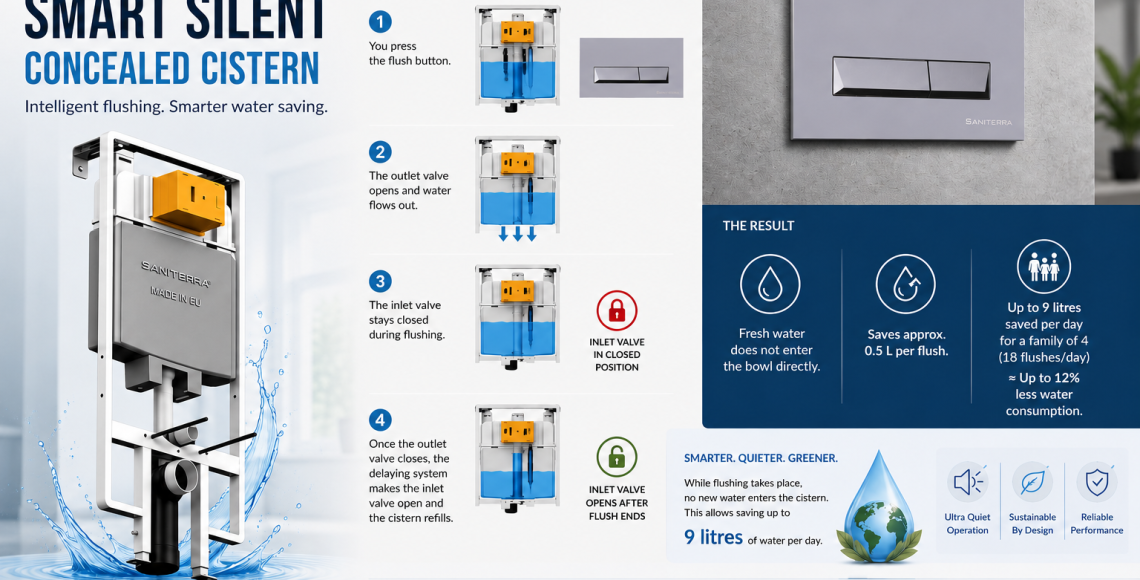
Some concealed cisterns, including Saniterra’s Smart Silent Concealed Cistern, are also designed to delay refilling until the flush cycle has finished. This reduces unnecessary water movement inside the tank, lowers operating noise and can help save up to 9 litres of water per day for a typical family of four under normal household use.

These technologies won’t solve a damaged valve in an existing toilet, but they are worth considering if you’re planning a bathroom renovation or replacing an ageing toilet.

FAQ

Why does my toilet keep running even after replacing the flapper?

The problem may be caused by the fill valve, float adjustment or mineral deposits inside the cistern rather than the flush valve seal.

Can a running toilet increase my water bill?

Yes. Even a slow leak can waste a significant amount of water if left untreated

Is it safe to keep using a running toilet?

Usually yes, but it should be repaired as soon as possible to prevent unnecessary water waste.

How long should a toilet flushing mechanism last?

Most quality flushing components last between 8 and 15 years, depending on water quality, usage and maintenance.

A toilet that keeps running is one of the most common plumbing problems, but it’s also one of the easiest to diagnose.

In many cases, replacing a worn seal, adjusting the float or servicing the fill valve is enough to restore normal operation. If your toilet is older or you’re renovating your bathroom, upgrading to a modern rimless toilet with an efficient concealed cistern can improve hygiene, reduce water consumption and provide quieter day-to-day performance.

Saniterra smart silent concealed cistern for wall mounted toilet

What Happens Inside a Concealed Cistern After You Press the Flush Button?

Every day, we press a flush button without giving it a second thought.

The water disappears, the toilet is cleaned, and within a few moments, everything is ready for the next use.

Simple, right?

Not quite.

Behind the wall, inside every concealed cistern, a carefully designed sequence of mechanical movements takes place in just a few seconds. These movements determine not only how well your toilet flushes, but also how much water is actually used, or wasted.

Surprisingly, not all concealed cisterns work the same way.

The First Second After You Flush

The moment you press the flush plate, the outlet valve opens.

Gravity takes over, allowing the stored water inside the cistern to rush into the toilet bowl with enough force to complete the flush.

At this point, every concealed cistern looks identical.

But this is exactly where the difference begins.

How a Conventional Concealed Cistern Works

In a conventional system, the inlet valve opens almost immediately after the flush starts.

While water is still leaving the cistern, fresh water has already started entering it.

From the outside, everything appears normal.

Inside the tank, however, two things are happening at the same time:

* Water is flowing out.
* Fresh water is flowing in.

This overlap might seem harmless, but it creates an inefficiency. Part of the incoming clean water contributes little to the flushing process because it enters before the cycle has finished.

It’s a small amount during each flush—but over weeks, months, and years, those small amounts accumulate.

Is There a Better Way?

Engineers asked a simple question:

Why refill the cistern before the flush has actually finished?

If the tank is still emptying, wouldn’t it make more sense to wait just a little longer before opening the inlet valve?

That simple idea led to a smarter flushing sequence.

A Smarter Sequence

Instead of refilling immediately, the inlet valve remains closed throughout the flushing cycle.

The sequence becomes:

1. The flush button is pressed.
2. The outlet valve opens.
3. Water leaves the cistern.
4. The inlet valve stays closed.
5. The outlet valve closes.
6. Only then does the cistern begin to refill.

Nothing changes for the user.

The flush feels exactly the same.

But internally, the system works much more efficiently.

Why Timing Matters

The difference is only a few seconds.

Yet those few seconds prevent fresh water from entering while the flush is still in progress.

Instead of allowing clean water to mix with an active flush, the cistern completes one task before starting the next.

Think of it as waiting for one door to close before opening another.

It’s a small engineering improvement, but it makes the entire system more efficient.

How SANITERRA Smart Silent Technology Works

This is exactly the principle behind the SANITERRA Smart Silent Concealed Cistern.

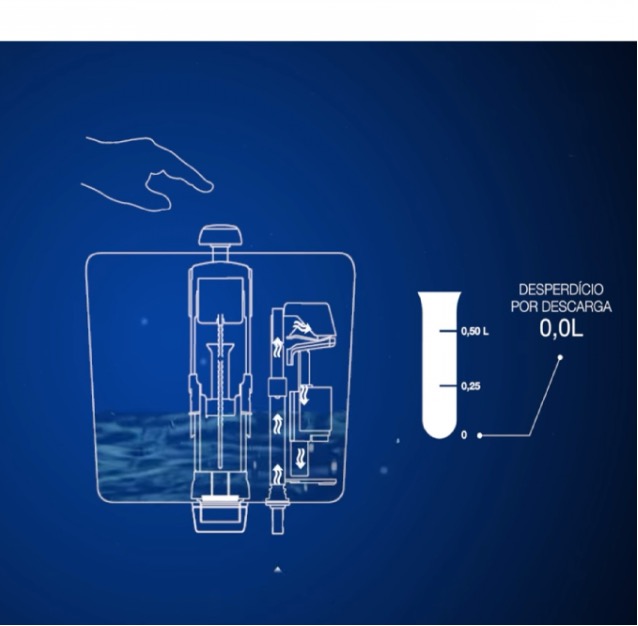
Its delayed-refill technology keeps the inlet valve closed while the outlet valve is open.

Only after the flushing cycle has completely finished does the inlet valve open and quietly refill the cistern.

This intelligent sequence offers several advantages:

* No unnecessary water enters during flushing.
* Approximately 0.5 litres of water can be saved with every flush.
* A typical family can save up to 9 litres of water per day.
* Overall water consumption can be reduced by up to 12%.
* The refill process is smoother and quieter.

The best part?

The user doesn’t have to do anything differently.

The system works automatically, every single time.

Smart Engineering Isn’t Always Visible

When choosing a concealed cistern, most people compare flush plates, frame strength, installation depth, or dual-flush volumes. BUT …

Very few ask an equally important question too:

What happens inside the tank after I press the flush button?

The answer reveals a difference you can’t see, but one you’ll benefit from every day.

Sometimes, innovation isn’t about adding more features.

Sometimes, it’s simply about making the sequence smarter.

And in the case of a concealed cistern, a smarter sequence means quieter operation, less wasted water, and better performance with every flush.

Rimles wall mounted toilet

In the realm of modern bathroom design, innovation continuously redefines our expectations of comfort, cleanliness, and aesthetics. Among the most significant advancements, the rimless wall-mounted toilet stands out as a true game-changer. This article delves into the myriad benefits and sophisticated design principles behind this particular fixture, exploring how it transcends traditional toilet designs to offer a superior experience. From its unparalleled hygienic properties to its sleek, space-saving form, we will uncover why Saniterra’s commitment to cutting-edge technology and elegant design makes its rimless wall-mounted toilet an essential consideration for any contemporary bathroom renovation or new build. Prepare to rethink what a toilet can be.

The rise of rimless technology: a new standard in hygiene

The concept of a rimless toilet is a revolutionary step forward in bathroom hygiene. Traditionally, toilets feature an inner rim where water flows to flush the bowl. This rim, while functional, creates a hidden cavity where germs, bacteria, and limescale can accumulate, making it notoriously difficult to clean effectively. The Saniterra rimless design eliminates this troublesome area entirely. Instead, a powerful, direct flush washes the entire inner surface of the bowl, ensuring comprehensive cleaning with every use. This innovative approach not only promotes a significantly more hygienic environment but also dramatically reduces the time and effort required for routine cleaning. Homeowners can now enjoy a cleaner toilet with less scrubbing and fewer harsh chemicals, making it a healthier choice for families and the environment.

Sleek design and space optimization: embracing modern aesthetics

Beyond its hygienic advantages, the Saniterra rimless wall-mounted toilet is a triumph of contemporary design. Its wall-mounted configuration means the cistern is concealed within the wall, leaving only the elegant bowl visible. This creates a minimalist, uncluttered look that is highly sought after in modern interiors. The absence of a visible base also frees up floor space, making even smaller bathrooms feel more open and spacious. Furthermore, the concealed fixings contribute to its seamless appearance, ensuring no unsightly bolts or brackets detract from its clean lines. This design choice not only enhances the aesthetic appeal of your bathroom but also facilitates easier floor cleaning, as there are no awkward nooks or crannies around the base of the toilet for dirt to accumulate.

Unpacking the Saniterra advantage: features that matter

Saniterra’s dedication to quality and user experience is evident in the specific features integrated into their rimless wall-mounted toilets. The combination of a rimless design with a wash-down model ensures efficient and thorough waste removal. The concealed fixings are not just for aesthetics; they also provide a secure and stable installation while maintaining the toilet’s sleek profile. This attention to detail results in a product that is not only beautiful but also highly functional and durable. To illustrate the clear advantages, consider the following detail:

Hygiene No rim, direct powerful flush, superior hygiene
Cleaning Ease Quick wipe, easy access to all surfaces
Aesthetics Sleek, minimalist, cistern concealed, elegant
Space Wall-mounted, frees up floor space, visually expands room
Installation Concealed fixings, professional installation for in-wall cistern
Color Pink, Sky Blue, Graphite, Ice, Beige, ……

rimless-toilet

Seamless integration: installation and long-term care

While the installation of a wall-mounted toilet requires professional expertise due to the concealed cistern and plumbing, the long-term benefits far outweigh this initial consideration. Saniterra designs its products with both the installer and the end-user in mind, ensuring a straightforward setup process for qualified technicians. Once installed, the maintenance of the rimless wall-mounted toilet is remarkably simple. The absence of a rim means that a quick wipe with a cloth is often all that’s needed to keep the bowl sparkling clean. The durable materials used by Saniterra also ensure longevity and resistance to wear and tear, providing years of reliable service with minimal fuss. This ease of maintenance frees up your time and ensures your bathroom remains a pristine sanctuary.

In conclusion, the rimless wall-mounted toilet represents a significant leap forward in bathroom design and functionality. We’ve explored how its innovative rimless technology sets a new benchmark for hygiene, making it easier than ever to maintain a clean and germ-free environment. Its sleek, wall-mounted design not only elevates the aesthetic appeal of any bathroom but also optimizes space, creating an illusion of greater openness and simplifying floor cleaning. With Saniterra, you’re investing in a product that combines superior cleanliness with modern elegance and practical benefits. For those seeking to create a contemporary, hygienic, and visually appealing bathroom space, choosing a Saniterra rimless wall-mounted toilet is undoubtedly a decision that will enhance both the comfort and value of their home.

SANITERRA