
Shower Water Pressure and Flow Rate: What’s the Difference and Why Does It Matter?
A shower can look perfect and still deliver a disappointing experience. Sometimes the water feels weak, takes too long to rinse shampoo, or changes noticeably when another tap is turned on.
These problems are often described as low water pressure. However, water pressure and flow rate are not the same thing. Understanding the difference can help you identify what is affecting your shower and choose the right shower fittings for your plumbing system.
In this guide, we’ll explain how pressure and flow rate work, how to measure water flow at home, what can affect shower performance, and what to consider when choosing a shower head.
1. Water Pressure vs Flow Rate: What’s the Difference?
Although they are closely related, water pressure and flow rate describe two different things.
What is water pressure?
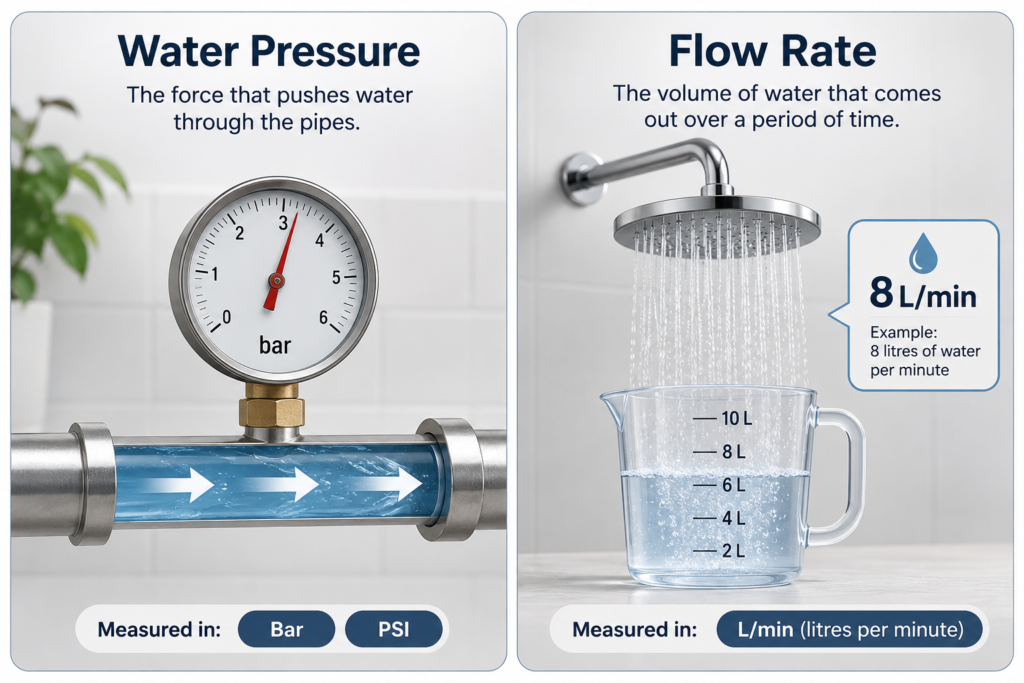
Water pressure is the force that pushes water through pipes and fittings. It helps move water from the supply system towards your shower.
It is commonly measured in:
- Bar: A metric unit widely used in Europe.
- PSI: Pounds per square inch, commonly used in some other markets.
In simple terms, pressure describes how strongly water is being pushed through the plumbing system.
What is flow rate?
Flow rate measures the volume of water passing through an outlet over a specific period of time.
It is usually measured in litres per minute (L/min).
For example, if a shower head delivers 8 litres of water in one minute, its flow rate is 8 L/min under those particular test conditions.
The difference is important: pressure describes the force driving the water, while flow rate describes how much water actually comes out.
A shower can have reasonable supply pressure but still deliver a low flow rate because of a restricted fitting, a blocked filter or a flow regulator.
2. How Is Water Pressure Measured?
Water pressure is commonly measured in bar or PSI.
A pressure gauge can be connected to a suitable test point in the plumbing system to measure pressure. However, there is an important distinction between two types of pressure measurement:
- Static pressure: The pressure when water is not flowing.
- Dynamic pressure: The pressure while water is flowing through the system.
Dynamic pressure is particularly relevant when assessing shower performance because the shower is operating while water is being used.
A system may show a reasonable static pressure but experience a significant pressure drop when the shower is running. This can happen when pipes, valves or other parts of the plumbing system restrict the available water supply.
For this reason, measuring pressure only when all taps are closed may not give a complete picture of how your shower performs.
3. What Is Flow Rate and How Can You Measure It at Home?
Flow rate is one of the most useful measurements when investigating shower performance.
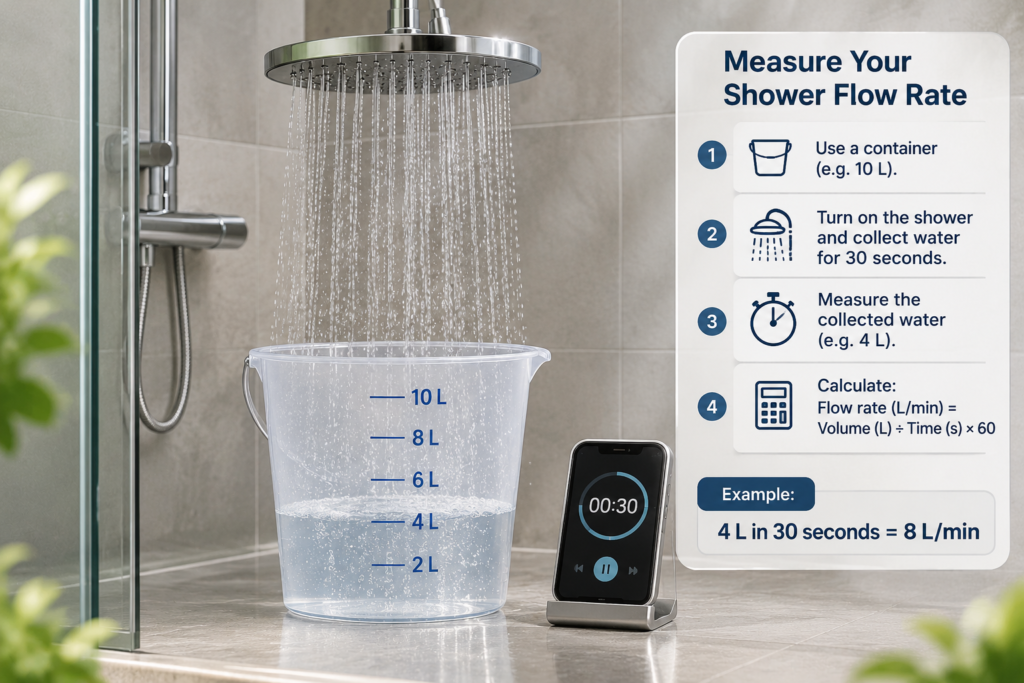
You can estimate your shower’s flow rate with a simple test using a container with a known volume and a timer.
The simple bucket test
- Take a container with a clearly marked volume, such as a 10-litre bucket.
- Place it under the shower head.
- Turn on the shower using the normal setting you would use.
- Collect water for a measured period, such as 30 seconds.
- Measure how much water has collected.
To calculate the flow rate, use this formula:
Flow rate (L/min) = Water collected (litres) ÷ Time (seconds) × 60
For example, if you collect 4 litres in 30 seconds:
4 ÷ 30 × 60 = 8 L/min
This means the shower is delivering approximately 8 litres per minute under the conditions of your test.
Remember that this test measures the actual water output at the shower head. It does not measure water pressure.
For a more accurate assessment, especially when comparing hot and cold water performance or investigating a suspected plumbing fault, a qualified plumber can carry out additional measurements.
4. What Causes Low Water Pressure or Poor Shower Flow?
If your shower does not perform as expected, several factors may be responsible. It is important to identify the cause before replacing the shower head or changing the plumbing system.
Limescale and blocked shower nozzles
Mineral deposits can accumulate around shower nozzles over time, particularly in areas with hard water. This can partially block the openings and affect the spray pattern and water distribution.
Cleaning the shower head according to the manufacturer’s instructions may improve its performance.
Blocked filters or flow restrictors
Some shower fittings contain filters or flow regulators. Debris, sediment or mineral deposits can affect these components and reduce water output.
Flow regulators are not necessarily a problem. They are often designed to control water consumption while maintaining the intended spray performance.
Restricted pipes or valves
Partially closed isolation valves, narrow or obstructed pipes, and other restrictions can affect the amount of water reaching the shower.
Problems with the water supply
The pressure available from the building’s supply system may vary. In some properties, pressure can also change when several water outlets are used simultaneously.
Incompatible shower fittings
A shower head or mixer may have specific minimum pressure or flow requirements. If the existing plumbing system cannot meet those requirements, the shower may not perform as intended.
Before changing equipment, check the manufacturer’s technical specifications and the conditions of the existing installation.
5. Does a Larger Shower Head Need More Water Pressure?
Not necessarily.
A common assumption is that a larger shower head always needs higher water pressure. In reality, performance depends on several factors, including the shower head’s internal design, nozzle arrangement, flow regulator and available water supply.
A large rain shower may distribute water across a wider surface. This does not automatically mean it needs a higher flow rate than every smaller shower head.
Some shower heads are specifically designed to deliver an effective spray at controlled flow rates. Others may require particular operating conditions to achieve their intended performance.
When choosing a shower head, consider:
- The manufacturer’s minimum and recommended operating pressure.
- The specified flow rate and the pressure at which it was measured.
- The size and design of the spray surface.
- Whether the product includes a flow regulator.
- Whether your plumbing system can supply the required water.
A larger shower head should therefore be selected based on its technical specifications and the available water supply, rather than appearance alone.

6. How Can You Improve Shower Performance?
If your shower feels weak, start with simple checks before considering expensive changes.
1. Clean the shower head
Check the nozzles for limescale or debris. Follow the manufacturer’s cleaning instructions to avoid damaging the finish or internal components.
2. Check the hose and connections
For a hand shower, inspect the flexible hose for kinks, damage or obstructions. Check that the connections are properly fitted.
3. Inspect accessible filters
Some shower fittings have small inlet filters that can collect debris. These should be checked and cleaned according to the product instructions.
4. Check the water supply
If several taps or showers experience reduced flow, the issue may be related to the building’s water supply or plumbing system rather than the shower head itself.
5. Ask a qualified plumber to assess the system
If the problem continues, a plumber can measure static and dynamic pressure, check the available flow rate and identify restrictions in the installation.
Installing a pump is not automatically the right solution. The cause of the problem, the type of water supply and the plumbing arrangement should be assessed first.
7. How to Choose a Shower Head Based on Pressure and Flow Rate
A good shower head should be compatible with the water supply available in your home.
Before making a purchase, check the technical information provided by the manufacturer. Pay particular attention to the minimum operating pressure and the flow rate at the stated test pressure.
If your property has limited water pressure, look for a product designed to operate under those conditions. If your water supply is more generous, you may have a wider choice of shower head designs and configurations.
It is also worth remembering that a well-designed shower is not necessarily one that uses the most water. The aim is to achieve a comfortable and consistent spray while using water responsibly.
For more guidance on choosing between different shower head designs, read our article Rain Shower vs Hand Shower: Which One Is Right for Your Bathroom?.
You can also explore the Saniterra Shower Head collection when comparing available designs.
Frequently Asked Questions
What is the difference between water pressure and flow rate?
Water pressure is the force that pushes water through the plumbing system. Flow rate measures the volume of water delivered over time, usually in litres per minute (L/min).
What is a good flow rate for a shower?
There is no single ideal flow rate for every shower. The appropriate value depends on the shower head design, its flow regulator, the available pressure and the user’s preferences. Always check the manufacturer’s specifications.
Can high water pressure cause problems?
Yes. Excessively high pressure can place additional stress on plumbing components and fittings. A suitable pressure-reducing valve may be needed if the system exceeds the recommended operating limits.
Does a rain shower need more pressure than a hand shower?
Not necessarily. Performance depends on the design, flow requirements and operating conditions of each product. Check the manufacturer’s specifications rather than relying on the shower head type alone.
How can I check my shower's flow rate?
You can estimate it using a container with a known volume and a timer. Collect water for a measured period and calculate the litres per minute. This measures flow rate, not pressure.
Understanding water pressure and flow rate makes it easier to identify why a shower may not perform as expected.
Although the two measurements are related, they describe different aspects of the water supply. Pressure tells you how strongly water is being pushed through the system, while flow rate tells you how much water is delivered.
Before replacing your shower head or investing in plumbing changes, check the actual flow, inspect the fittings and consider the technical requirements of the products you intend to use.
The best shower experience comes from choosing compatible fittings and ensuring that the plumbing system can support their intended performance.
