
Rain Shower vs Hand Shower: Which One Is Right for Your Bathroom?
Choosing the right shower setup can make a noticeable difference to your daily routine. Two popular options are the rain shower and the hand shower. Both provide a comfortable showering experience, but they serve different purposes and offer distinct advantages.
A rain shower is designed to create a relaxing, overhead water flow, while a hand shower offers greater control and flexibility. So, which one is better for your bathroom?
The answer depends on how you use your shower, the space available, and the experience you want to create. Let’s compare the two.
1. What Is a Rain Shower?
A rain shower, also known as an overhead shower, is designed to distribute water from above, creating a broad spray that resembles natural rainfall.
It is usually installed on the ceiling or on a wall-mounted arm positioned high above the user. Rain showers are available in different shapes and sizes, making them suitable for a variety of bathroom styles.
Main advantages of a rain shower:
- Relaxing experience: The overhead water flow creates a calm and comfortable showering environment.
- Wide coverage: Its larger spray area can distribute water over a wider part of the body.
- Modern appearance: Its clean design works particularly well in contemporary bathrooms.
- Convenient everyday use: Once positioned correctly, it allows you to shower without holding or adjusting the shower head.
However, a rain shower is fixed in position, so directing water towards a specific area can be more difficult.
2. What Is a Hand Shower?
A hand shower is a shower head connected to a flexible hose. It sits in a holder or on a shower rail and can be removed whenever you need to direct the water manually.
Unlike a fixed overhead shower, a hand shower allows you to control the direction of the water. This makes it a practical choice for everyday routines and different cleaning tasks.
Main advantages of a hand shower:
- Greater flexibility: You can direct the water exactly where you need it.
- Easier rinsing: It is convenient for rinsing shampoo, washing specific areas and reaching places that are harder to reach with an overhead shower.
- Practical cleaning: You can use it to rinse shower walls, floors and other parts of the shower area.
- Adjustable positioning: When installed on a suitable shower rail, the holder can often be adjusted to different heights.
A hand shower may not provide the same broad, overhead experience as a rain shower, but its versatility makes it highly practical.
3. Rain Shower vs Hand Shower: Key Differences
Although both are designed for the same basic purpose, their everyday use is quite different.
| Feature | Rain Shower | Hand Shower |
|---|---|---|
| Water direction | From above | Manually directed |
| Coverage | Generally wider and more spread out | More focused and adjustable |
| Shower experience | Relaxing, overhead flow | Flexible and practical |
| Position | Fixed | Removable from holder |
| Rinsing hair | Convenient, depending on installation | Easy to direct |
| Cleaning the shower | Less convenient | More convenient |
| Design | Often creates a minimalist look | Offers practical flexibility |
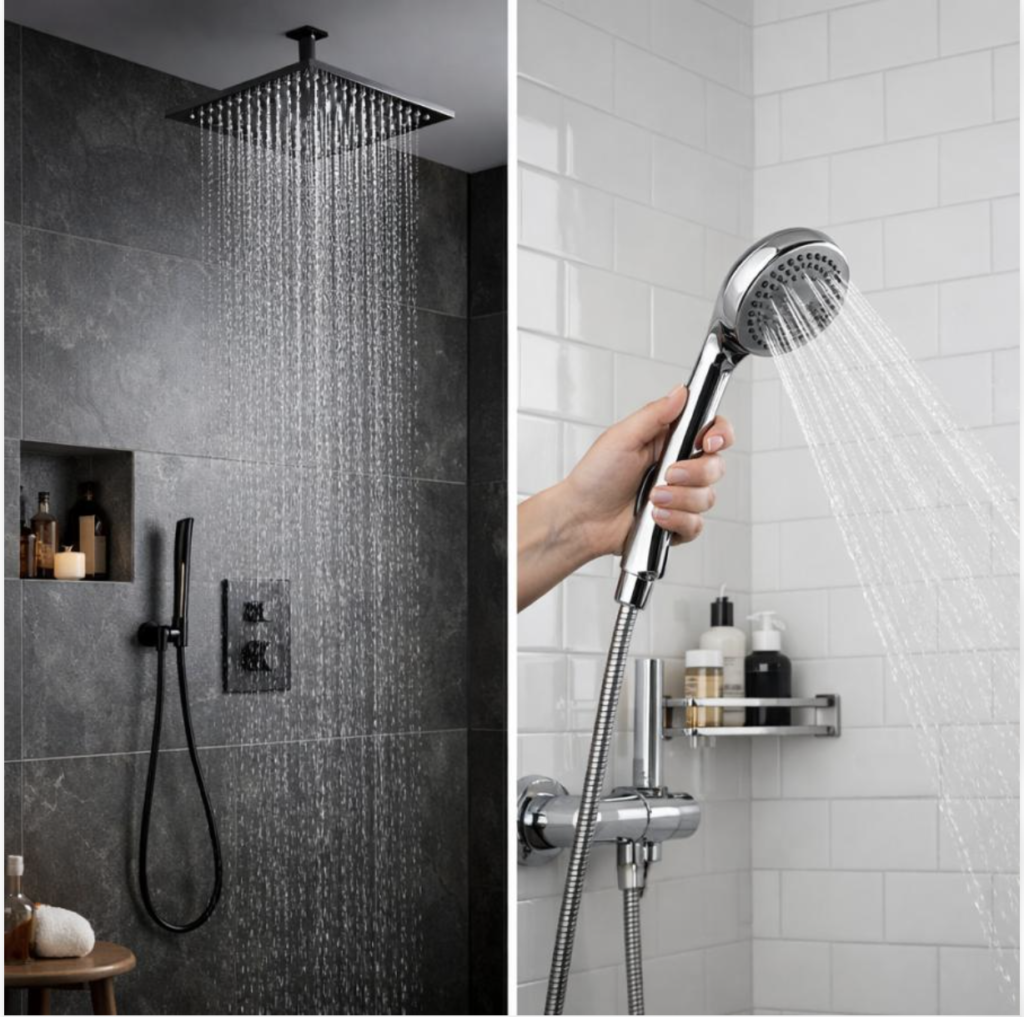
Neither option is automatically better. A rain shower prioritises the overall showering experience, while a hand shower prioritises control and convenience.
4. Which One Is Better for Everyday Use?
The best option depends on your daily habits and personal preferences.
A rain shower can be a good choice if you enjoy a relaxing shower with water falling from above. It is particularly appealing for people who prefer a simple, uncluttered shower arrangement.
A hand shower is often more practical when flexibility matters. For example, it can make rinsing hair easier, help with cleaning the shower area and allow you to direct water towards specific parts of the body.
It can also be useful in households where different people have different showering preferences.
If you are designing a bathroom for everyday family use, considering these practical differences is just as important as choosing the appearance of the shower fittings.
5. Can You Have Both a Rain Shower and a Hand Shower?
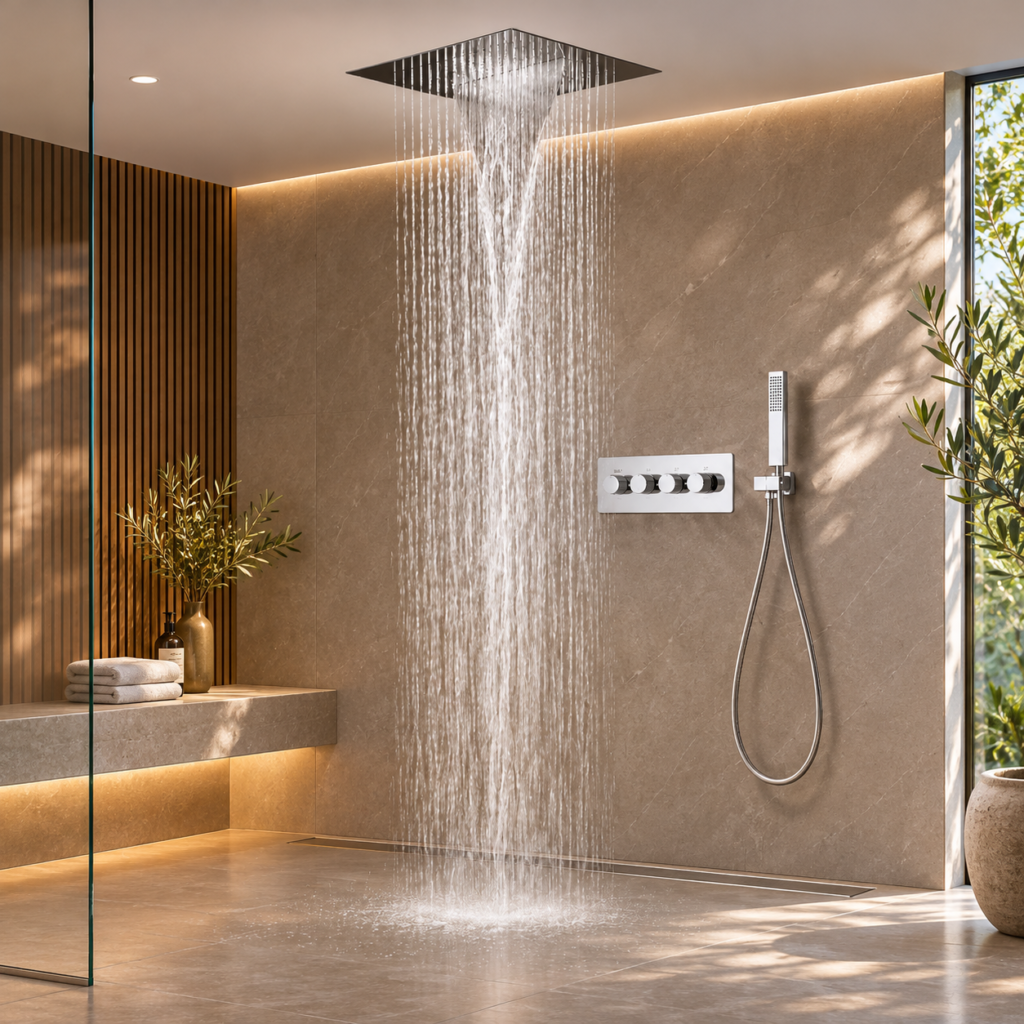
Yes. In fact, combining both is often one of the most practical solutions for a modern bathroom.
A combination shower system usually includes an overhead rain shower and a separate hand shower, allowing you to switch between the two according to your needs.
For example:
- Use the rain shower when you want a relaxing, hands-free shower.
- Use the hand shower when rinsing your hair or directing water to a specific area.
- Use the hand shower to rinse the shower enclosure after cleaning.
This arrangement combines the comfort of an overhead shower with the flexibility of a hand shower.
Before choosing a combination system, check that the shower mixer or diverter is compatible with the number of water outlets you intend to use. The installation must also provide suitable water pressure and flow for the selected fittings.
6. What About Water Consumption?
One common question is whether a rain shower uses more water than a hand shower.
The answer is not determined by the shower type alone. Water consumption depends on factors such as the flow rate of the shower head, how long you shower and whether the product has water-saving features.
A large rain shower may have a higher flow rate than some smaller shower heads, but this is not always the case. Similarly, using a hand shower does not automatically mean using less water.
To make a more informed choice, check the manufacturer’s stated flow rate, usually measured in litres per minute (L/min).
You can estimate water consumption using this simple formula:
Water consumption = Flow rate × Shower duration
For example, a shower head with a flow rate of 9 litres per minute uses approximately 90 litres during a 10-minute shower.
Choosing a suitable flow rate and keeping shower time reasonable can help manage water consumption, regardless of the shower type.
7. Which One Should You Choose?
There is no single answer that suits every bathroom. Your choice should reflect your priorities.
- Choose a rain shower if you prefer a relaxing overhead experience, wide water coverage and a clean, contemporary look.
- Choose a hand shower if flexibility, targeted rinsing and practical everyday use are more important to you.
- Choose both if you want the benefits of an overhead shower and the convenience of a removable hand shower.
Ultimately, the right shower arrangement is the one that makes your bathroom more comfortable and functional for the people who use it.
Frequently Asked Questions
Is a rain shower better than a hand shower?
Not necessarily. A rain shower offers a relaxing overhead experience, while a hand shower provides more control and flexibility. The better option depends on your preferences and daily needs.
Can a rain shower be used with a hand shower?
Yes. Many shower systems are designed to include both. A compatible mixer or diverter allows you to switch between the overhead shower and the hand shower.
Does a rain shower use more water?
Not always. Water consumption depends mainly on the product’s flow rate and how long it is used, rather than simply whether it is a rain shower or a hand shower.
Is a hand shower practical for a small bathroom?
Yes. A hand shower can be a practical option in smaller bathrooms because it offers flexible water direction and does not require a large overhead shower head.
Can I install a rain shower without a ceiling connection?
Yes. Some rain showers can be installed using a suitable wall-mounted shower arm. The correct installation depends on the product design and the bathroom’s existing plumbing.
Rain showers and hand showers offer different advantages, and choosing between them is about more than appearance. A rain shower can create a relaxing, overhead experience, while a hand shower provides the flexibility needed for everyday tasks.
If your bathroom layout and budget allow it, combining both can give you a more versatile showering experience without having to choose one over the other.
